
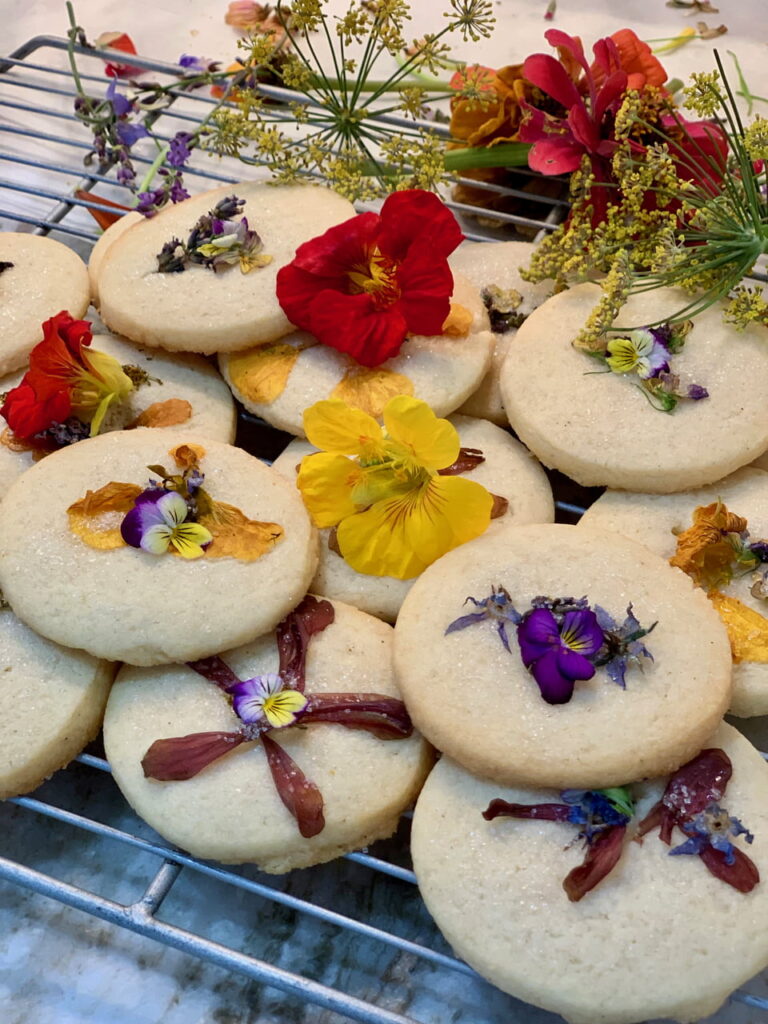
There is something timeless about a shortbread cookie. But press an edible flower petal into that golden butter dough and suddenly, it becomes art.
What Are Edible Flower Shortbread Cookies?
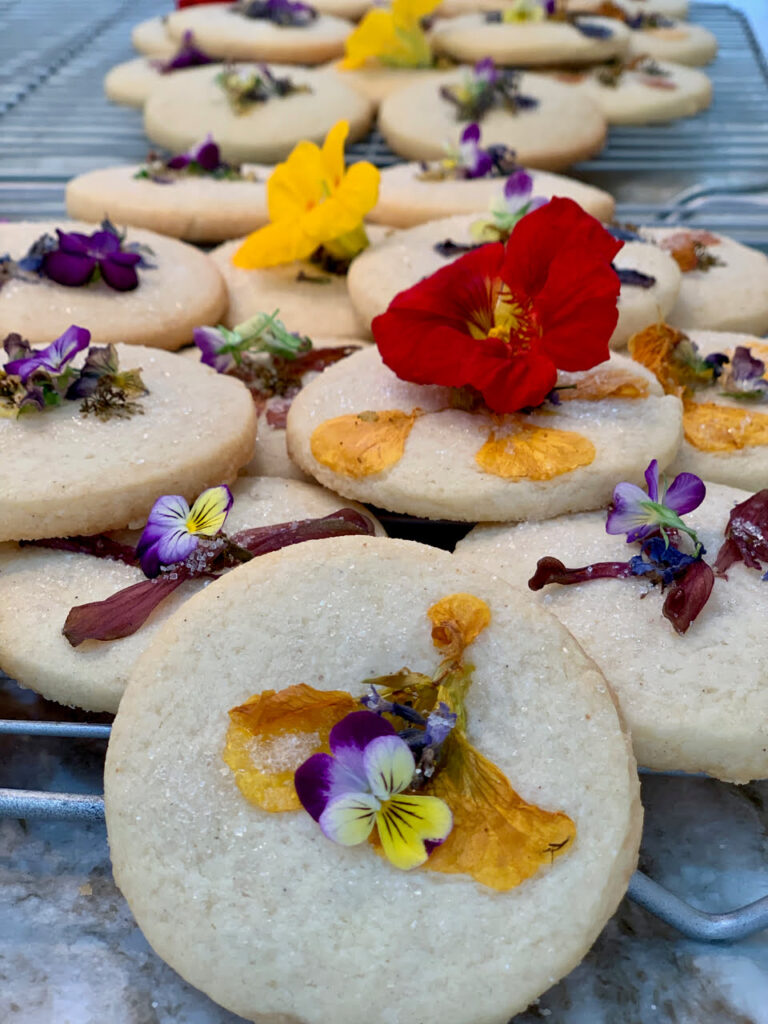
Edible flower shortbread cookies are delicate, buttery, and almost too beautiful to eat. Almost. They carry the romance of an English garden and the simplicity of a three-ingredient classic, elevated with pressed edible blooms that shimmer like stained glass when baked.
If you’ve ever wondered how to make edible flower shortbread cookies, you’ll be surprised at how simple the process is. And yes… they photograph beautifully, making them ideal for:
- Spring tea parties – The British tradition of Afternoon Tea is one we Americans enjoy too, and so I wanted to share a collection of recipes and ideas for this lovely gathering.
- Garden Gathering Brunch – The ultimate time to have these beautiful cookies ready to show off.
- Mother’s Day desserts – Something I love to serve to the moms in our family along with a favorite Crab Tower which happens to come into season around Mother’s Day.
- Easter cookie platters – A time of year when many of these flowers have returned to shower you with edible flower joy for months to come.
- Elegant homemade gifts that are thoughtful, fun, affordable and easily put together for a wide range of friends and family; cook, novice or Junior Baker!
The Origin of Shortbread Cookies
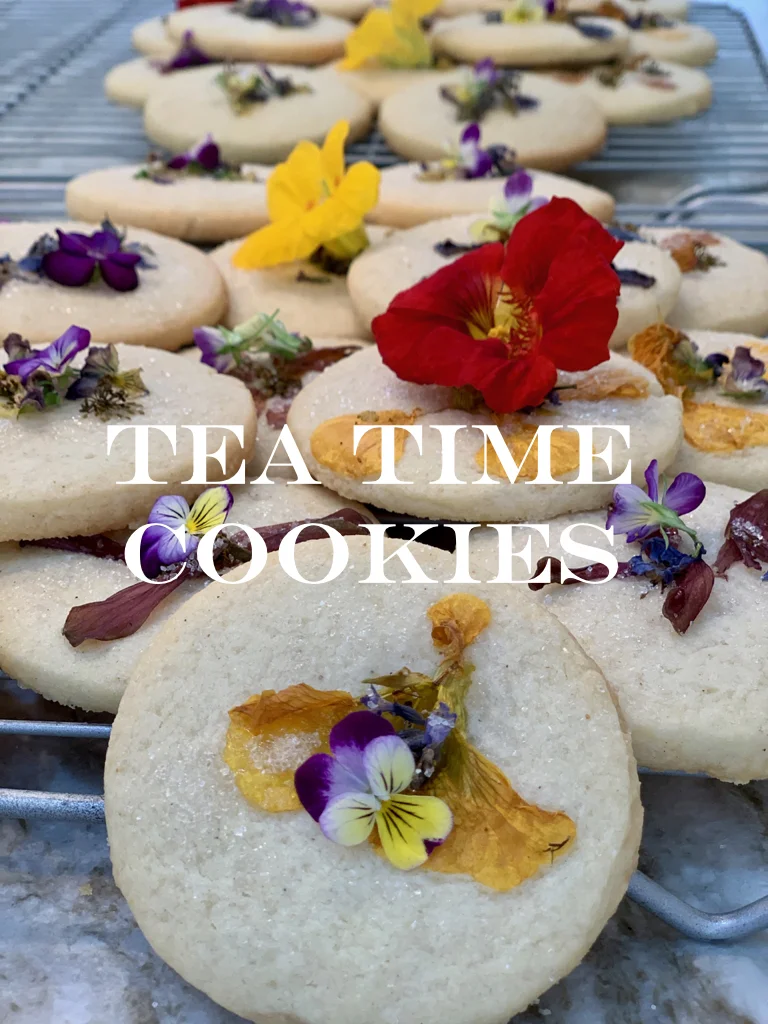
Shortbread traces its roots to 16th-century Scotland, where it evolved from something much simpler called “biscuit bread,” something my British hubby still calls his cookies.
Early versions were made from leftover bread dough that was dried out in a low oven until crisp. Over time, yeast was replaced with butter, and that single change transformed everything.
The rich butter created a tender, crumbly texture. That “short” texture (meaning crumbly, due to high fat content) is what gave shortbread its name.
The refinement of shortbread is often credited to Mary, Queen of Scots, who reigned from 1542 to 1567. She is said to have favored a version flavored with caraway seeds and cut into delicate triangular wedges. Those wedges are still known today as “petticoat tails,” possibly named for their resemblance to the shape of a flared skirt.
What Are Edible Flowers?
Edible flowers are blossoms that are safe for human consumption, often times used in place of herbs for a more subtle flavor, and are used for: Garnish, Decoration, Subtle flavor, color and visual impact. They are typically valued for their beauty first, flavor second.
Certainly, we know that flowers are nature’s perfect artwork, but how did we realize that they are likened to the herbs or leafy vegetables we eat? The flavor of each flower varies from flower to flower, as do herbs and their health benefits.
While not are edible flowers have leaves we might also want to eat, there are a few that compete in flavor to their flower, but we’ll get to that in a moment.
Our Garden To Table Fresh Flowers
There’s nothing more beautiful than a splash of color across our yard, from our own garden, or a vase on a tabletop. So why not plant a few flowers that are specifically edible?
These can be edible flowers that are easily obtained from a window box, an outdoor garden, or just a few pots indoors.
The excitement of cooking with edible flowers, as well as any other edible plant I could learn how to grow, led to the inspiration of a recent book I published, Dirt To Dish, with over 100 recipes and ideas for how to grow things to cook with year round, including microgreens indoors in the dead of winter.
Middle Eastern Cooking And Edible Rose Petals
Having grown up in a Middle Eastern influenced home, we always had desserts flavored with rosewater or orange blossom water.
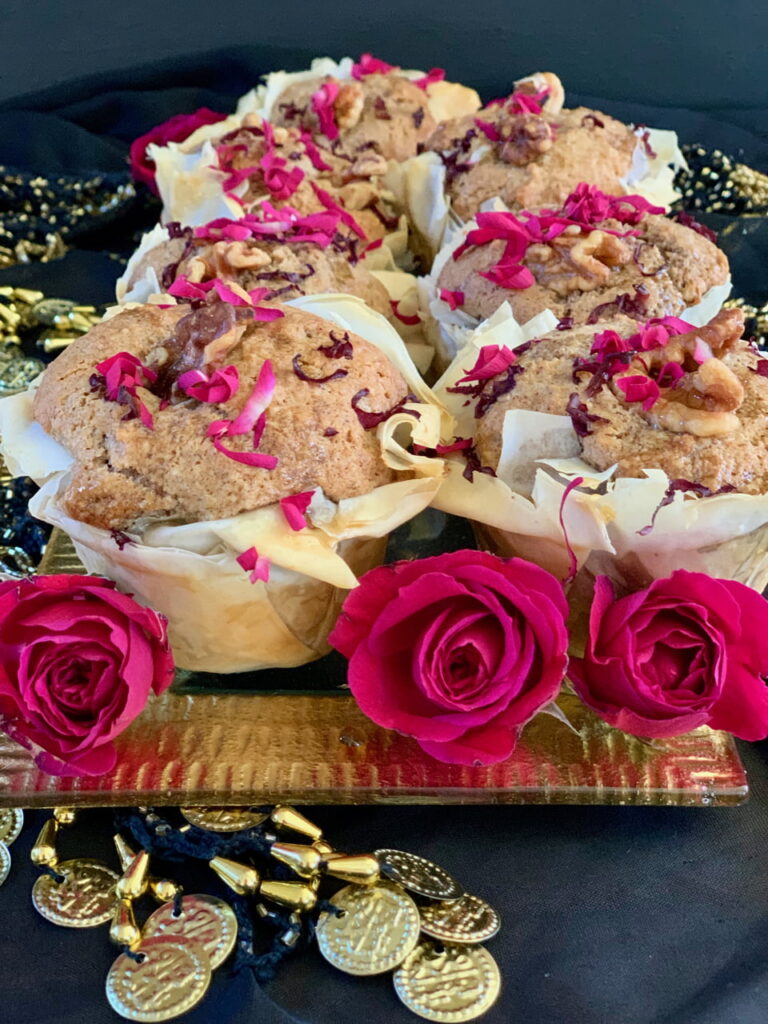
The flavor of rosewater, like the Rosewater Baklava I made on the PBS program, has a floral, yet sometimes strong flavor. And yet, the chopped rose petals are very delicate in flavor.
Like so many other edible flowers, the essence of rose petals can be extracted into a Homemade Rose Water for both cooking and beauty aids.
Growing Edible Nasturtium Flowers For A Variety Of Recipes
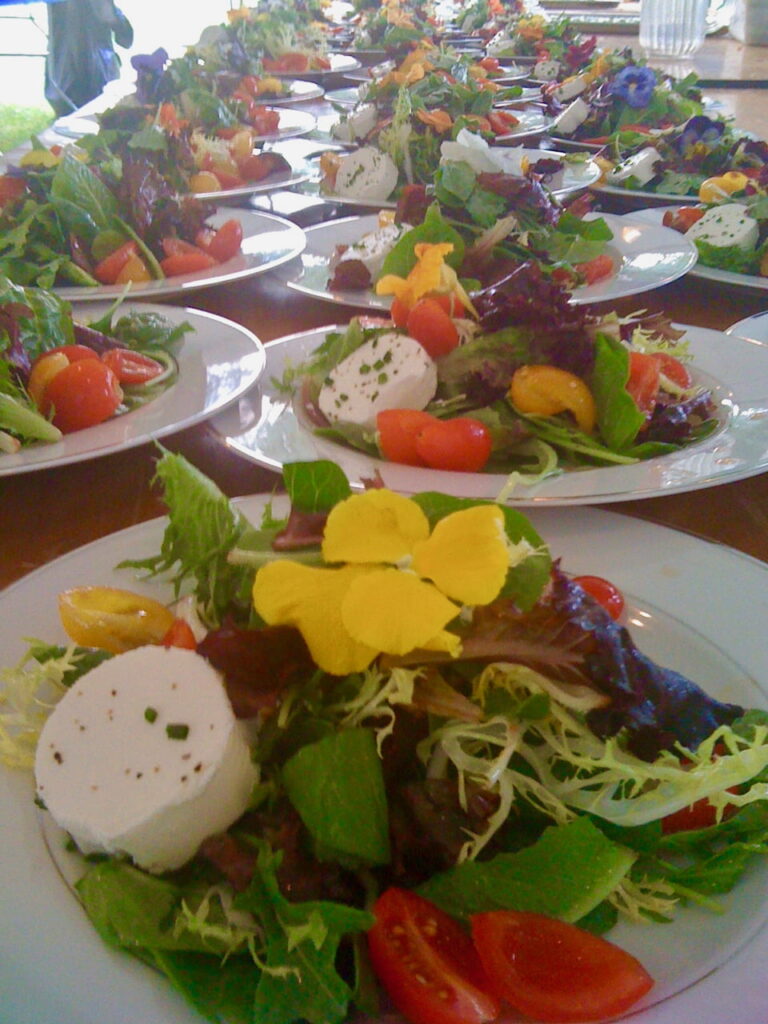
Having worked alongside my chef son, in a large family event catering company, long ago, I learned about nasturtium flowers and salads. The flavor of the edible flower petals taste a little like radishes.
Fast forward to 2023, and I now have baskets of nasturtium growing in my tiny greenhouse, because they are so easy to grow in the dead of winter, and adjust quickly to be moved outdoors when spring returns.
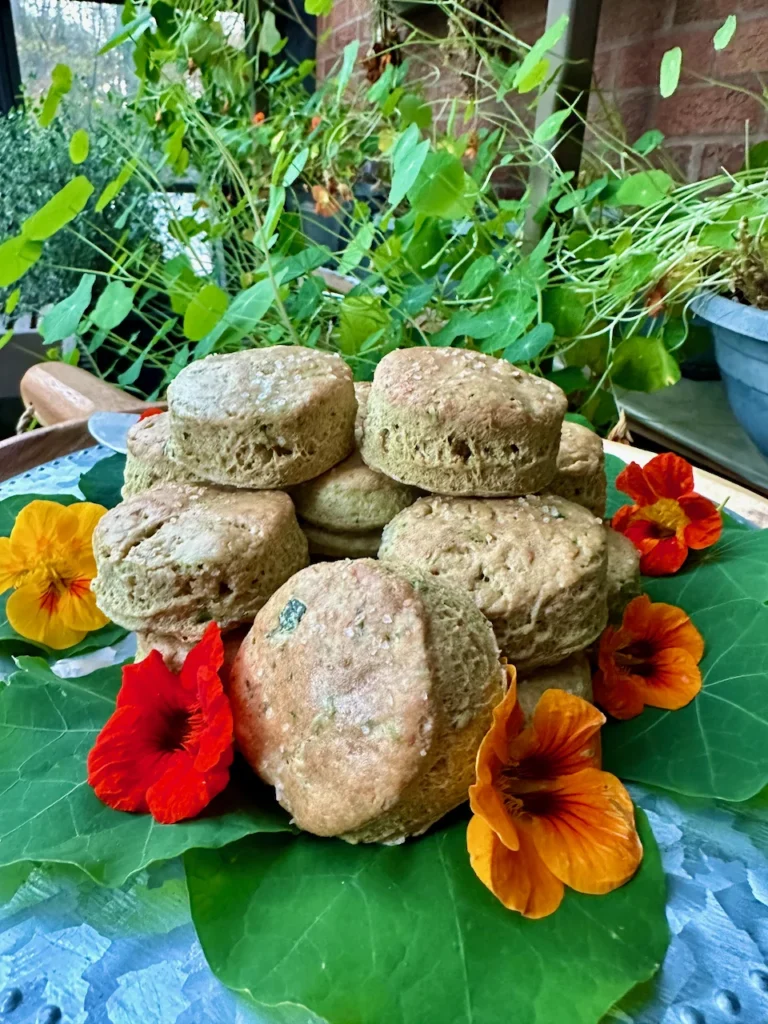
A favorite new recipe I created with both the edible flowers and leaves from the nasturtium plant, is one I don’t think you will find anywhere, because I deliciously made it up! Buttery rich, savory Nasturtium Scones with that familiar hint of a radish flavor, making it perfect for soups, salads or even small biscuit size sandwiches.
How To Use Edible Flowers Safely
Preferably you are able to grow a few flowers of your own for culinary use, in this way you know exactly how they are cared for. If not, numerous farmers markets and roadside stands throughout spring and summer are delighted to share their joy in growing edible flowers with you.
- Always choose organic, food-safe flowers, preferably grown at home, but definitely grown without pesticides.
- Gently rinse and pat dry before using.
- Use whole blossoms for a bold statement or scatter petals for a delicate, whimsical look.
- Once rinsed and dried, the petals can be ‘sugared’ to last for several weeks.
Candied Edible Flowers For Added Garnish On Cookies and Cocktails
Once you have gathered an assortment of magnificent edible flowers, you are going to want to do lots more with them! They make for both savory and sweet ingredients to adorn your recipes, however there are a few more ways to preserve their usability: Ice cubes and Candied Flower petals.
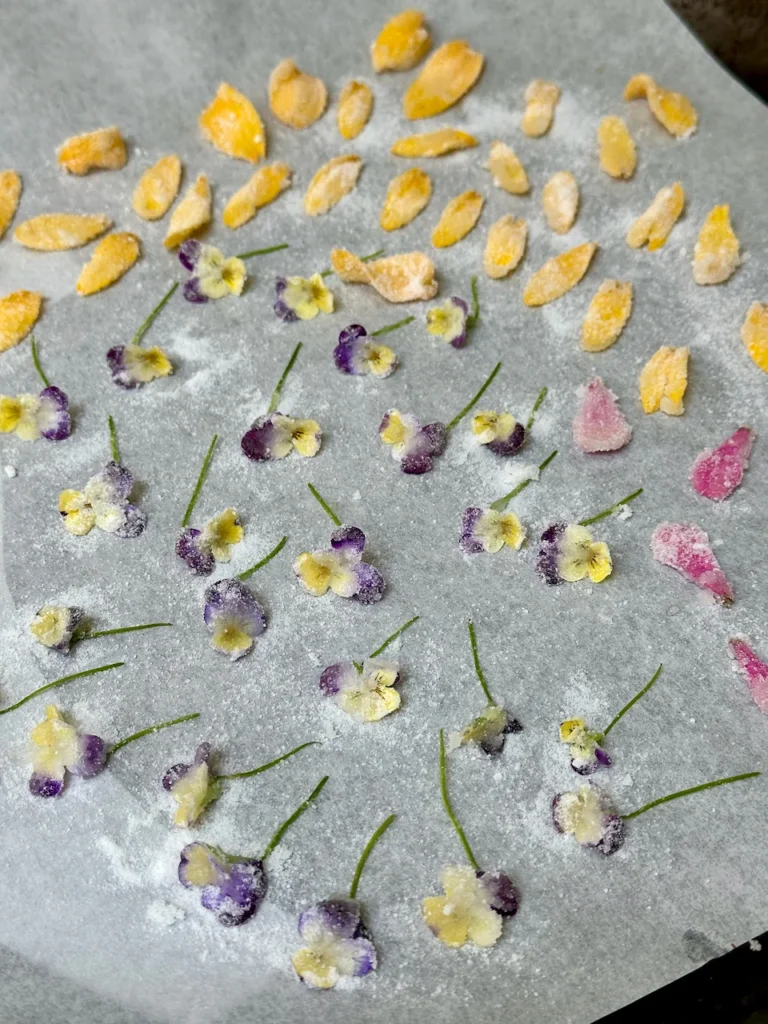
Below you will see my video for making the ice cubes, and so let me also tell you how simple it is to make edible candied flower petals. Simply whisk an egg white with 1/4 teaspoon of water until it becomes frothy.
With a small paint brush, brush the egg wash onto each petal carefully and then dip it into caster sugar (a very fine granulated sugar), set on a parchment paper lined pan, and allow to dry out over night.
They become firm and can easily be stored in an airtight container for at least a month, and will beautifully adorn so many of your baked goods.
Shortbread Dough Is Perfect For A Variety Of Floral Cookies
There are few cookie dough recipes that lend themselves to the ease of pressing a perfectly round cookie.
Contrarily though, a shortbread dough is easy to roll out, chill for a short time, and proceed with shaping and baking. Besides a shortbread cookie dough recipe, often calling for butter, it works quite well with vegan butter too.
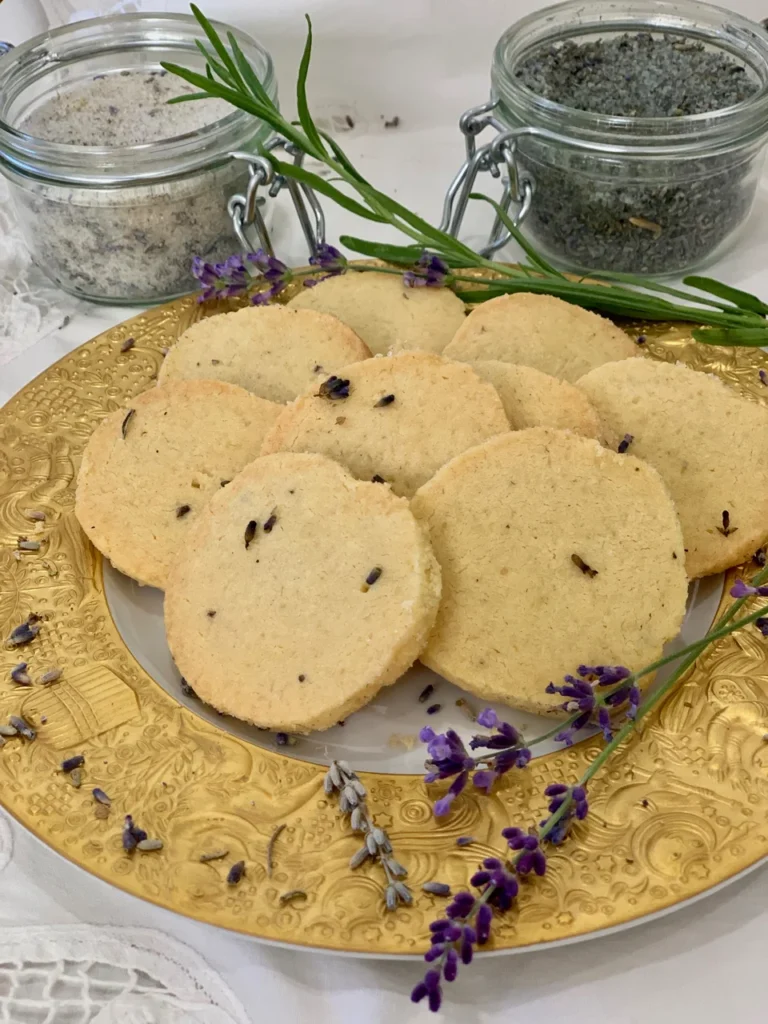
Take Lavender, an herb by tradition, treasured for its fragrant leaves. But its blossoms? Those can be pressed gently into shortbread, infused into cream, or stirred into sugar. The same plant, two identities. The leaves are strength. The flowers are grace and these Lavender Shortbread Cookies are equally hard to resist.
How To Enjoy Edible Flowers In A Cocktail
Since cherry blossoms arrive before mother’s day, I quick created a cocktail with these beautiful blossoms. The sky lights up with the pink and white clouds of these magnificent flowers after a long winter’s sleep and the fragrance invites you to want to drink them!
So, I froze the blossoms into ice cubes, and was able to enjoy the blossom cubes in my cocktail for Mother’s Day. Meanwhile, since mother’s day is also said to be the first day for outdoor planting in my region, I planted specifically for these flower cookies!
A Harvest Of Edible Flowers For Cookies
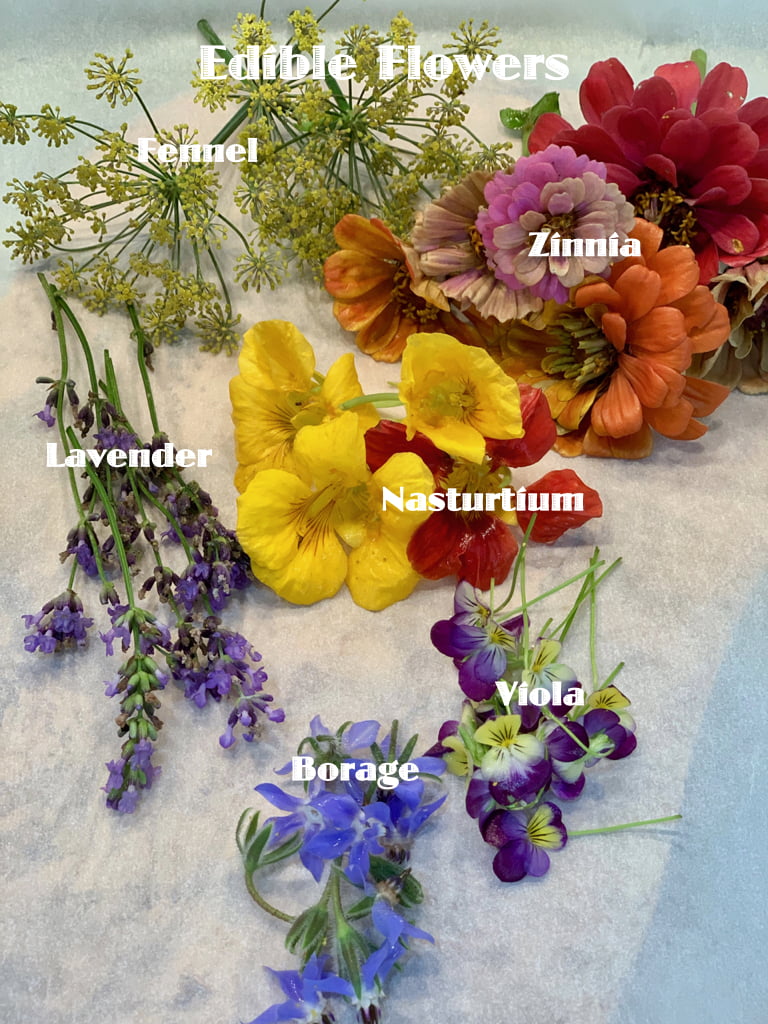
Eventually, I had handpicked edible flowers by mid-summer; Zinnias, nasturtium flower, English lavender and violas.
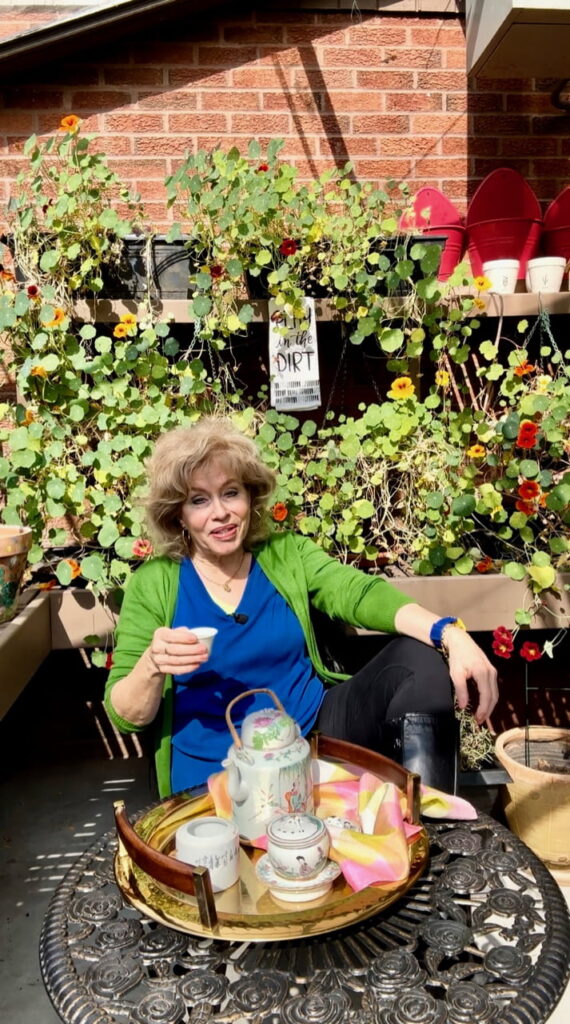
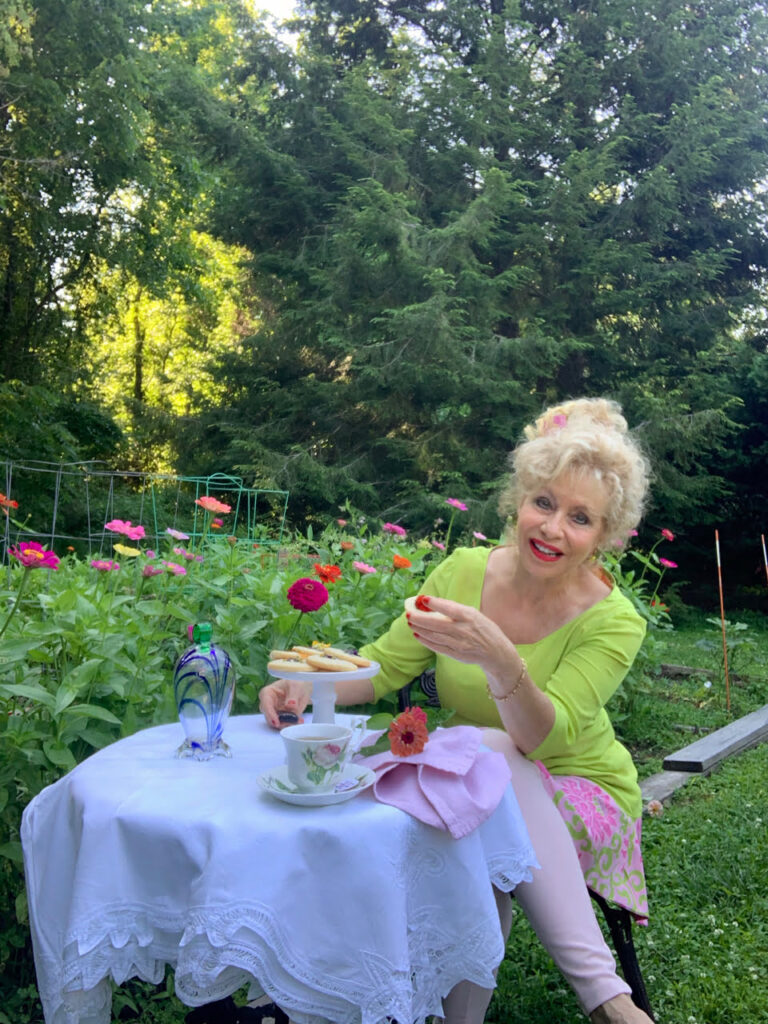
As you can see, I celebrated an afternoon tea in my garden, right in front of my zinnias, but by all means, support your local farmers markets and florists, and ask which type of flower they sell that is organic and free of pesticides, for the perfect botanical cookies with real flowers.
How To Make Edible Flower Shortbread Cookies
Once you have gathered the flowers you have chosen to use, gently wash them and blot their delicate petals on a towel, you are ready to prepare the dough.
In the bowl of a standing mixer or food processor, cream the room temperature butter and mascarpone, along with the powdered sugar. Once the remaining ingredients are whisked into the dough, press into a disc, wrap and chill for 30-minutes. This makes the dough more manageable to roll out and press. This step can also be done days in advance.
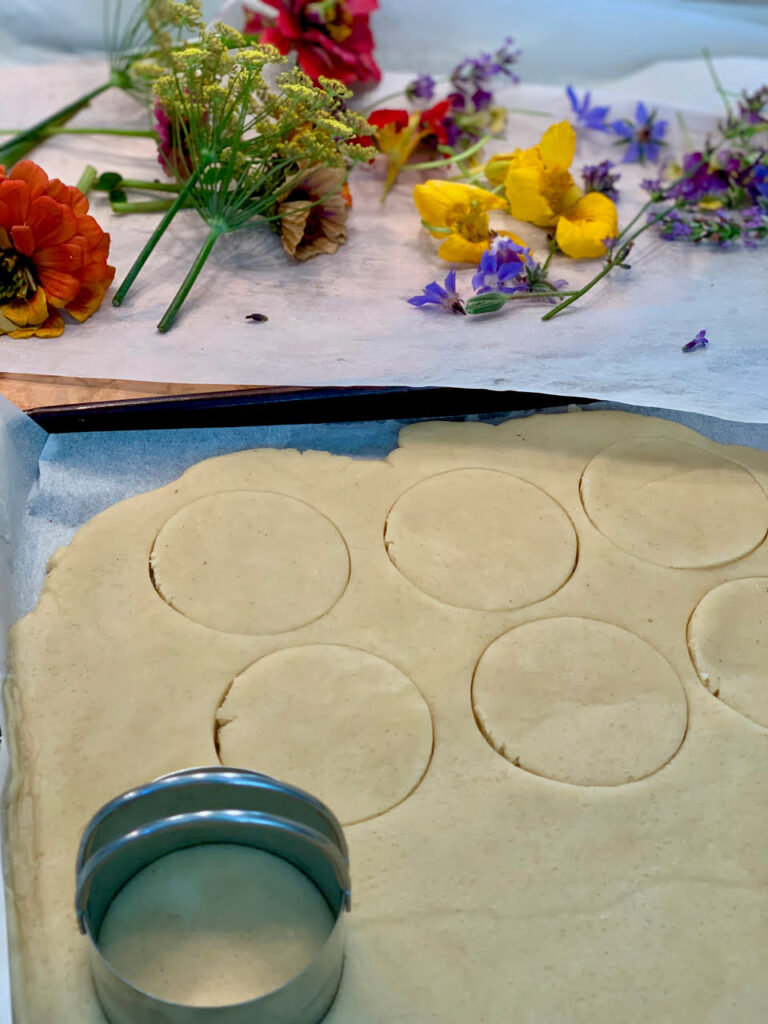
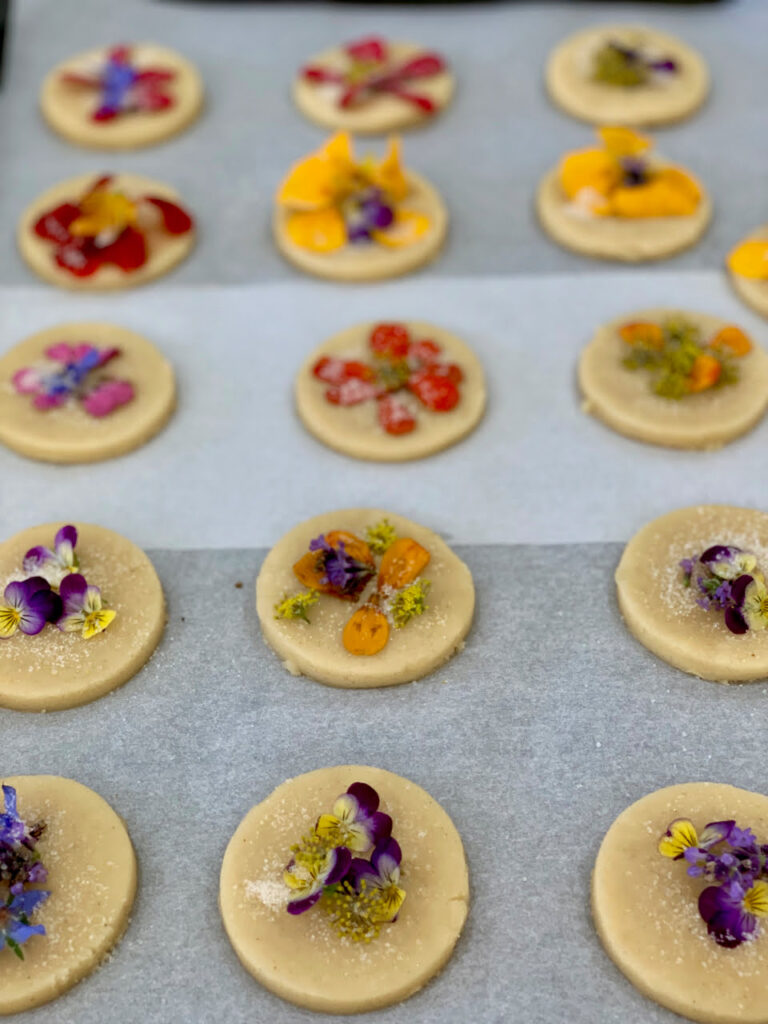
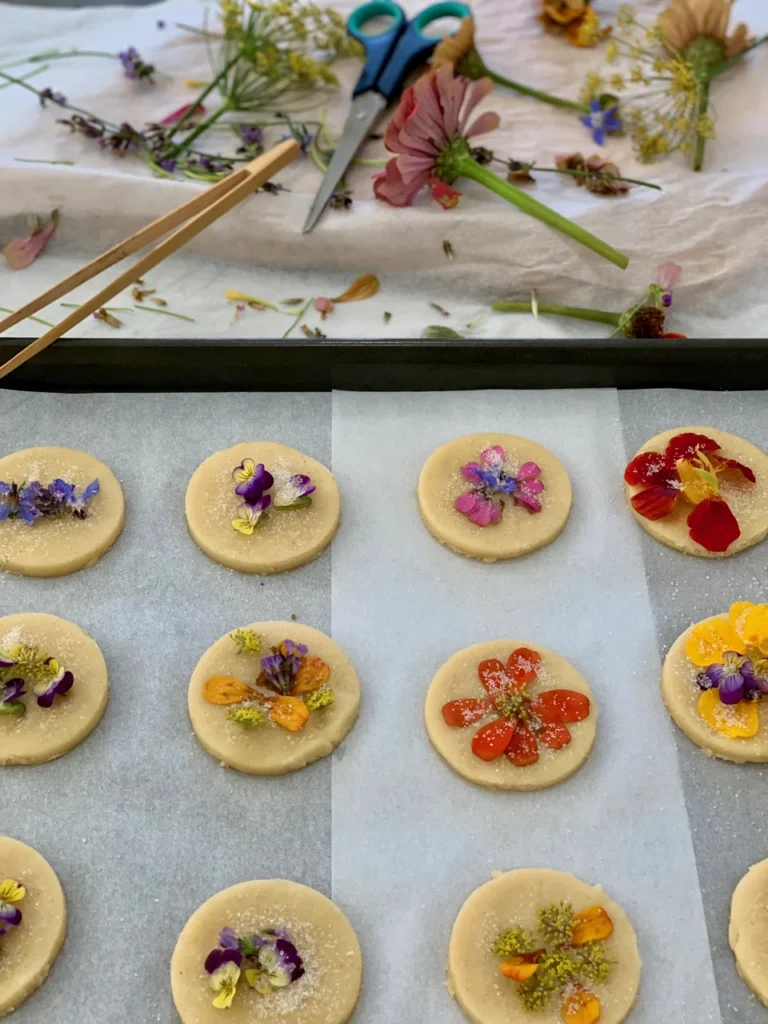
Remove the chilled dough from the refrigerator, uncover and place on a floured surface. With a rolling pin, roll the dough to about quarter of an inch thick. Press the cookies into shape with a round cookie cutter, transfer each pressed round onto a parchment paper lined baking sheet, and place the petals you have chosen, on top of the cookies.
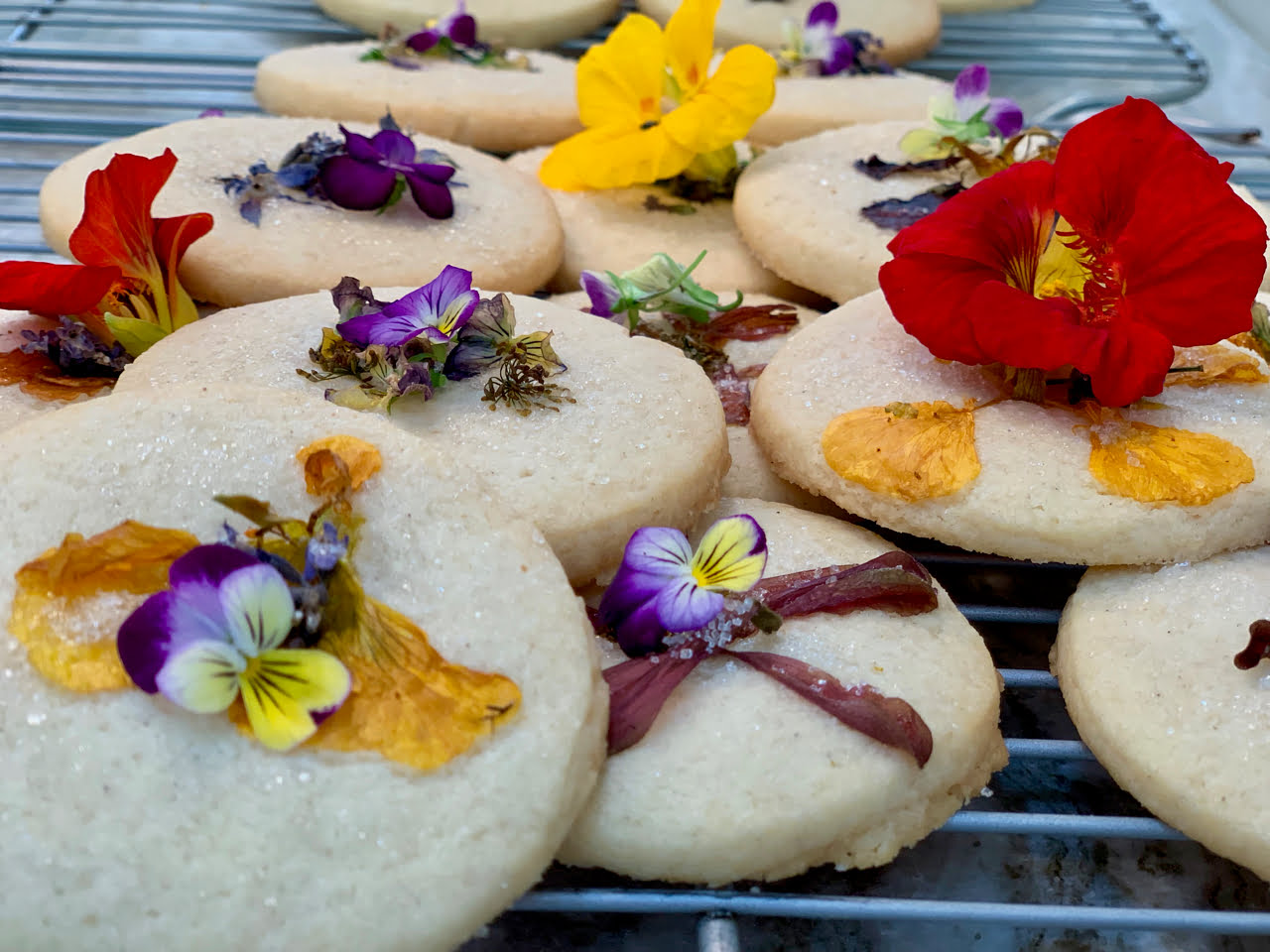
Sprinkling a little coarse sugar across the tops before baking will produce an almost candy-like finish to the flowers once they have baked, however, I also like to reserve a few fresh flower petals to place on top once they have come out of the oven, giving them the contrast of both cooked and fresh flowers.
The Tools That Bring Edible Flower Shortbread Cookies To Life
Before the butter softens and the petals are pressed dry, there is a quiet gathering of simple things. Just the essential.
- Food processor – A food processor makes short work of traditional shortbread dough. With a few pulses, butter, sugar, and flour come together into that sandy, tender mixture that defines classic shortbread. It keeps the dough cool and prevents overmixing, which is key to achieving that delicate, crumbly texture. (You can absolutely mix by hand, but the processor gives you ease and consistency.)
- Measuring tools – Accurate measuring cups and spoons matter in shortbread. This is a simple ratio recipe, butter, sugar, flour, and precision keeps the cookies tender rather than dry. Shortbread forgives little, but rewards careful hands.
- Rolling Pin – Rolling the dough to the desired thickness prepares the canvas for the shape that of your choice.
- Baking sheet pan – A sturdy baking sheet pan ensures even heat distribution. Shortbread bakes low and slow, and a quality pan helps the bottoms stay pale and buttery rather than over-browned.
- Cookie cutter – A simple round cookie cutter is traditional and beautiful for pressed edible flower cookies. The clean edges allow the blossoms to sit like tiny stained-glass windows inside each circle. Rounds feel timeless, but any shape works if it fits your story.
- Parchment paper – Parchment paper prevents sticking and allows the delicate cookies to lift cleanly once cooled. It also makes transferring and chilling the dough effortless. For floral cookies, clean release is everything.
- Dish towel – A soft dish towel is essential for gently drying lightly rinsed edible flowers. The blossoms must be completely dry before pressing into the dough, moisture can discolor petals or affect the cookie’s surface. Patience here preserves beauty.
- Cooling Rack – A quick and gentle transfer of the baked cookies to a cooling rack will stop them from continuing to cook and become too hard.
- Oven – And finally, the quiet warmth of the oven, set low, around 325°F. Shortbread should bake slowly, just until the edges whisper gold. Too much heat steals the tenderness.
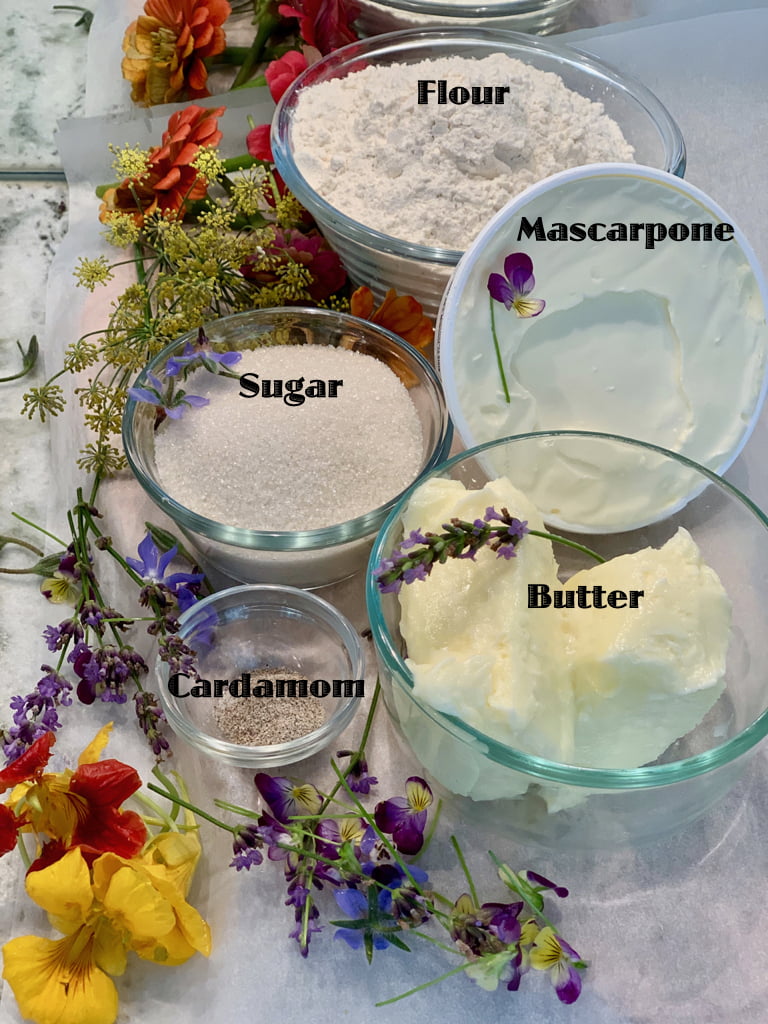
Ingredients Needed For Edible Flower Shortbread Cookies
This is a classic shortbread ratio with a floral twist.
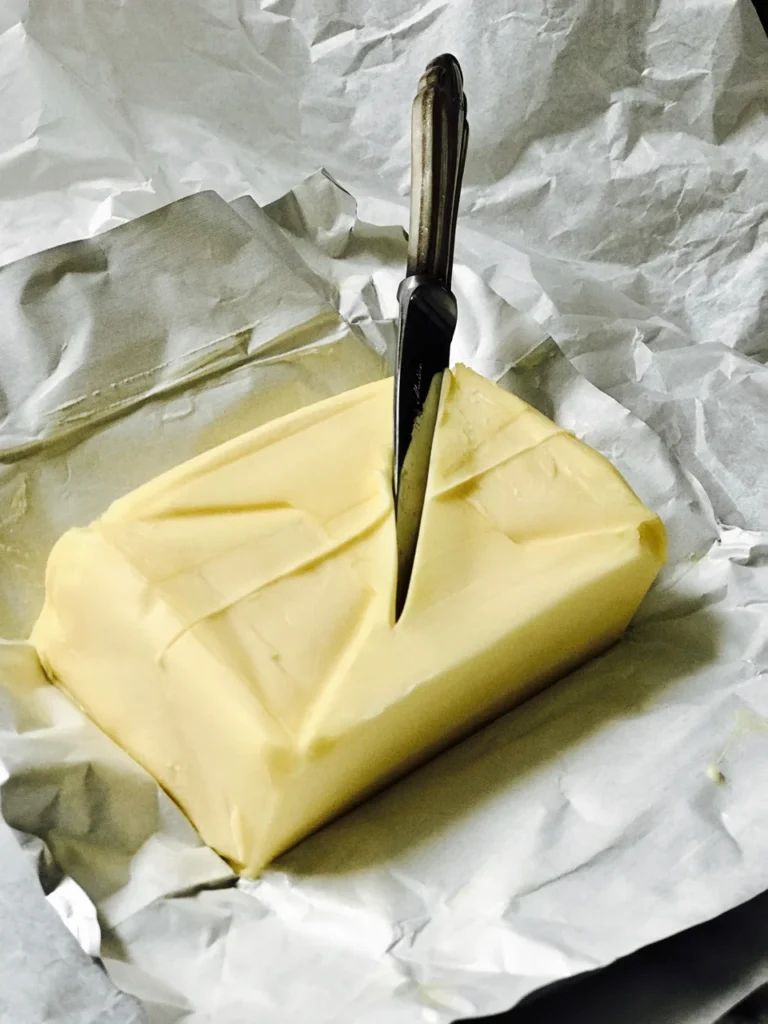
- Butter – Use unsalted, high-quality butter. European-style butter gives an even richer flavor and firmer structure for pressing flowers.
- Mascarpone – Adding mascarpone as an unconventional ingredient to a traditional shortbread cookie makes for a richer cookie dough with an added tang to the flavor.
- Powdered Sugar – Powdered sugar creates that delicate, melt-in-your mouth texture that defines authentic shortbread cookies.
- All-Purpose Flour – The backbone of traditional shortbread. Measure carefully for the perfect crumb.
- Cornstarch (optional) – A small amount makes ultra-tender shortbread cookies with a soft, refined texture.
- Salt – just a little helps to intensify flavors and make sweet, sweeter.
- Extract or a spice of choice – Vanilla or a floral essence of choice to define the taste you want from your shortbread cookies. Or simply a sprinkle of cardamom or cinnamon for a warm and deeper flavor.
- Coarse sugar (optional) – Sprinkled on top of the cookies just before baking for an added caramel finish on top the baked cookies
- Edible flowers – Fresh, dry, pesticide-free edible flowers are essential. Pat them completely dry before pressing into dough.
How To Make Edible Flower Shortbread Cookies
Equipment
- Food processor or hand mixer
- Cookie cutter
- Baking sheet
- Rolling Pin
Ingredients
- 16 oz Butter softened
- 8 oz Mascarpone softened
- 3/4 cup Powdered Sugar
- 2 tbsp Coarse sugar
- 3 1/2 cups All purpose flour more as needed
- 1/2 tsp Cornstarch
- 1 tsp Salt
- 1 tsp Extract or Spice a flavor of your choosing
- 2 tbsp Coarse sugar (optional)
- 24 Edible flowers of choice gently rinsed and dried
Instructions
- In a food processor or stand up mixer, place the softened butter, mascarpone, sugar, salt, spice or extract, and 3 cups of flour. Whisk until the dough forms a ball.
- Roll out the dough between 2 pieces of lightly floured parchment paper, to about 1/4 inch thickness. Chill for 30-minutes.
- Preheat oven to 325.
- Using a round cookie cutter, press out the cookies and place on a parchment paper lined baking sheet pan.
- Place the flowers on top. Sprinkle with coarse sugar for an added glaze on top.
- Bake 12-15 minutes, or until a pale golden brown. Place extra flowers on warm cookies. Transfer to a cooling rack to stop from cooking, and enjoy.
Video
Notes

I believe the table... that place that draws people to gather, is the most powerful symbol of togetherness. All that happens before the table is set, the planning, the gathering, the preparing, are all an intricate part of the dance that create the mood of celebration to share with friends and loved ones.