
Mediterranean Sweet Easter Bread Recipe, a rich, buttery brioche-style loaf flavored with mahleb or mastic, braided and topped with sesame seeds.
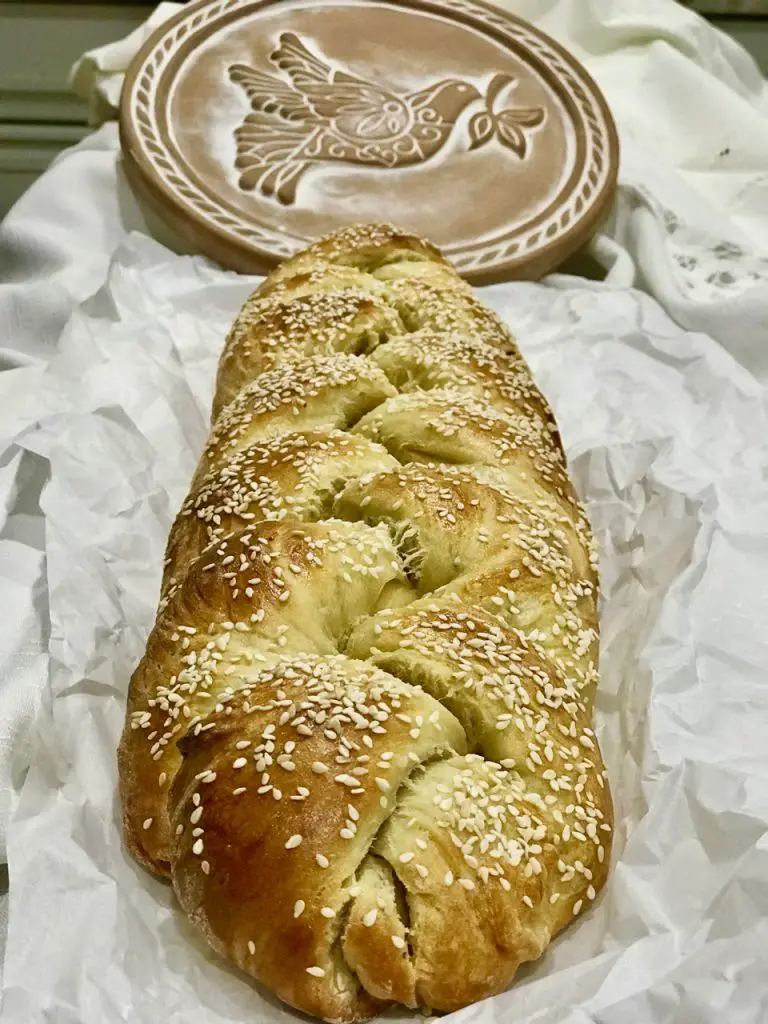
Mediterranean Sweet Easter Bread Recipe
A rich, brioche-style Easter bread scented with mahleb and bright citrus
There is something unmistakable about the aroma of Mediterranean Easter bread rising in the oven. It is not simply sweet, it is perfumed. Resinous notes of mahleb, the ground kernel of wild cherry pits so beloved in Lebanese baking, mingle with orange zest and warm yeast. In Greek kitchens, similar festive loaves are infused with mastiha or mahleb, braided by hand, and crowned with crimson-dyed eggs symbolizing renewal and rebirth.
This egg-enriched, buttery bread sits somewhere between challah and brioche, yet it has a character entirely its own. Slightly sweet, tender, and fragrant, Mediterranean Sweet Easter Bread is traditionally served on feast days, especially Easter morning, when families gather after weeks of fasting. Each slice tells a story of heritage, faith, and celebration.
Old World Easter Traditions
Since I was a young teen, I have made this bread at Easter time, each and every year. Why? Tradition!
Having grown up in the Eastern Orthodox church, traditions run deep. Consequently, food is celebrated abundantly, especially bread. This sweet bread, is a lovely way of carrying on an old world tradition.
Mediterranean Sweet Easter Bread is more than a recipe, it is a celebration baked into golden braids of buttery, egg-rich dough. Found across the sun-drenched kitchens of Greece and Lebanon, this brioche-like holiday bread carries centuries of tradition, family gatherings, and the unmistakable scent of spring.
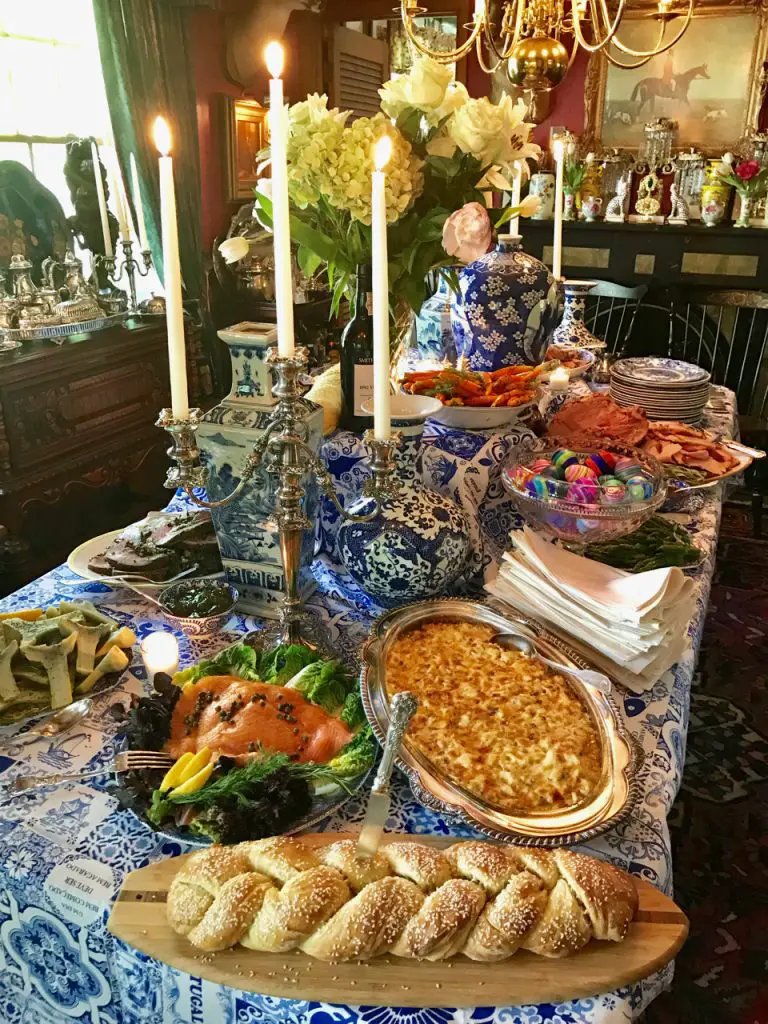
Mediterranean Easter Table
As in many parts of the Mediterranean, a style of eating, known as Meze, is spread to celebrate a variety of favorite dishes.
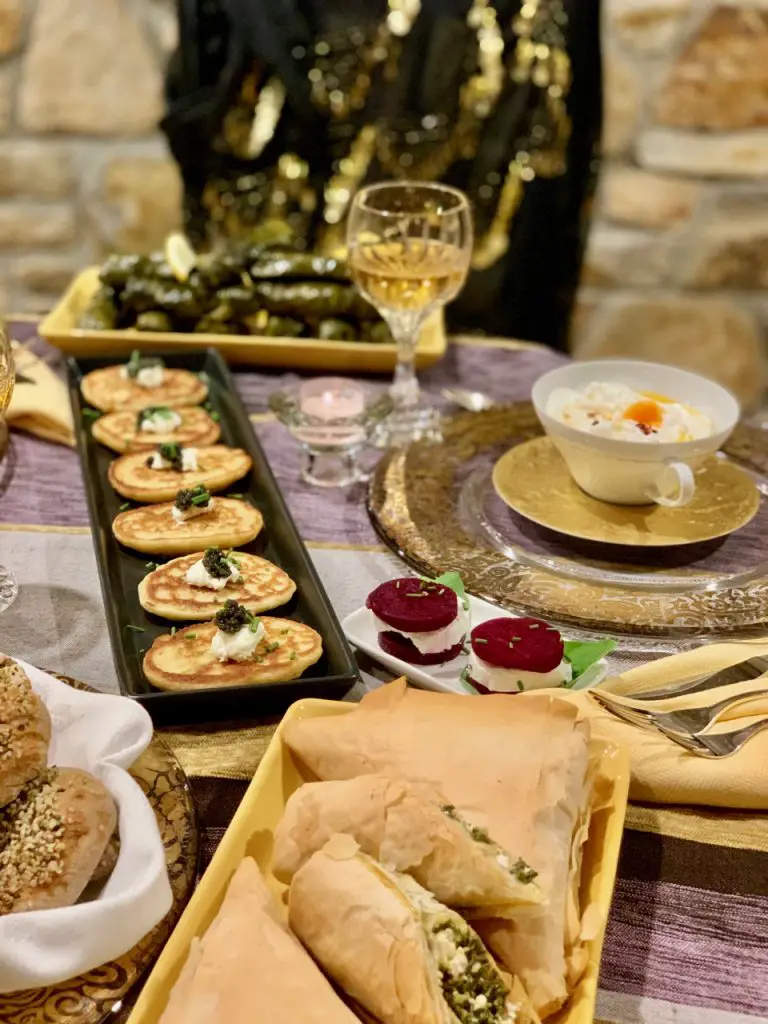
Typically, a special bread is made for the occasion, to compliment the dishes being served.
My Mediterranean sweet bread, is more rich, rather than sweet, and would compliment any Meze spread. I would venture to say, that I have as many recipes for bread as I do for a main course, probably because bread makes them special.
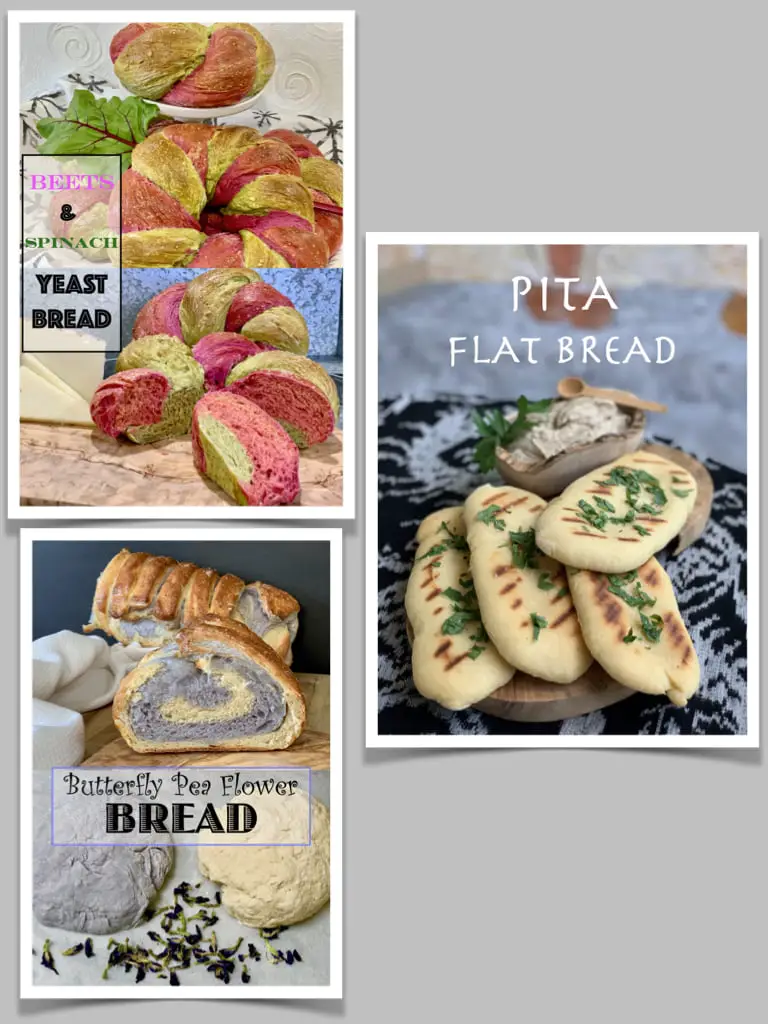
Therefore, you will find an abundance of bread recipes throughout my blog, just a few to entice you:
- Pita Bread – Traditional Easy Homemade Mediterranean Pita Bread Recipe, with fresh herbs or dried spices, are a favorite with sandwiches, dips or tapas spreads!
- Butterfly Pea Flower bread – Butterfly pea flower tea bread is a delicate tea made from butterfly pea flowers, then the tea is the base for a purple and white bread.
- Beetroot and Spinach braid bread – Beetroot spinach bread braid is a delicious, healthy, showstopper of beetroot with garlic dough and spinach with lemon dough, braided together.
Family Favorite Festive Bread Recipes
The two most exciting times of the year, in a Greek or Middle Eastern home, are Easter time and the Christmas and New Year Holidays.
What wonderful unforgettable sweet smells emanate from the kitchen, as aromatic spices are showcased in our cooking! How the family members love to linger to watch the traditional breads kneaded and shaped for the eventual baking.
Sweet Easter Bread
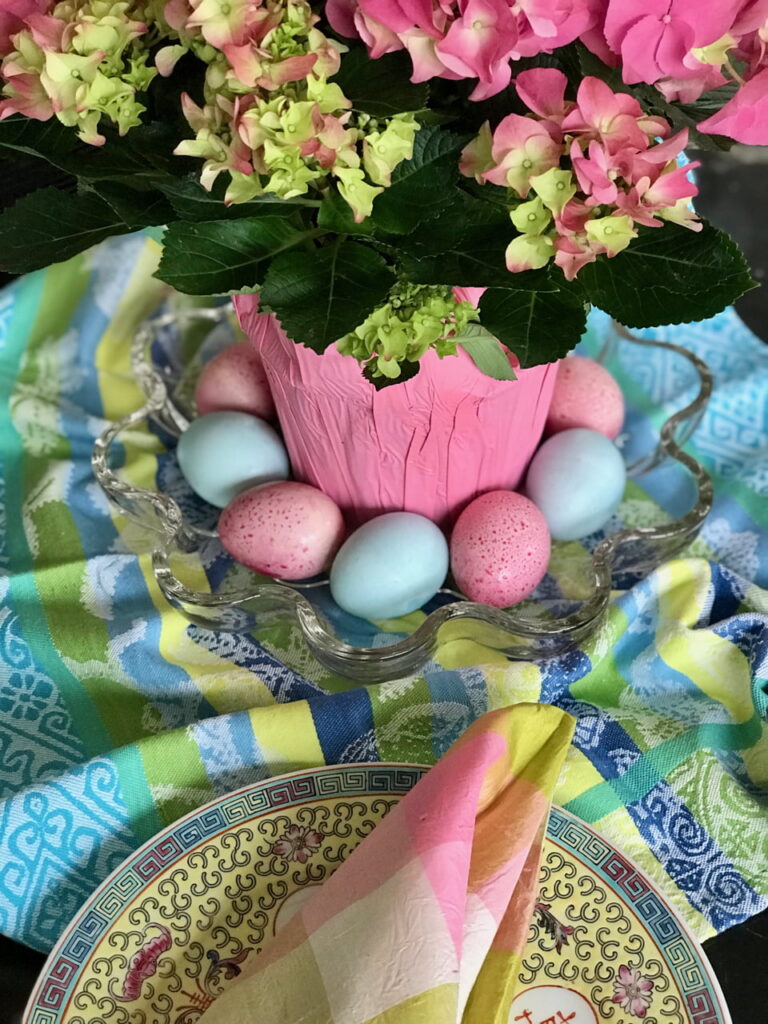
Traditionally this sweet bread recipe, is made for Easter and has red-dyed hard-boiled eggs popping through the top of the bread. Preparation of this sweet bread involves spices that have their own distinctive flavor; either mastic or mahlab.
Braided shapes often represent unity and eternity. In many homes, dyed red eggs are tucked into the dough before baking, symbolizing life and resurrection. This tradition spans generations across Mediterranean cultures.
Unfortunately, several generations later, here in America, many traditions have faded. However, you will always find this delicious bread on our family table, no matter what American dishes are being served with it.
Mediterranean Sweets
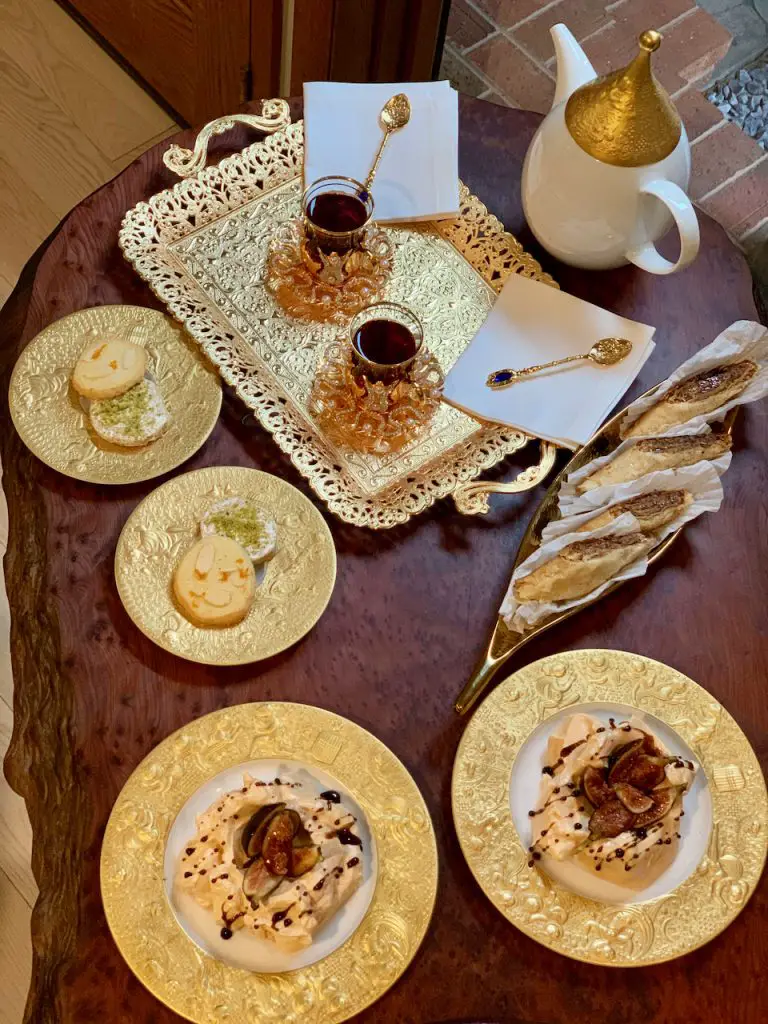
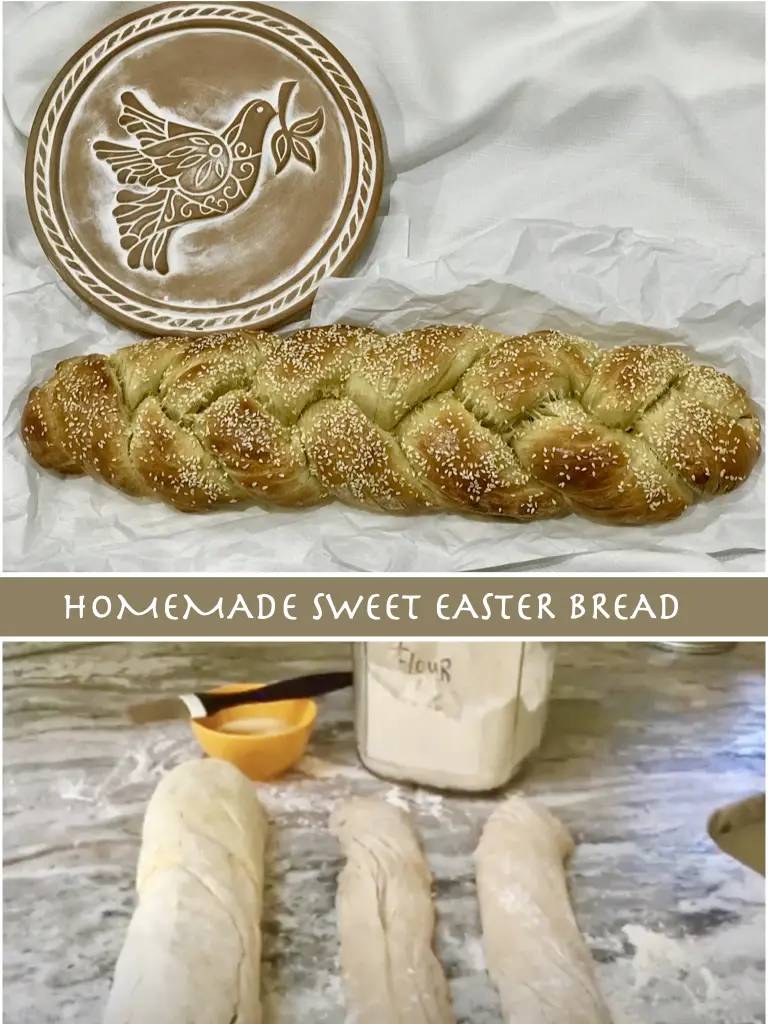
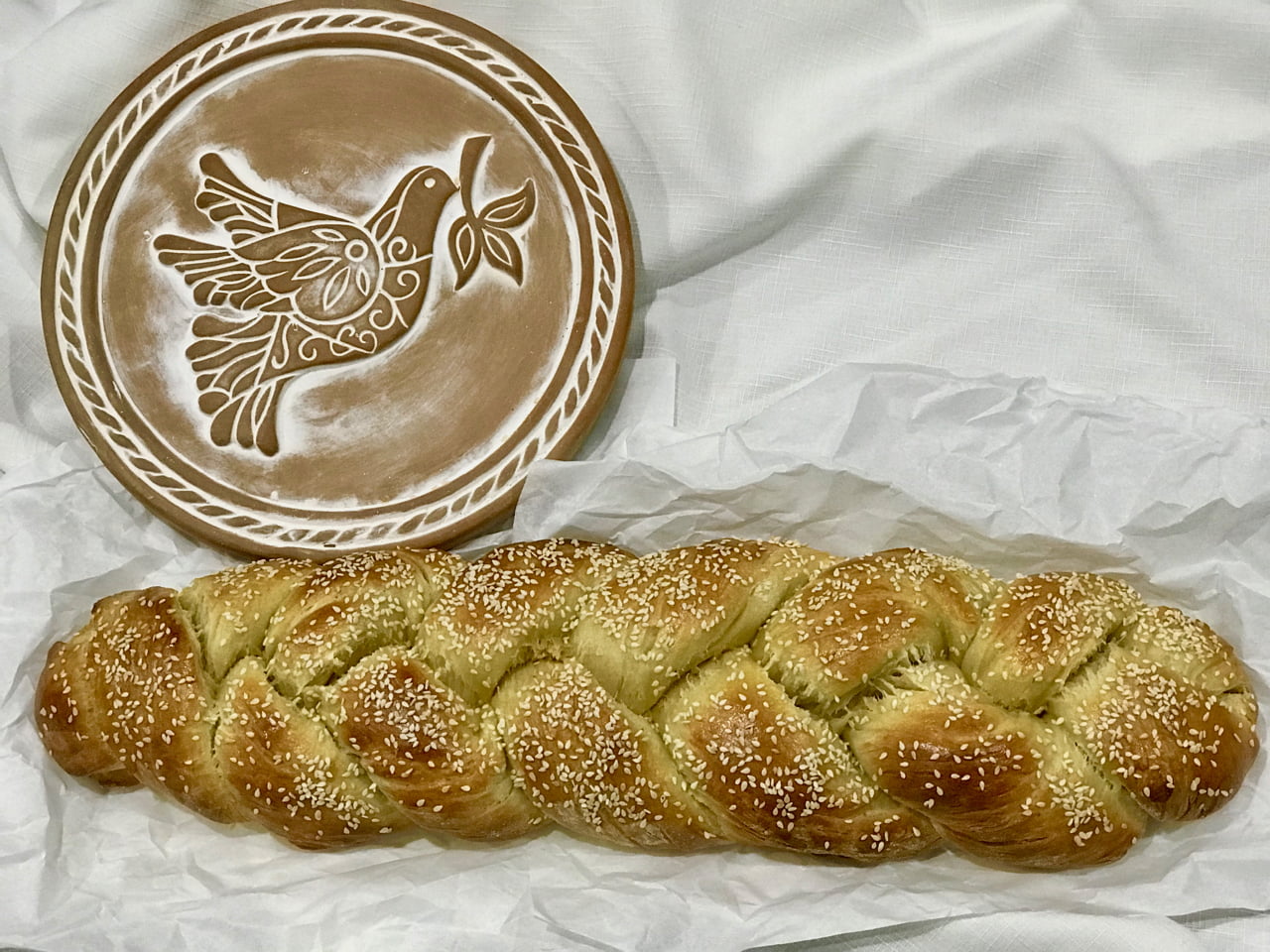
While this beautiful three-strand braid, Mediterranean sweet bread is perfect eaten alone, alongside some great cheeses, it can also be showcased on a dessert table. Although this flavor rich bread would be right at home on a dessert spread, it’s not overly sweet.
For a sweeter Mediterranean sweet treat, you might want to try:
- Baklava – traditional pastry of layered honey and nuts.
- Ouzo Cookies – shortbread-like cookies with pistachio and ouzo.
- Date Cookies – Middle Eastern cookies made with a farina dough and filled with dates.
- Tahini Custard Pie – A unique pie I created for The Great American Recipe on PBS with a sesame seed crust and tahini custard filling.
How To Make Mediterranean Sweet Bread Recipe
While the process of making this bread is no different than making most of my Homemade Breads, the ingredients are. There is no rushing a feast-day bread, this is a slow dance between flour and time.
1. Awaken the Yeast – In a small bowl, stir warm water with a spoonful of sugar and sprinkle in the yeast. Let it rest quietly for 5–10 minutes, until it blooms into a soft cloud of foam. This is the first sign of life, the promise of rise and lightness.
2. Warm the Milk and Butter – Gently warm the milk and melt the butter together until just lukewarm. Not hot, never hot, but warm enough to welcome the yeast. The scent alone begins to hint at what is to come.
3. Build the Dough – In a large bowl, whisk together flour, sugar, salt, and your chosen aromatic, mahleb or crushed mastic. This is where the Mediterranean character enters the story. The fragrance will be subtle now, but it will deepen as the dough rises and bakes.
Make a well in the center. Add the eggs, the foamy yeast mixture, and the warm milk and butter. Stir slowly at first, then more confidently, until a soft dough begins to form.
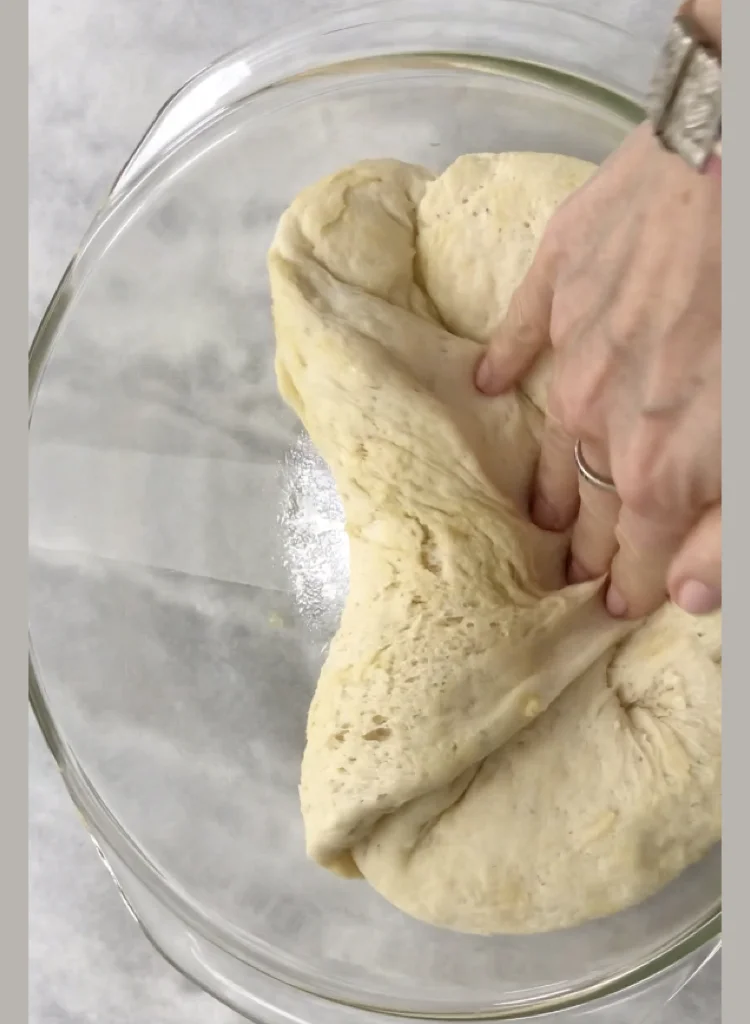
4. Knead with Intention – Turn the dough onto a lightly floured surface and knead for 8–10 minutes. Press. Fold. Turn. Repeat. The dough will move from shaggy to smooth, from sticky to supple. When it feels elastic and slightly springy beneath your hands, it is ready.
This is the part where memories are made, children watching, flour dusting the counter, hands learning the rhythm.
5. Let It Rise – Place the dough in a lightly greased bowl, cover gently, and allow it to rise in a warm place for about 1–2 hours, or until doubled in size. The dough should feel airy and alive.
This first rise develops flavor and tenderness, essential for an authentic Mediterranean Easter bread recipe.
6. Shape and Braid – Punch the dough down softly and divide it into strands. Roll each into long ropes and braid them together, simple three-strand or more elaborate if you wish. The braid symbolizes unity and eternity, a quiet nod to tradition. Another option is to shape the bread dough into individual knots for sweet bread buns.
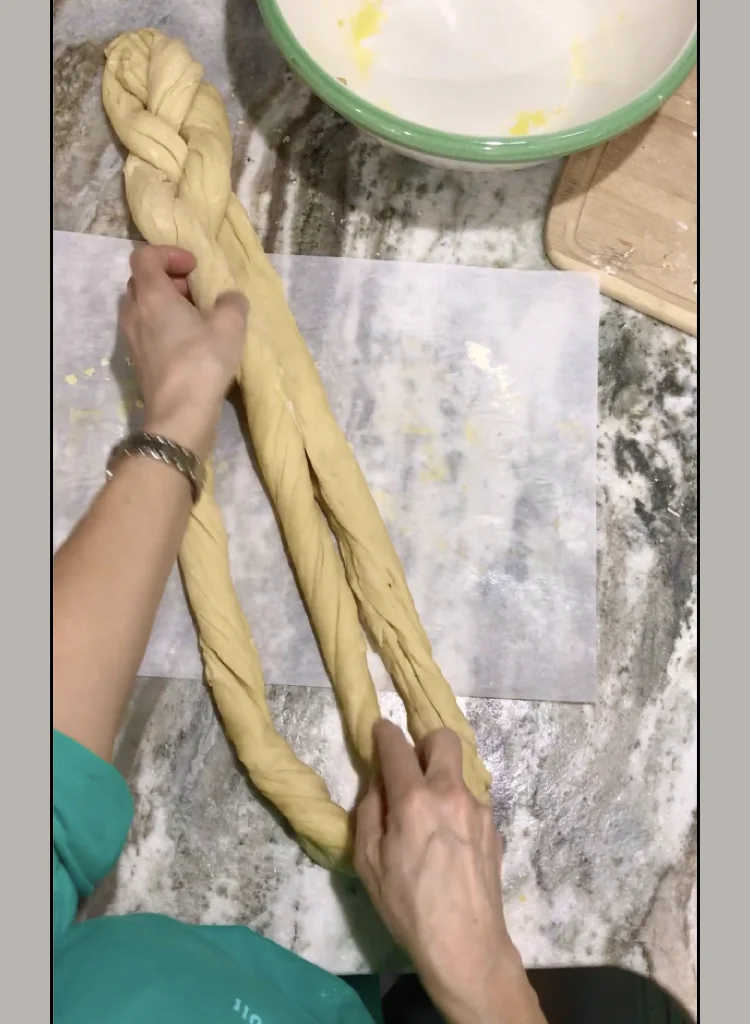
Transfer to a parchment-lined baking sheet. Cover and let rise again for 30–45 minutes, until puffy.
7. Finish with Care – Brush the loaf gently with beaten egg for that deep golden shine. Sprinkle generously with sesame seeds, adding texture and nutty warmth.
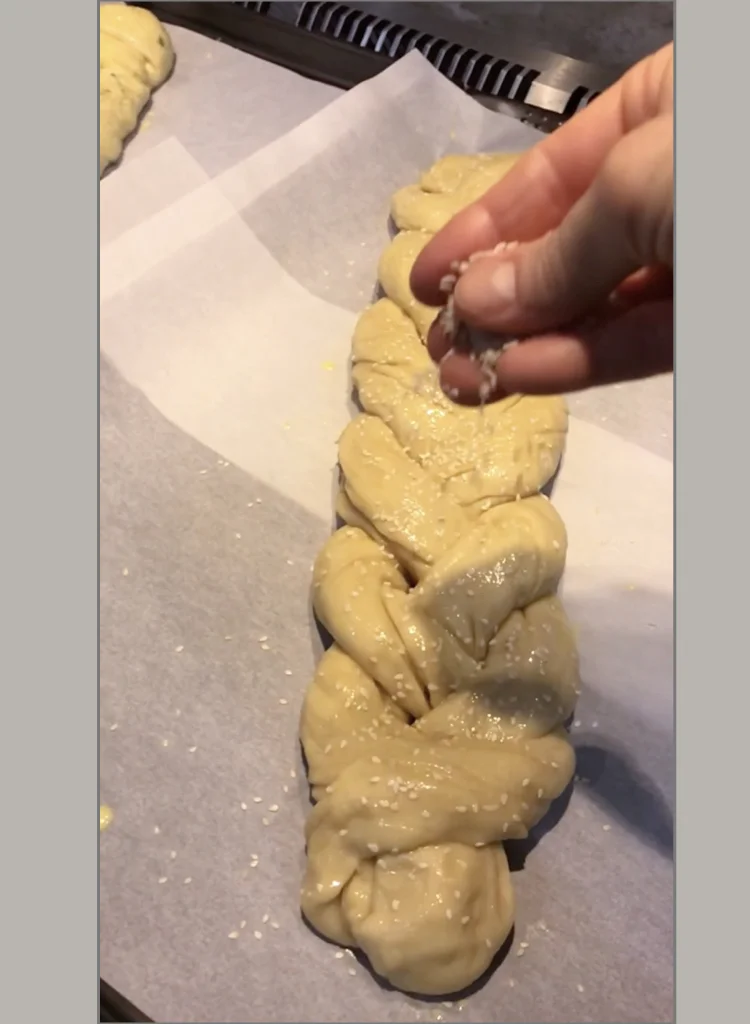
8. Bake Until Golden – Bake in a preheated 350°F (175°C) oven for 25–35 minutes, until richly golden brown and hollow-sounding when tapped underneath.
The aroma will fill the kitchen, sweet butter, warm spice, toasted sesame. This is the scent of Easter morning in Mediterranean homes.
9. Cool If You Can Wait – Allow the bread to cool before slicing, though resisting may be difficult. The crumb will be tender, lightly sweet, and delicately perfumed with mahleb or mastic.
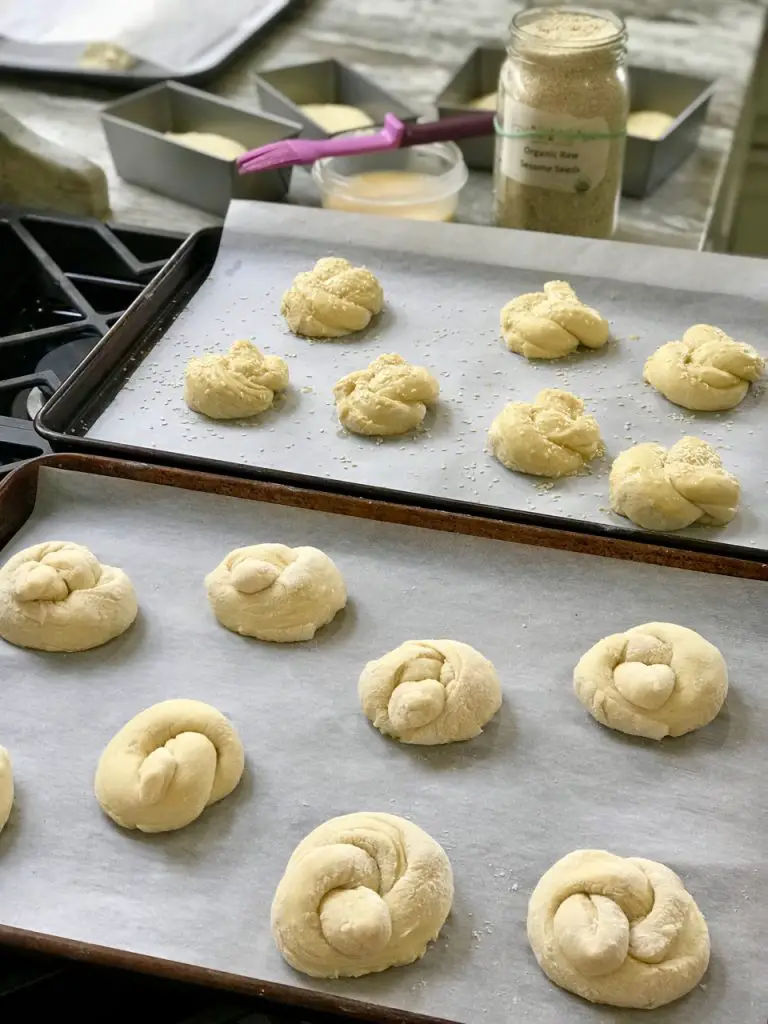
Flavors Of A Mediterranean Sweet Bread
Specifically, the flavors pertinent to any regional cooking are what set the recipes apart. The dominant flavor of Mastic, a resin from a type of pine tree in Greece, reminds me of juniper berries in taste.
While Mahlab is the secret ingredient that sets this bread apart. Made from ground cherry pits, it offers a subtle almond-cherry aroma that feels both exotic and comforting. Just a small amount perfumes the entire loaf.
Both flavors are popular among Mediterranean regions and throughout the Middle East. However, there are substitutes that can be made, using fennel seed, orange zest, or simply almond extract.
What To Serve With Mediterranean Sweet Bread
Whether this bread is being served with a sit-down dinner, a Meze spread or just a quiet slice with a cup of coffee, it will be memorable. However, I’d be delighted to suggest to you, family favorites of ours!
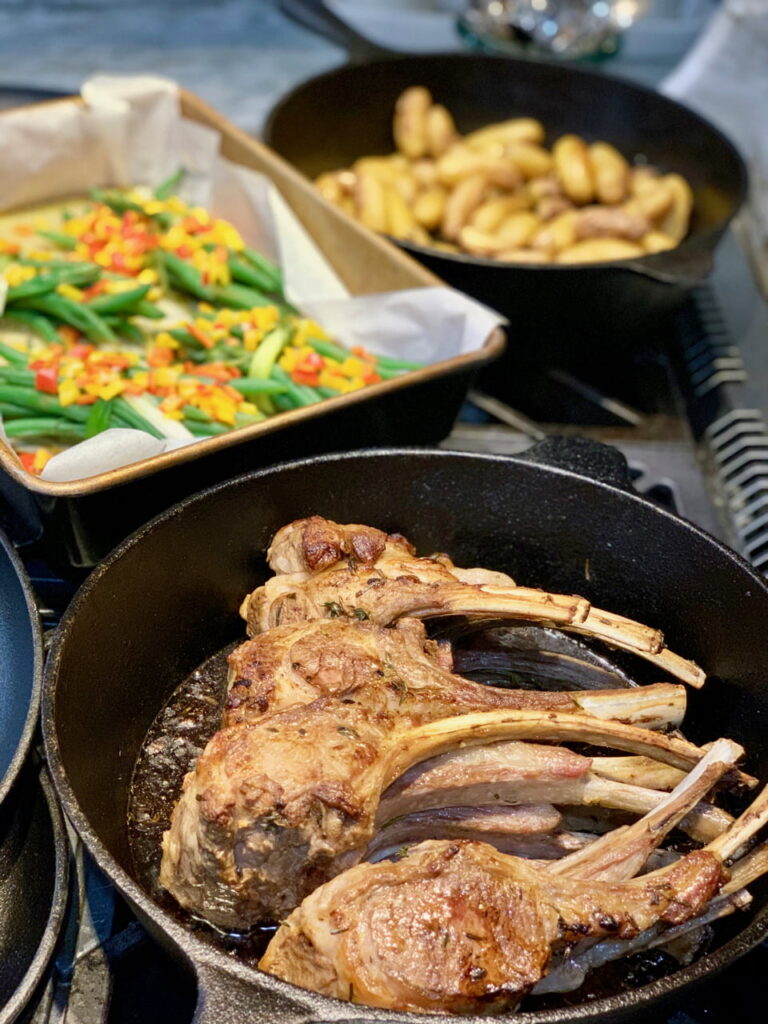
Naturally, lamb is always on the menu in a Mediterranean kitchen and that can be anything from a gorgeous rack of Lamb Chops, a winning dish I made on The Great American Recipe on PBS, to a slow cooked Tajine.
For a Meze spread, with lots of good quality cheeses and olives, there’s always a serving of hummus to spread on the bread. I’ve got several, from the traditional Hummus to a gorgeous Beetroot Hummus.
Let’s not forget how delicious a spread of smokey Baba Ganoush would taste on this rich Mediterranean sweet bread.
There’s so many more, from a Cold Greek Cucumber Soup in the summertime, that will remind you of Tzatziki, to a hearty bowl of Mediterranean Beef or lamb stew in Wine sauce.
But first… let’s make this fabulous bread!
Ingredients For Mediterranean Sweet Easter Bread
The beauty of Mediterranean Sweet Easter Bread lies in its simplicity. These are humble pantry staples, transformed through time, patience, and heritage into a fragrant, golden loaf worthy of any feast table.
- Milk – Warm milk creates a tender crumb and enriches the dough, giving this bread its soft, brioche-like texture. In many Mediterranean kitchens, whole milk is preferred for its richness, adding depth to this traditional Easter bread recipe.
- Sugar – Just enough sugar sweetens the dough without overpowering it. This is not cake, it is gently sweet, designed to complement the aromatic spices and buttery crumb that define Mediterranean holiday breads.
- Butter – Butter brings luxurious softness and that unmistakable golden flavor. Melted and folded into the dough, it creates the supple, pull-apart strands that make braided Easter bread so irresistible.
- Salt – A small but essential ingredient. Salt balances the sweetness and enhances the fragrant notes of mahleb or mastic, allowing every flavor in the loaf to shine.
- Mahlab or Mastic – Here lies the soul of the bread. Mahleb (Mahlab), ground from wild cherry kernels, deeply cherished in both Lebanon and Greece, lends a delicate almond-cherry aroma. Mastic, a resin harvested from the mastic tree, traditionally cultivated on the island of Chios, offers a piney, slightly sweet fragrance unlike anything else. Either one gives Mediterranean Sweet Easter Bread its unmistakable signature scent, the aroma that fills the kitchen and announces that a feast day has arrived.
- Eggs – Eggs enrich and strengthen the dough, creating that golden interior and tender structure. They symbolize renewal and rebirth in many Easter traditions, making them especially meaningful in this holiday bread.
- Yeast – Active yeast gives life to the dough, transforming simple flour and liquid into a beautifully risen loaf. The slow rise allows the aromatic flavors to develop fully.
- Water – Warm water activates the yeast and helps bring the dough together into a soft, kneadable consistency.
- Flour – All-purpose flour forms the foundation of the bread. Kneaded until smooth and elastic, it creates the structure needed for braiding and shaping this traditional Mediterranean sweet bread.
- Sesame Seeds – A generous sprinkle of sesame seeds on top adds nutty warmth and subtle crunch. In many Mediterranean cultures, sesame symbolizes abundance and blessing, a fitting finish for a celebratory loaf.
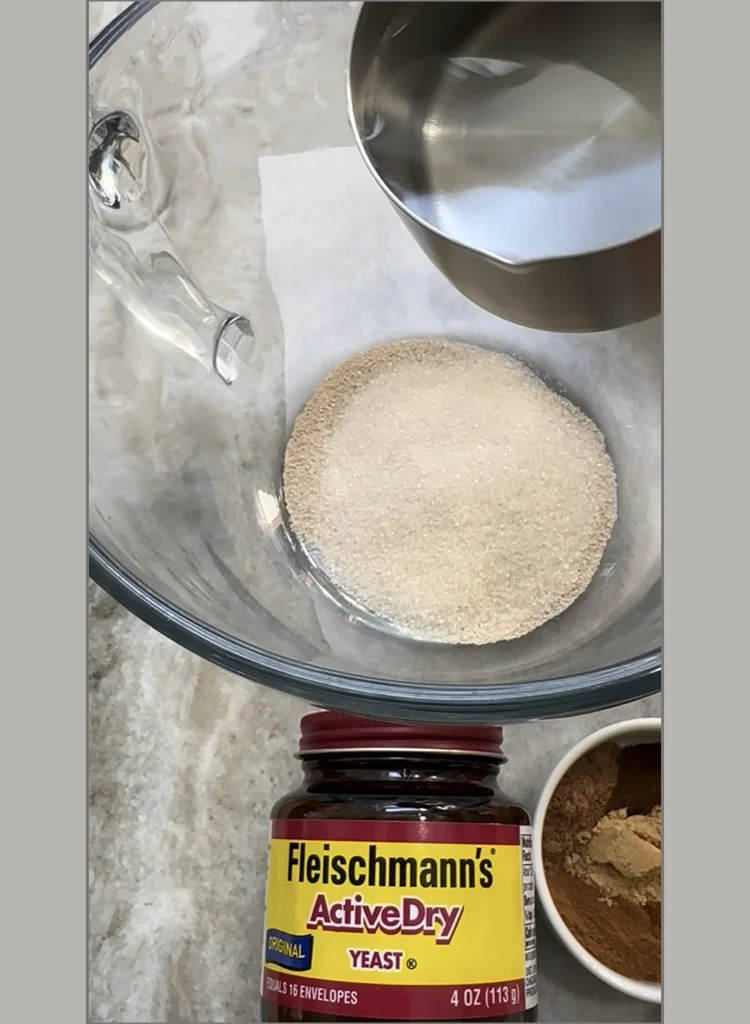
Equipment Needed To Make Sweet Easter Bread
Making traditional Mediterranean Sweet Easter Bread does not require anything elaborate, just a few well-loved kitchen tools and a little patience.
- Large Mixing Bowl or Stand Mixer with Dough Attachment – A large mixing bowl gives you room to stir and knead by hand, connecting you to the rhythm of the dough. If you prefer ease and efficiency, a stand mixer fitted with a dough hook will knead the enriched brioche-style dough beautifully until smooth and elastic.
- Wooden Spoon – Perfect for combining the early ingredients before the dough comes together. There’s something timeless about stirring flour and milk with a wooden spoon, simple and sturdy.
- Kitchen Towel – A clean kitchen towel gently draped over the bowl creates a warm resting place for the dough to rise. This quiet rising time is essential for developing flavor and structure in Mediterranean Easter bread.
- Baking Sheet – A sturdy baking sheet supports the braided loaf as it bakes to golden perfection. Choose one large enough to allow for expansion during the final rise.
- Parchment Paper – Prevents sticking and ensures easy transfer from pan to cooling rack. It also keeps the beautifully braided shape intact.
- Measuring Tools – Accurate measuring cups and spoons help balance the enriched dough, especially important when working with yeast and aromatic spices like mahleb or mastic.
- Mortar and Pestle or Spice Grinder – If using whole mastic resin or fresh mahleb seeds, a mortar and pestle or spice grinder is essential. Grinding releases their fragrant oils, the very soul of this traditional Mediterranean holiday bread.
- Small Saucepan – Used to gently warm milk and melt butter together. Slow, careful warming protects the yeast and keeps the dough tender.
- Stovetop – For warming milk and activating flavors, a simple but necessary step in developing the bread’s richness.
- Oven – The final transformation happens here. A steady, preheated oven turns braided dough into a deeply golden, aromatic Easter centerpiece.
A Bread That Connects Generations
What makes this bread truly special is not only its ingredients but the ritual of making it. The kneading. The braiding. The waiting for the dough to rise. Children watching. Grandmothers guiding. The scent filling the home.
Mediterranean Sweet Easter Bread is not just baked, it is remembered.
Mediterranean Sweet Easter Bread Recipe
Equipment
- Large mixing bowl clay works best
- Baking sheet pan
Ingredients
- 1 cup Milk
- 3/4 cup Sugar reserve 1 tsp
- 8 oz Melted Butter
- 1 tbsp Salt
- 1/2 tsp Mahlab or Mastic, crushed or fennel seeds
- 3 Eggs lightly beaten
- 1 tbsp Active Yeast
- 1/2 cup Lukewarm Water
- 8 cups Flour more as needed
- 1 tbsp Sesame Seeds
- 1 Egg yolk for egg wash
- 1 tbsp Milk for egg wash
Instructions
- In a small saucepan heat the milk until bubbles form; remove from heat. Whisk in sugar, melted butter, salt, Mastic or Mahlab. Set aside.
- In a small bowl, mix warm water, yeast and a pinch of sugar. Let set 10 minutes.
- In a very large bowl, or bowl of a stand mixer fitted with a dough hook attachment, pour in the milk mixture, the yeast mixture and whisk in the beaten eggs. Begin to whisk in the flour, one cup at a time. When the mixture begins to thicken, continue to add flour, little at a time until it is no longer sticky. If working the dough by hand, transfer the dough from the bowl onto a floured surface and continue to press and fold flour into the dough until it is no longer sticky.
- Transfer to a large, greased bowl, cover with a kitchen towel and place dough in a warm spot for the first rise. This dough is dense, so it might take 2 hours to rise.
- Once the dough doubles in size, transfer to a lightly floured surface, cut into three equal parts, and prepare a three-strand braid. Place dough on one, or two parchment paper lined baking sheets, cover with a kitchen towel for the second rise.
- Preheat oven to 400 degrees F
- Just before baking, the dough is brushed with an egg wash, which creates a beautiful golden brown finish and bakes to perfection. Additional options, such as sesame seeds, poppy seeds, or even the dyed eggs can be placed on top before it goes into the oven.
- Bake for 18-25 minutes or until tops are golden brown.
Video
Notes
- Keeps for a week and is fabulous for breakfast, lunch with cheese and fruit, or your favorite lamb dinner!

I believe the table... that place that draws people to gather, is the most powerful symbol of togetherness. All that happens before the table is set, the planning, the gathering, the preparing, are all an intricate part of the dance that create the mood of celebration to share with friends and loved ones.
A favorite bread❣️
A tasty, distinctly flavored bread. I made it. Robin’s right – it goes well with coffee
This sits at the bread/cake crossroads. It stands alone!
Home baked bread is an art, but its also straightforward and really doesn’t take long to do. Bravo Robin for the encouragement!