
Tagine Mediterranean Stew is slow cooked in an ancient Tagine clay vessel with lamb, vegetables, exotic spices and apricots.
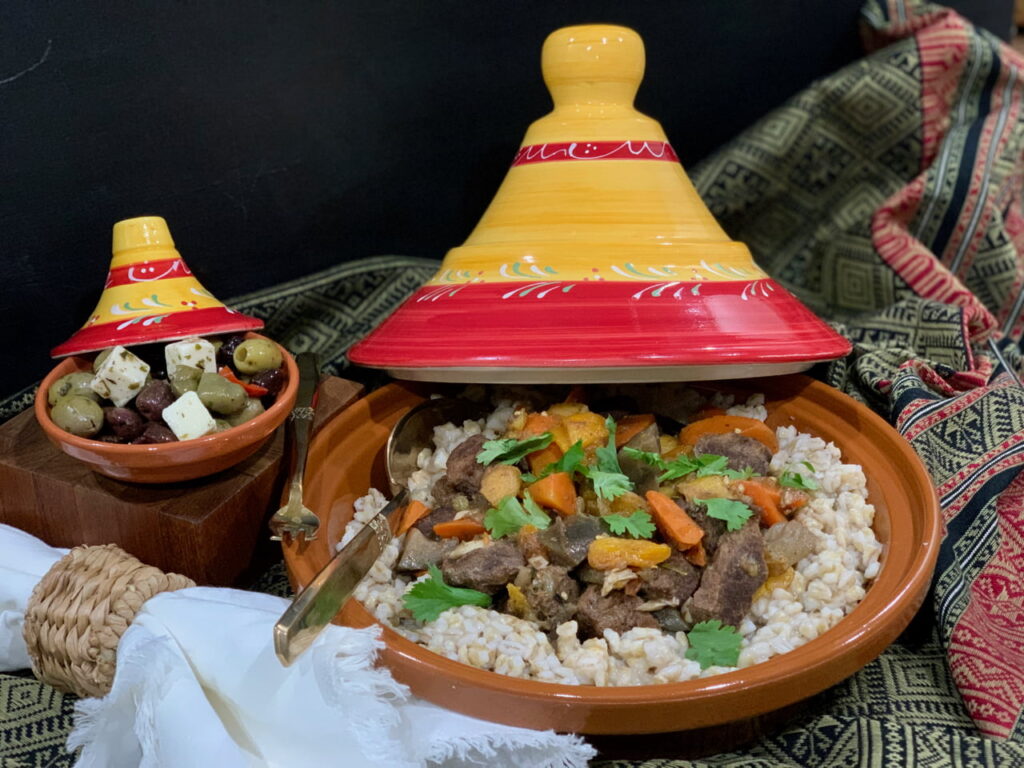
Traditionally simmered low and slow in the Tagine clay pot to intensify its aromatic flavors; an ancient technique not easily duplicated in modern cooking.
What Is A Tagine?
A Mediterranean lamb tagine is more than a meal, it’s a way of cooking that honors patience, generosity, and the alchemy of time. Originating in North Africa and traveling across the Mediterranean through trade, migration, and shared tables, the tajine reflects a landscape shaped by spice routes, olive groves, and sun-dried fruit.
Traditionally cooked in a clay vessel of the same name, the tagine was designed for slow, gentle heat, perfect for transforming tougher cuts of lamb into meltingly tender bites. As the dish simmers, steam rises and falls back into the pot, carrying with it layers of spice, sweetness, and savory depth. Nothing is rushed, everything is allowed to become itself.
Mediterranean Lamb Stew
What makes a lamb tagine so irresistible is its balance. Warm spices mingle with fruit and honey, acidity cuts through richness, and a whisper of heat lingers on the palate. Lamb, so well suited to these flavors, absorbs the spice-laced sauce while lending its own richness in return. Vegetables soften, dried apricots plump, and the sauce becomes something you’ll want to chase with bread long after the last bite of meat is gone.
Across the Mediterranean, variations of tagine reflect local ingredients and personal hands, sometimes fragrant with herbs, sometimes bright with citrus, sometimes deeply sweet and spiced. Yet at its heart, every tagine is an invitation to slow down, gather close, and let the food speak.
Tagine – The Ancient One Pot Cooking
Let’s first describe the Tagine pot (also spelled tajine); think of a centuries-old crock pot. The ancient, hand made clay, earthen or ceramic baking dishes with a cone shaped lid, called a conical lid which traps steam during cooking, keeping the liquid inside the clay pot.
This type of ancient cooking was designed to keep moisture in poor quality cuts of meat (think, goat or mutton), while creating a concentrated flavor profile from the other ingredients.
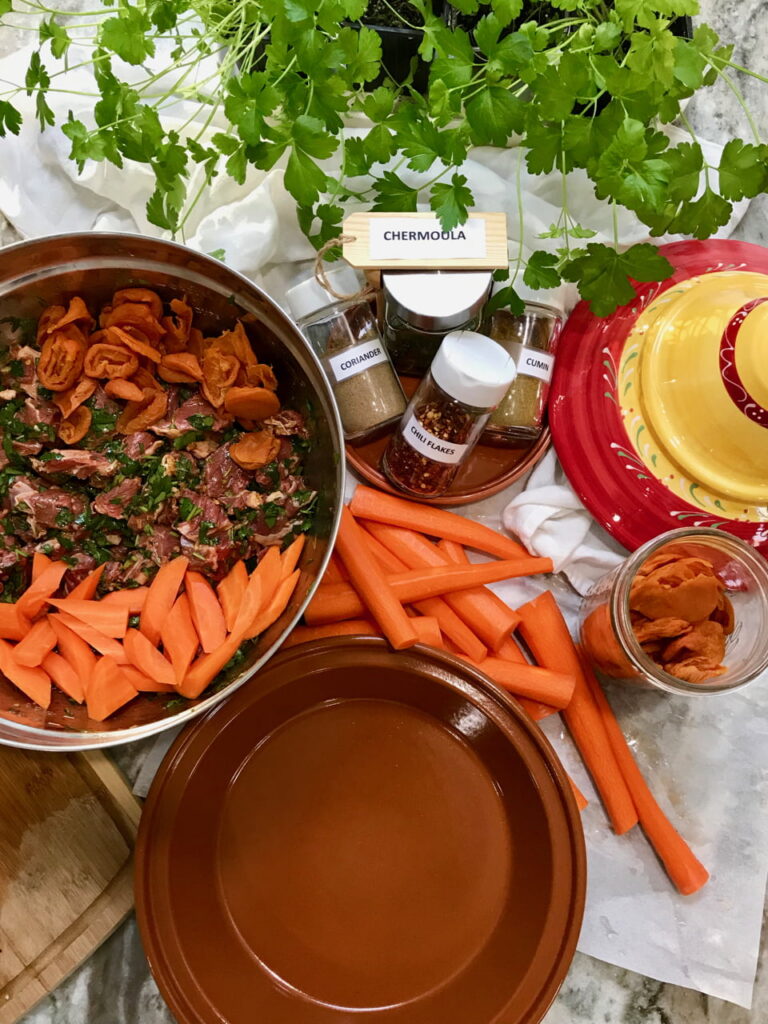
It was once, only done over hot coals or open wood fires. No, we are not going to be preparing this spectacular dish over open fire, though we could.
Slow cooking on the stove top is the way this lamb Tagine stew will be cooked, with much the same modern-day concept as a crockpot.
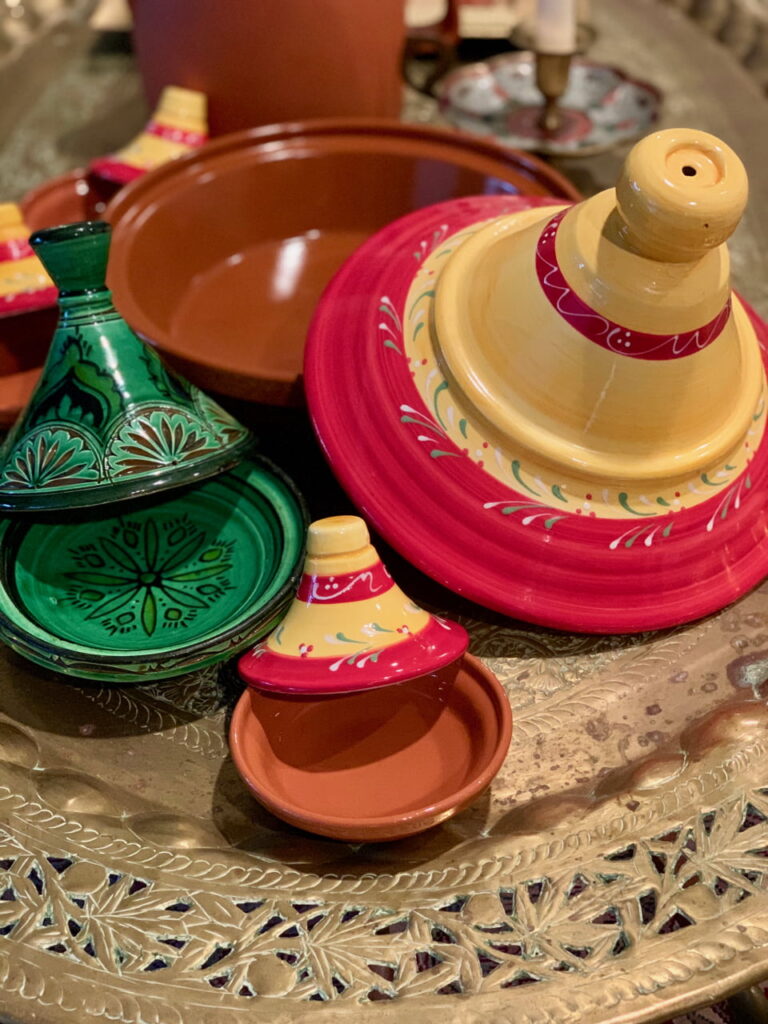
How To Use A Tagine Pot To Cook Stew
First important step in cooking with the Tagine pot, you have already seasoned (in much the way a cast iron pot is seasoned), is to marinate the meat being used.
The marinade to be used, one I found most often used when living in Brazil; Salt. Simply coarse salt.
Salt gets rubbed into the meat and left to sit out for several hours. This, is the best way to tenderize meat.
When ready to cook, layering the Tagine pot in a specific order, is the next important aspect of cooking in a Tagine pot.
Step By Step Preparation Of The Tagine
- Layer the bottom of the clay dish with the moist vegetables, such as onion, celery, carrots, fennel or other moisture producing ingredients.
- A good amount of olive oil gets drizzled across the base of vegetables.
- In goes the meat, fish or other protein, leaving room around the edges for other vegetables, such as potatoes, eggplant or other slower cooking vegetables.
- Add the larger vegetables around the edges of the protein.
- Dried fruits go on next and are often found in Middle Eastern stews such as this, as they not only impart flavor and help contrast the spices with a bit of sweetness but the concentrated sugar content in dried fruits, helps to further tenderize the meat as it cooks.
- Spices are layered on top of ingredients so that as steam is created inside of the pot, the spices are carried throughout the layers creating more concentration of flavor.
- Water, broth, even a little wine is poured on top, only to the level of the meat.
- Cook low and slow for 1 hour to 1 1/2 hours, checking the liquid to be certain it has liquid.
Mediterranean Spices
Many a tale has been told about the enticing, sometimes war triggered desire for the spices of the Middle East and Asia. Why?
The ancient spices that come from that part of the world are the foundation what molded, influenced and refined our modern day culinary world.
While every Middle Eastern woman has her own heritage of spices passed down to her from her grandmother, for making an exotic Tagine, I too have mine, since that is, in fact, my roots as well.
My Spice Profile
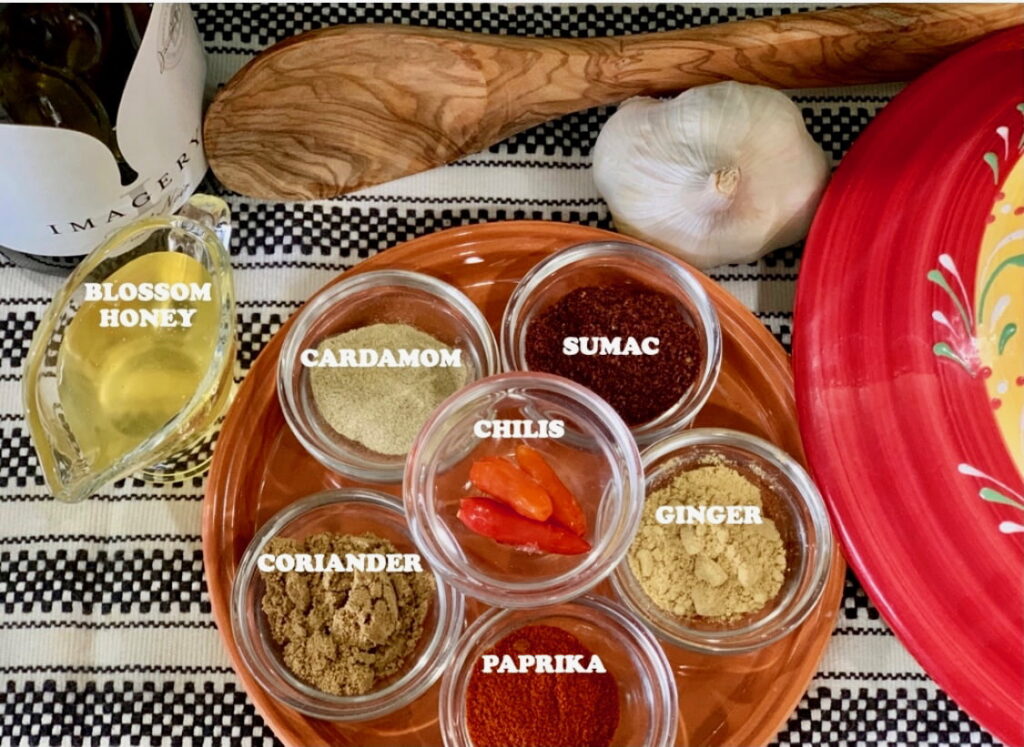
Before the lamb is browned for the stew, or the apricots plump in their honeyed sauce, this tagine begins with spice, measured not just by spoon, but by feeling. I blend these warm, fragrant notes myself, a small ritual that sets the tone for the dish and fills the kitchen with promise.
In this particular Tagine dish, I used lamb, therefore I chose a flavor profile I know best compliments the lamb, however you can use other proteins such as goat, venison even a meaty fish such as salmon.
Mix this spice profile and store for other recipes:
- Sumac brings the first spark: a gentle, citrusy tang that lifts the richness of lamb and keeps the sweetness in check. It’s bright without being sharp, like a squeeze of lemon softened by sun and time.
- Ginger powder offers a quiet heat, warming rather than fiery, awakening the palate and weaving seamlessly into the honeyed sauce as it simmers.
- Paprika (my home smoked or store bought) lends a subtle smokiness, evoking open fires and clay pots, adding color and a savory backbone that balances the fruit and spice.
- Ground coriander softens the blend with its citrus-floral notes, bridging brightness and warmth, while cardamom finishes the story, aromatic, slightly sweet, and unmistakably luxurious, lingering long after the last bite.
When making Tagine with poultry, fish, goat, pork, or a vegetarian version using the plump and very meaty Fava Bean, I change the spice profile specifically to compliment the protein.
Homemade Mediterranean Chermoula
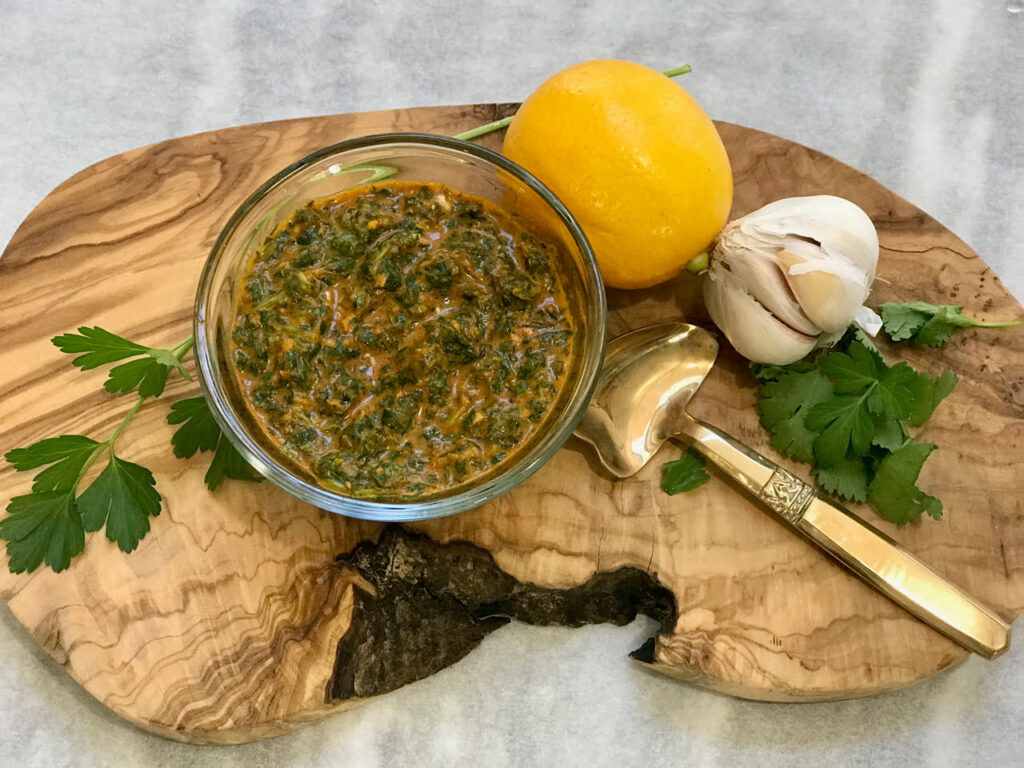
Tucked in my fridge, you will often find a jar of Homemade Chermoula, which is a beautiful and refreshing flavor profile I keep for a hurried meal, or a slow cooked stew.
It compliments fish, poultry and vegetarian dishes beautifully.
Lamb and Apricot
Whether it’s lamb and apricot, pork and prunes, squab and dates, fish and figs, Mediterranean cooking is the most known, for using the concentrated sugars in dried fruits, to balance the multiple layers of spices.
Since sugar molecules are much larger than salt ions, which act as a natural tenderizer in cheap cuts of meat.
Ancient day cooking just instinctively knew how dried fruits, often dates raisins or figs, would tenderize an old and tough cut of meat.
What Grains To Eat With Tagine
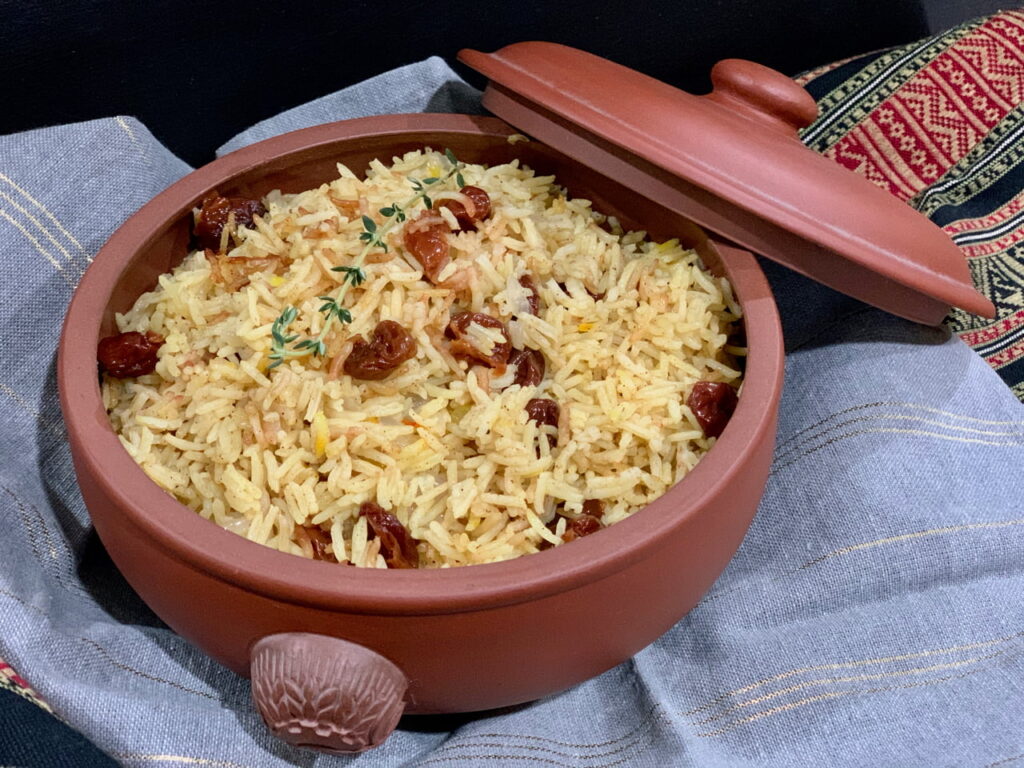
Since I rarely include potatoes in my Tagine (a more European version of stew preparation), I give special attention to preparing barley or my most favored Moroccan Rice Recipe With Dried Fruit, a dish you could almost eat just by itself!
Ingredients Needed
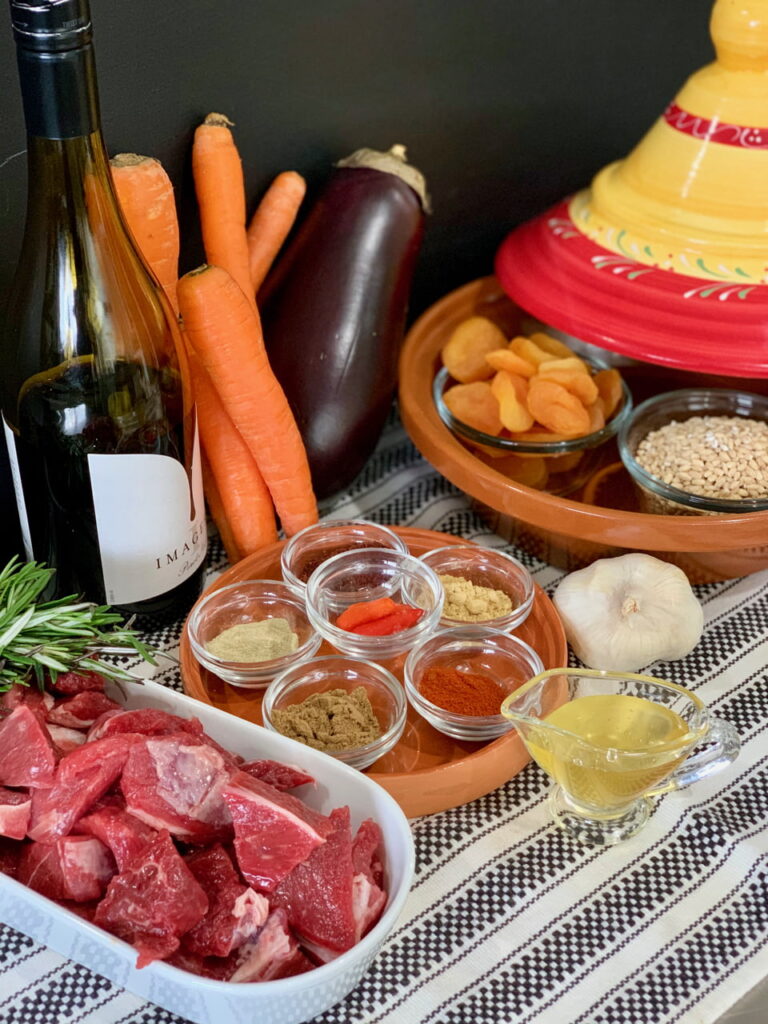
This lamb tagine is built layer by layer, each ingredient chosen for how it deepens the pot and softens into something greater with time.
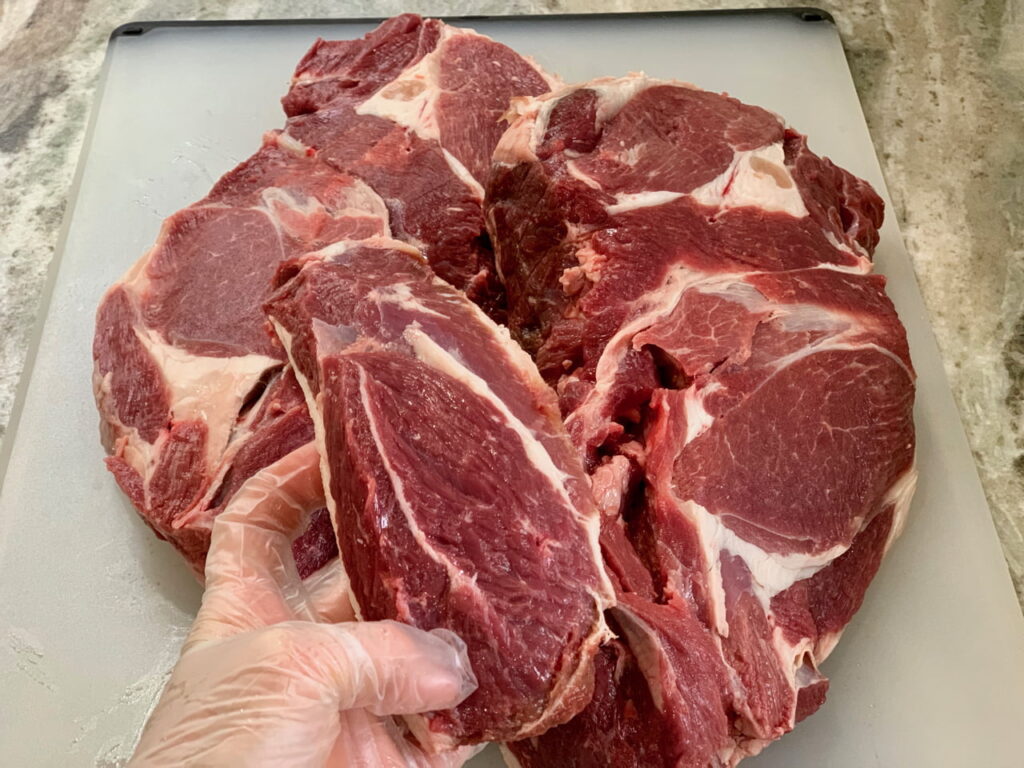
- Lamb is the heart of the dish, rich, resilient, and perfectly suited to slow cooking. As it braises, it absorbs the warmth of the spices and the sweetness of the sauce, becoming tender enough to yield at the touch of a spoon.
- Eggplant melts into the tagine almost unnoticed, soaking up olive oil and spice while adding a silken body to the sauce. Carrots bring an earthy sweetness that intensifies as they cook, echoing the fruitiness of the dried apricots.
- A generous pinch of coarse Salt early on draws out moisture and flavor, preparing the vegetables and lamb for what’s to come. Onion and Garlic form the aromatic base, gently softened in Olive Oil until sweet and fragrant, while Chili Peppers add a gentle heat that lingers rather than overwhelms.
- Dried Apricots are where the magic shifts, plump and jewel-like, they release their honeyed sweetness into the sauce, creating that signature balance of savory and sweet. A drizzle of Honey deepens this note, rounding the edges and tying the fruit and spice together.
- A splash of Red Wine lends depth and acidity, deglazing the pot and enriching the sauce, while water slowly transforms everything into a cohesive, fragrant braise.
- The homemade Spice Profile, sumac, cinnamon, ginger powder, smoked paprika, ground coriander, and cardamom, blooms in the warm oil, coating every ingredient in aroma and color before the liquids are added.
- Finished with a scattering of Cilantro or Rosemary, the tagine emerges deeply aromatic, balanced, and comforting, sweet, spiced, and gently heated, meant to be shared slowly, spoon by spoon.
Equipment Needed
- Large Clay Tagine Pot – is at the center of this dish. A unique cooking vessel that is absolutely worth owning. Its conical lid gently circulates steam back into the dish, creating a moist, slow-cooked environment that transforms humble ingredients into something deeply aromatic and tender. Cooking in clay isn’t just practical, it’s sensory, ritualistic, and grounding, inviting you to slow down and let the pot do the work.
- A large mixing bowl is essential for seasoning the lamb and vegetables, allowing the spices and olive oil to coat everything evenly. Two small mixing bowls keep spices, dried fruit, or liquids measured and ready, making the cooking process feel calm and intentional.
- A sturdy Cutting Board and sharp Chopping Knife are your quiet companions here, carrying you through onions, eggplant, carrots, and herbs with ease. A Slotted Spoon helps lift and layer ingredients without disturbing the sauce as it builds.
- The Garlic Press releases garlic into a soft, fragrant paste that melts seamlessly into the base of the tagine, ensuring no sharp edges, only warmth.
Mediterranean Tagine Lamb Stew With Apricots
Equipment
- 1 Large Tagine Pot
Ingredients
- 2 lb Lamb cubed
- 1 Eggplant cubed
- 1 tbsp Coarse salt
- 1/2 cup Apricots chopped
- 4 Carrots, large
- Fresh Cilantro and Rosemary finely chopped
- 2 tbsp Olive oil
- 1 Onion, large chopped
- 4 Garlic cloves crushed
- 3 Chili peppers finely chopped
- 1 tbsp Sumac
- 1 tbsp Ginger powder
- 1 tsp Paprika homemade
- 1 tsp Cinnamon
- 1 tsp Ground Coriander
- 1 tsp Cardamom
- 1 tsp Salt
- 2 tbsp Honey
- 1/2 cup Red wine
- 1 cup Water more if needed
Instructions
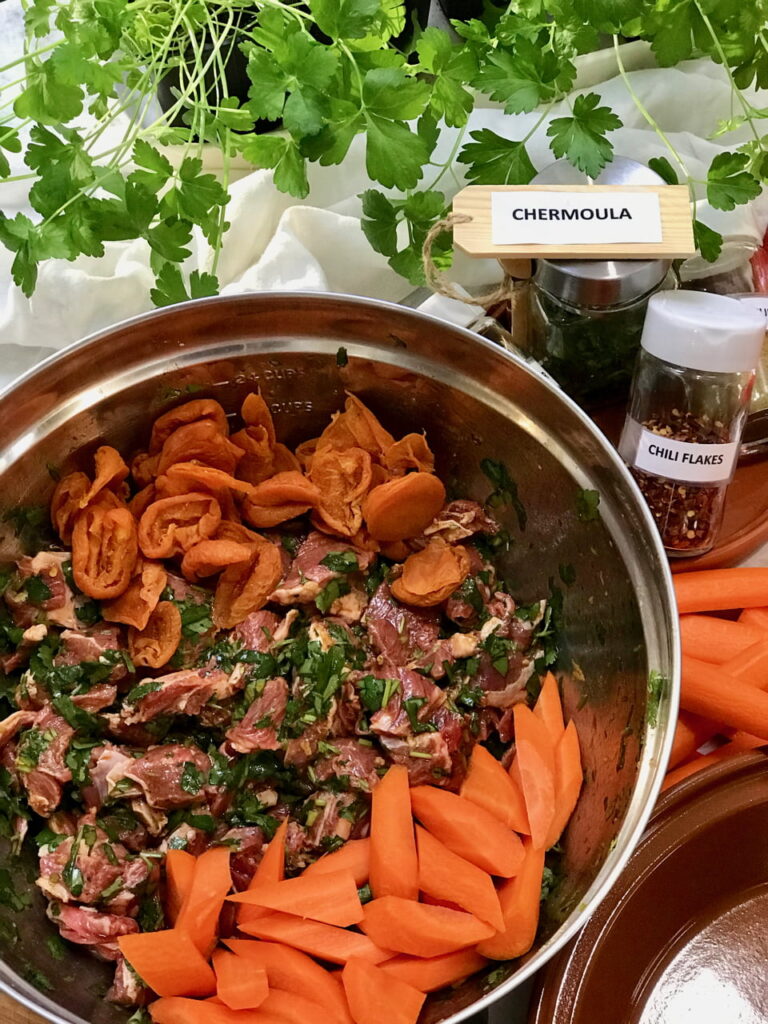
- Place the cubed lamb chunks and cubed eggplant in a bowl and massage the course salt into the meat and eggplant and allow to sit out room temperature for an hour.
- Peel and chop the carrots into pieces similar to the size of the meat and eggplant pieces. Set aside.
- In a small mixing bowl, place the spices: sumac, ginger, paprika, cinnamon, coriander, cardamom and salt, mix and set aside.
- In a small mixing bowl, place the honey, wine, garlic and chopped chili peppers, mix and set aside.
- Arranging Tagine To Cook
- Place the large Tagine pot on top of the stove and turn the heat on low to medium low.
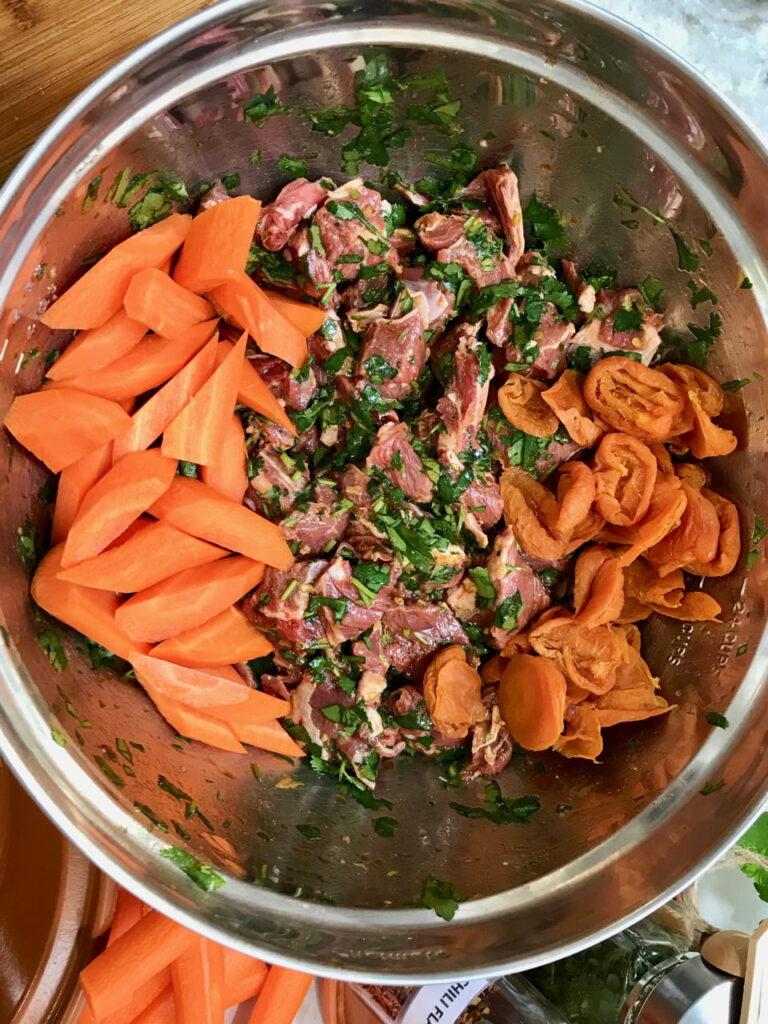
- Begin to layer the ingredients, placing the onions on the bottom, drizzle the olive oil, lay the meat and eggplant on top of the oiled onions, lay the apricots on top next, sprinkle the spice mix over everything, set the carrots around the edges.
- By now you should start to hear the onions sizzle a little. Pour the wine mixture over everything, followed by the water. Cover, lower and allow the mixture to slow cook for about an hour, untouched.
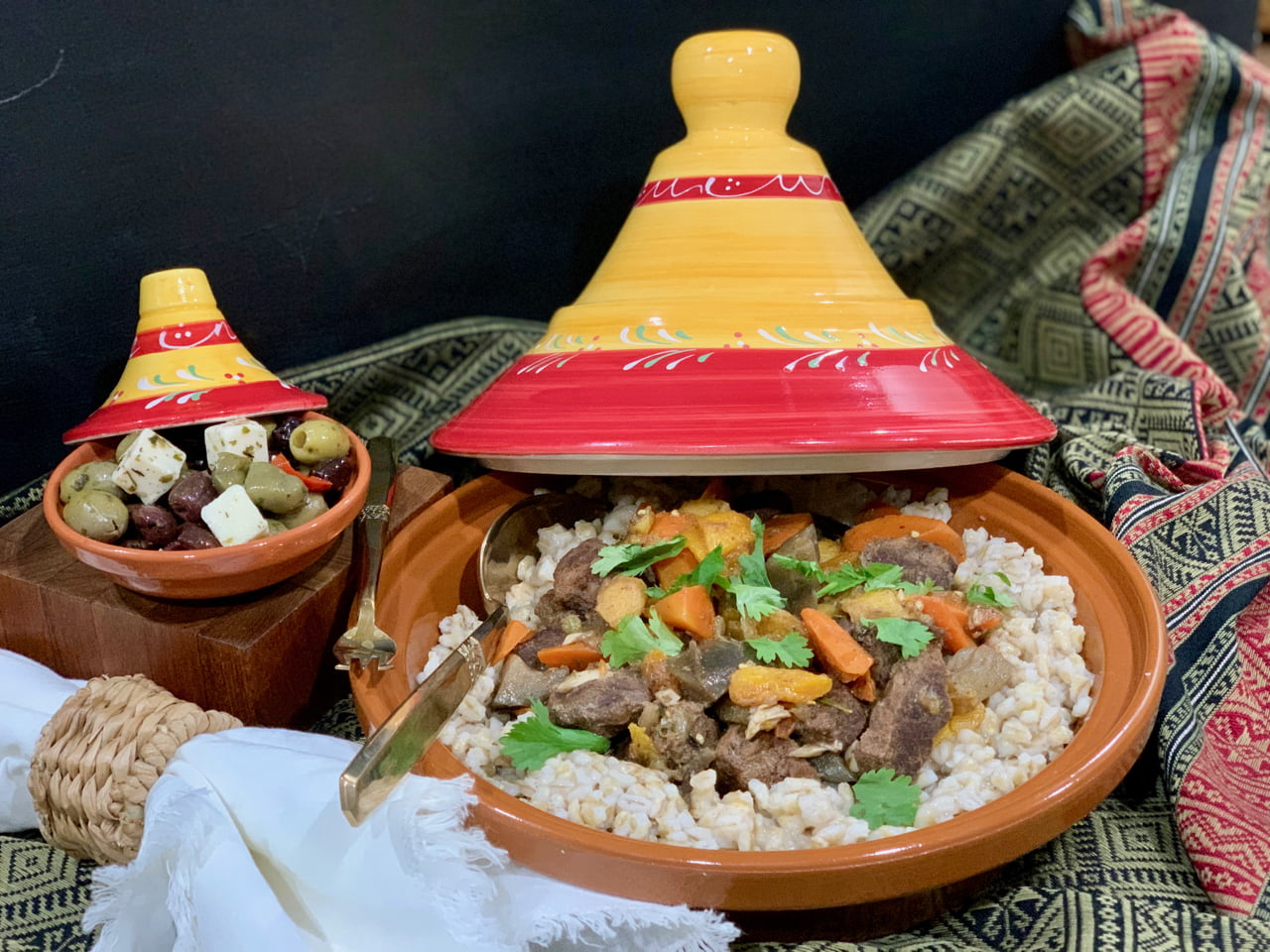
- Remove the lid and sprinkle the chopped cilantro and rosemary, gently stir and serve over cooked barley or rice and a side of olives and cheese.
Notes
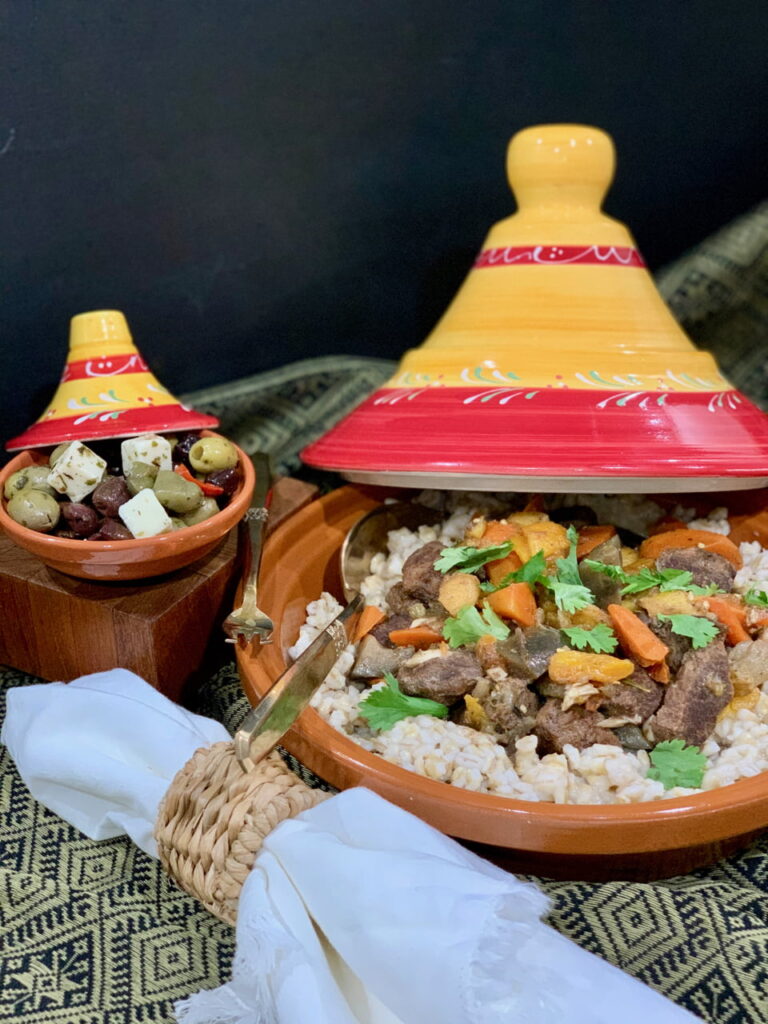

I believe the table... that place that draws people to gather, is the most powerful symbol of togetherness. All that happens before the table is set, the planning, the gathering, the preparing, are all an intricate part of the dance that create the mood of celebration to share with friends and loved ones.