
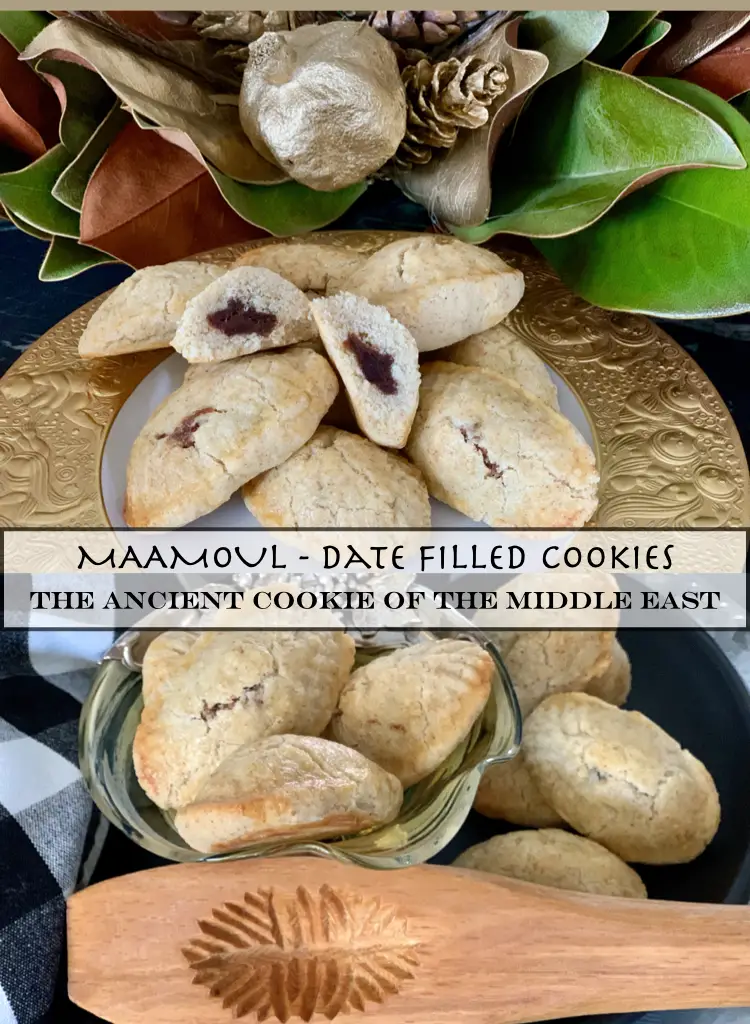
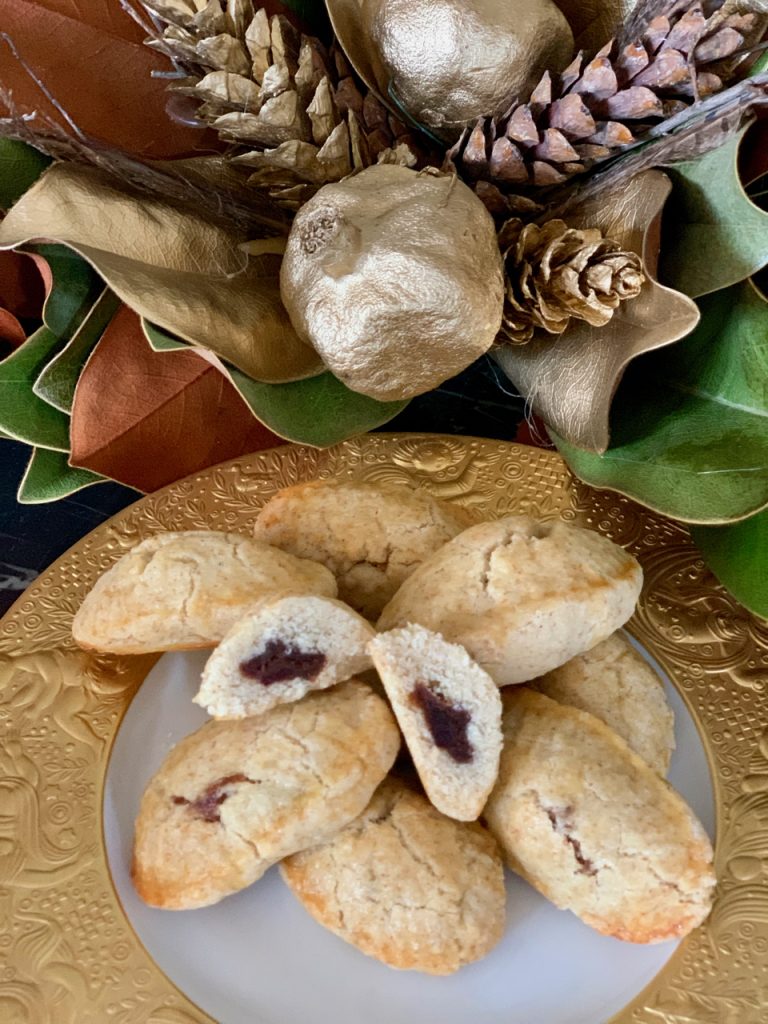
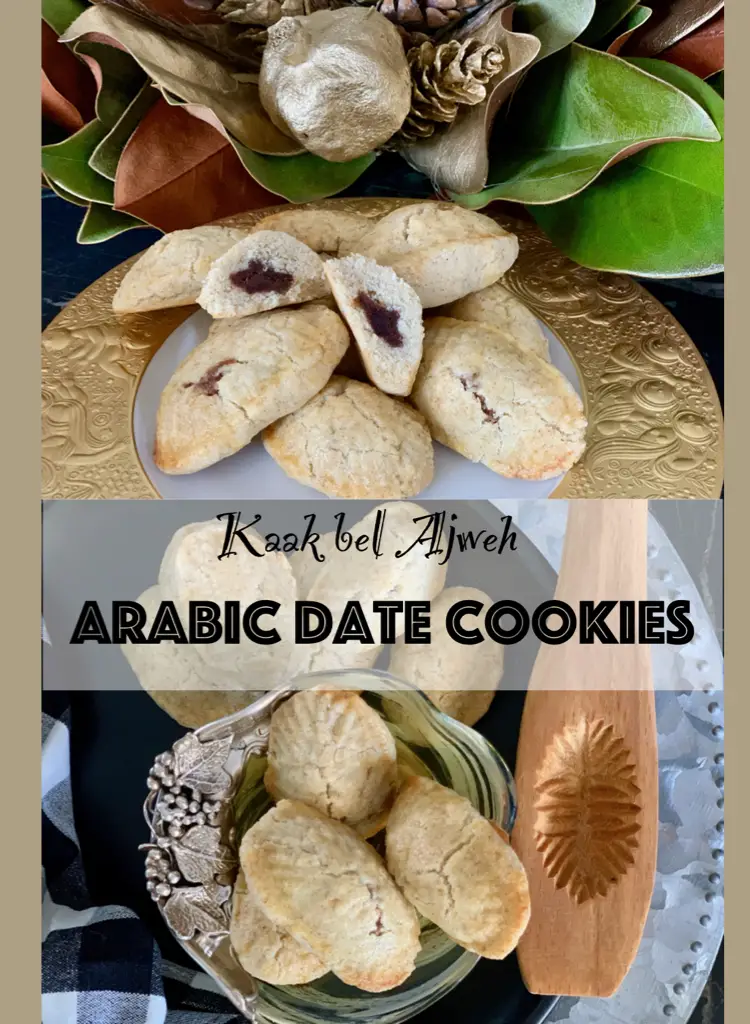
Maamoul Traditional Date Stuffed Arab Cookie with orange blossom and a cookie dough of farina and Arab spices, shaped in the ancient wooden Maamoul mold.
The Cookie Most Loved From My Childhood
This cookie, known as Kaak bel Ajweh, is the cookie recipe most loved from my childhood. These tender, hand-pressed cookies are as much a part of our family’s story as any heirloom passed from one generation to the next. Each Maamoul is filled with a sweet, spiced date paste, wrapped in a delicate, buttery semolina or flour dough, and pressed into intricate molds that leave behind beautiful patterns, like tiny pieces of edible art.
In our home, Maamoul has always meant more than a cookie. It’s a symbol of welcome, celebration, and togetherness, a cookie served with love to guests, shared with family at holidays, and always made by hand, never in a hurry. The scent of dates, butter, and orange blossom drifting from the oven is the smell of home, of laughter echoing through the kitchen, of stories retold year after year. Even surrounded by all the glittering sweets of the season, these humble, fragrant cookies remain the heart of our table, a reminder that the simplest traditions often hold the deepest meaning.
Traditional Arab Desserts
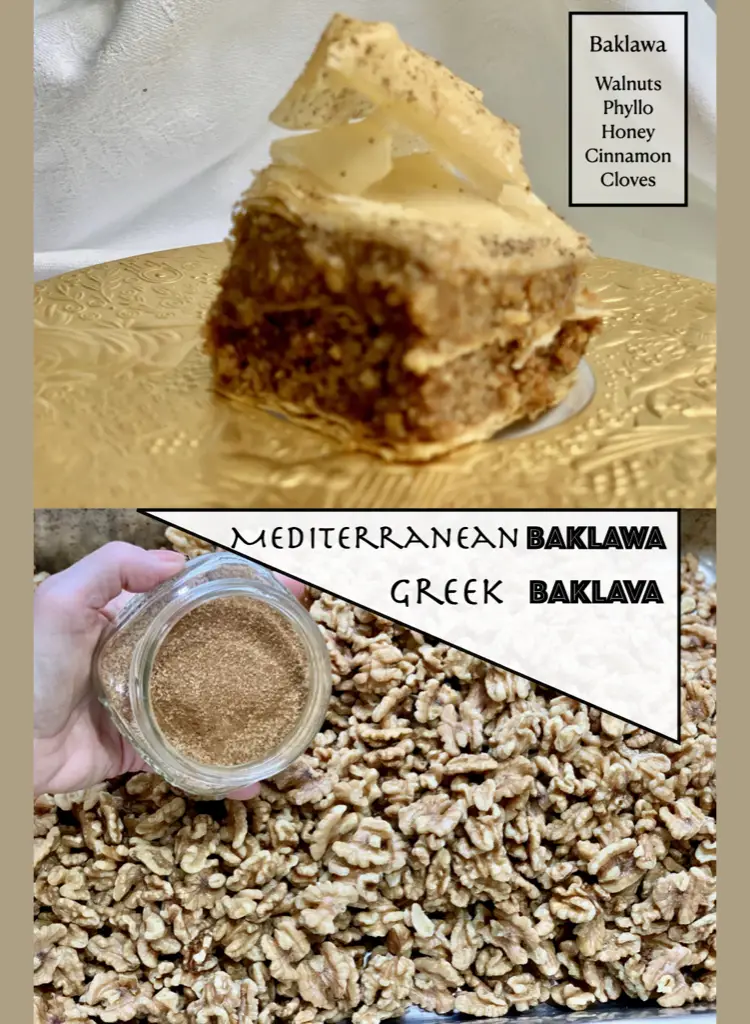
While many of us know and love the well known Baklawa, nuts stuffed inside of phyllo pastry and drizzled with honey; cookies in the Arab world are equally scrumptious, yet perhaps less known.
In the Arab world of cooking, honey is often the sweetener used in desserts, along with lots of nuts, dried fruits and spices.
Traditional Arab Cookies
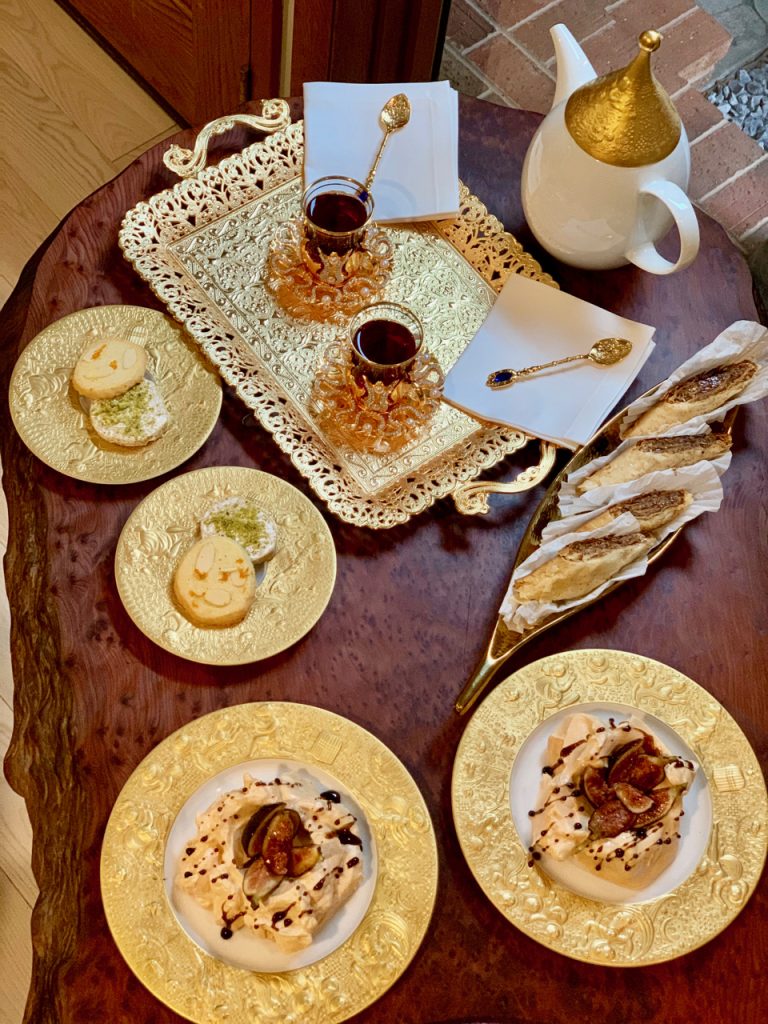
In a Middle Eastern home, cookies and pastries are regularly made and stored in the fridge for unexpected visitors; Christians, Muslims and Middle Eastern Jews.
My mom used to tell me of the tradition she learned from her father, “When friends, family or a new comer stops in for a visit, never ask what you can offer them, simply lavish the table with pastries and coffee”.
This tradition was a way of making any guest feel welcome in the home, but also a way to show that the man or woman of the home, were of refined upbringing and proper etiquette.
Arab Cookies In America
Cookies from the Middle East, are unlike most other cookies from around the world, especially here in America.
Basically the use of nuts, seeds, dried fruits and honey, are often the base of the ingredients that sets them apart.
Although nut flours, farina or semolina, are often what make up the dough, all purpose flour can be used as well.
Exotic Arab Essence
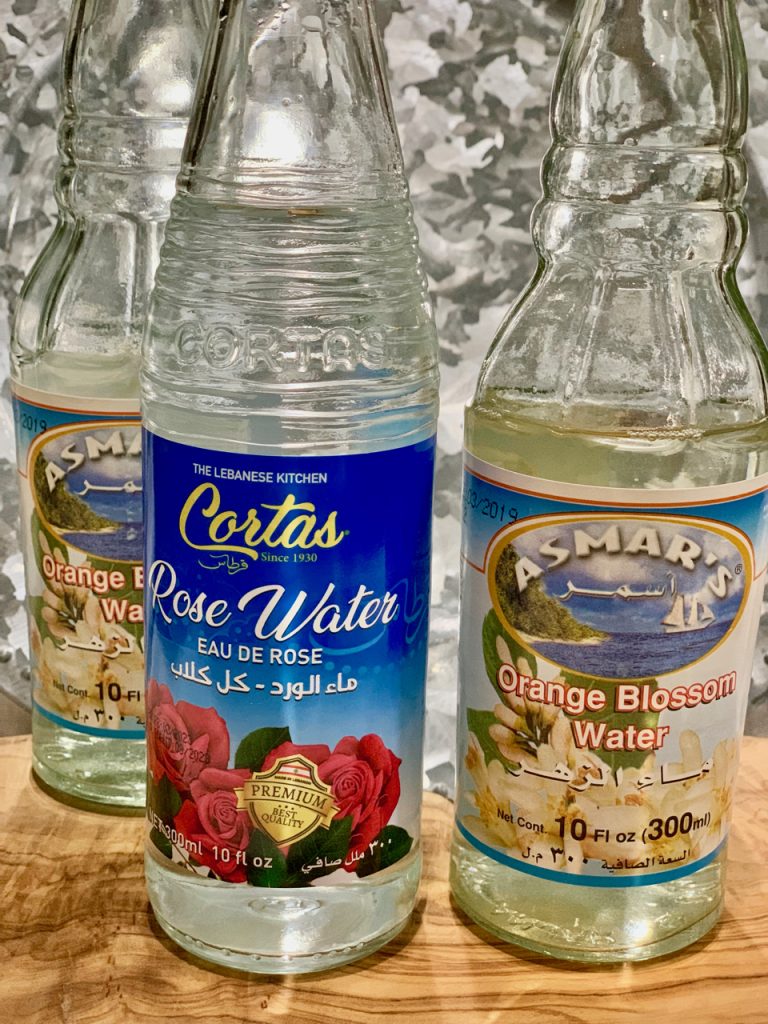
Also, as an added measure of exotic flavor, which usual come from the floral essence of orange blossom water or rosewater, an extract of your choice can be substituted.
Arab cookies are often stuffed with – dare I say – healthy ingredients, pressed into beautiful shapes, using a traditional wooden mold, or are simply molded in the palm of your hand.
My Mom’s Arab Cookies
While the bases of most cookies around the world are flour, butter and sugar, my mom’s cookies seemed so much more elaborate and healthy.
Great care and time went into the making of the dough for her cookies, back when I was a kid.
We didn’t have a blender, or food processor to grind, or chop nuts or dried fruits, and so it was done by hand.
Consequently, the crushing nuts, into the consistency of flour, took time and patience, especially if the nuts were still in their shell.
Today, we have the help of a food processor, which grinds nuts into a beautiful flour in minutes, as it also purees dried fruits into a paste equally as fast.
Date Stuffed Cookies
There is no cookie quite as elegant to look at or satisfying to eat as a cookie that crunches on the outside, yet has a soft, rich flavors on the inside.
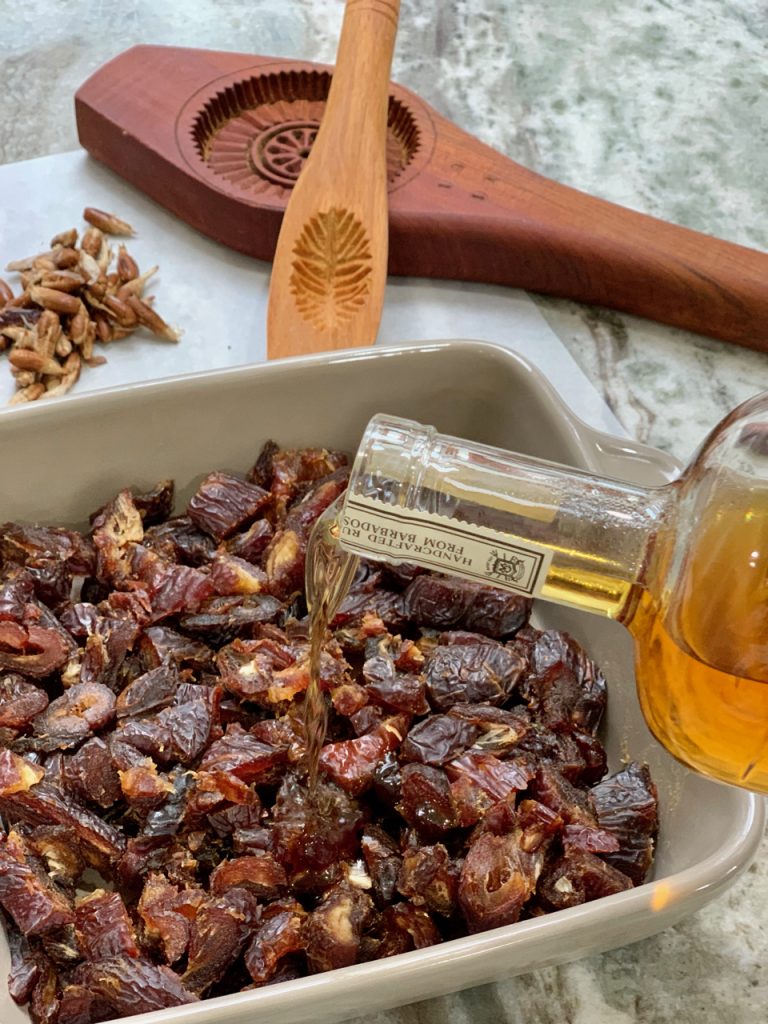
Once the dates have been pitted and roughly chopped, I soak them in a little liquor and the essence of either orange blossom or rosewater.
This step both balances the intense sweetness of the dates and makes them easy to puree into a paste, without the addition of butter or oil.
Since dates are so sweet, much sweeter than processed sugar, very little sugar needs to be added to the cookie dough, making Arab cookies healthier than most other types of cookies.
What Flavors Are Used In Arab Cookies
Specific spices or essence, are what set one ethnic flavor apart from another. In Middle Eastern sweets, the flavors of delicate, and often floral, extracts are most common.
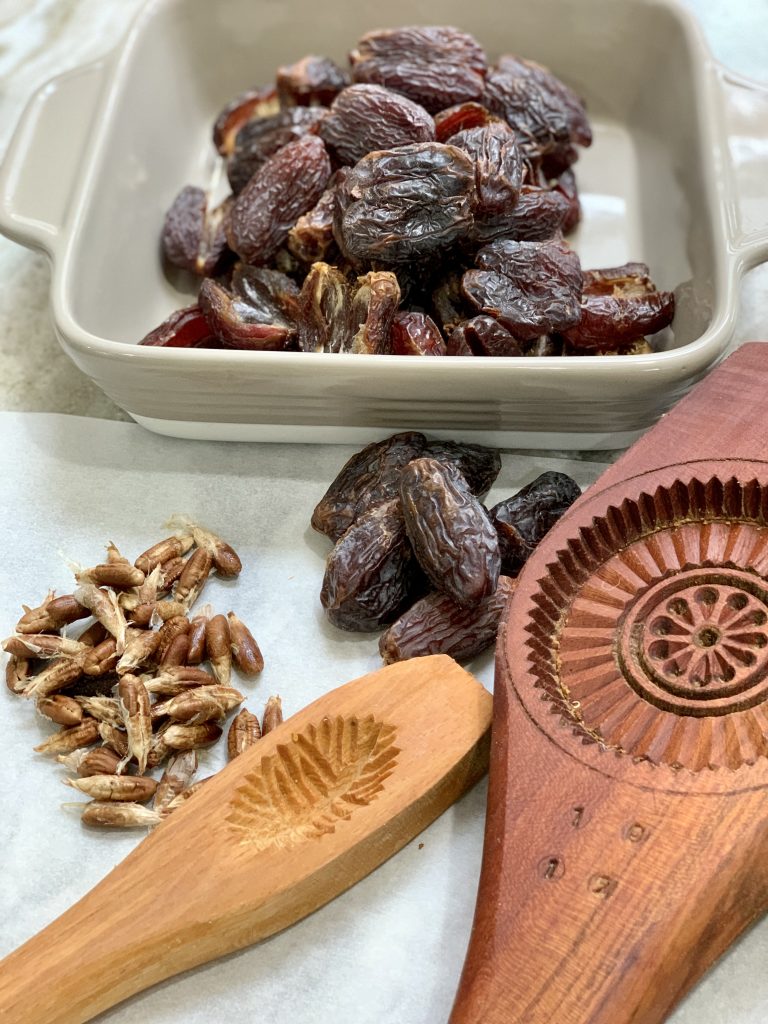
A popular spice, in Arab cookies, is Mahleb, an aromatic spice made from the seeds of a type of cherry.
Before the cherry stones can be used, they are opened to extract the seed kernel, the seed kernel is then ground into a powder.
The flavor of Mahleb is of a gentle, warm nutty, yet slightly fruity essence, and is often added to sweet breads or the dough of pastries.
Arab Cookie Flavor Substitutions
While orange blossom water, or rosewater are flavors added to the preparation of Middle Eastern desserts, vanilla or almond extract makes for a good substitution.
Interestingly enough, blossom water is produced through a water distillation of the floral blossom, creating the essence of the flower, highly prized in Middle Eastern cooking.
Comparatively, though, if a similar flavor to the traditional Arab flavors are what you are after, a variety of liquors can be used, such as Ouzo or Arak, which most liquor stores sell.
These flavors can also be used in American baking, to add an exotic twist to our American ingredients; like the Cranberry Orange Blossom Pie I make every Autumn, when cranberries are in season.
The Arab Tradition Of Meze
As I explained the tradition of how one greets an unexpected visitor in the home, with the sudden spread of pastries and coffee, the same tradition applies when a savory spread is desired.
Likened to Tapas, Meze is my most favorite way to dine, because lots and lots of small plates, of favorite dishes, are served as a spread, to eat as and what you like.
For this reason, I created a lovely collection into a cookbook I called The World On My Plate.
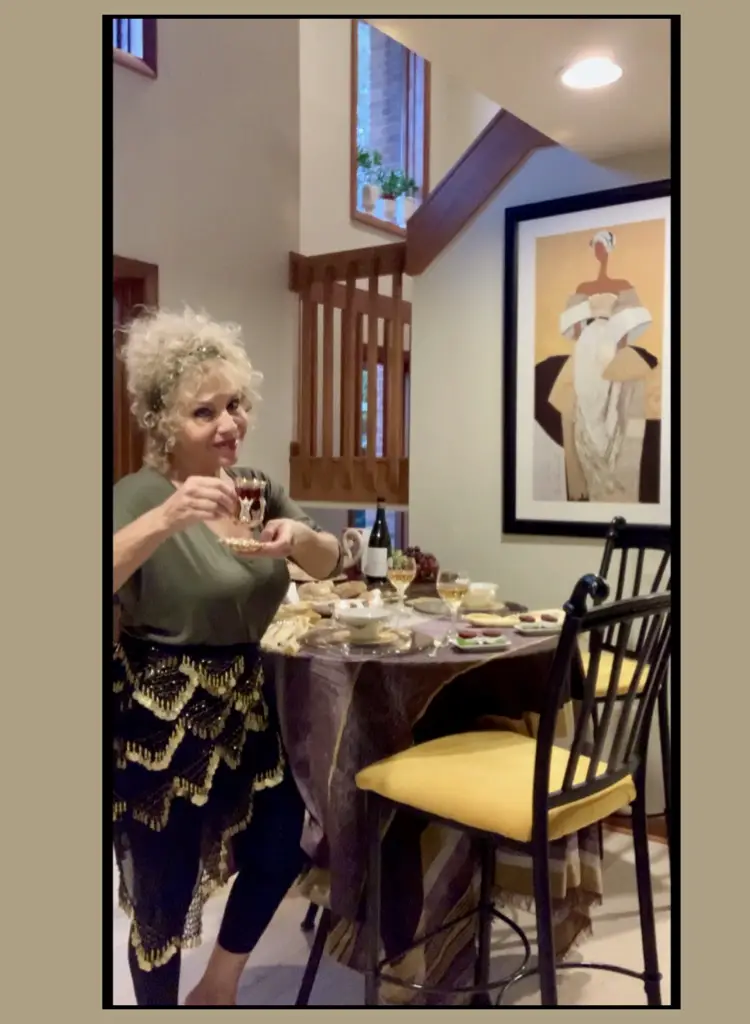
A dessert table, in a situation such as this, is grand; a variety of sweets, coffee, tea and liquors. It was often said, by my mom, “If the dessert table is grand, then you know much attention will have been taken for the savory dishes being served”.
To this day, in my home, I will prepare a meze spread for occasions that call for long lingering hours of conversation and fellowship.
How To Make Date Stuffed Arab Cookies
Once the dough is mixed, which has a little yeast in it having been dissolved in the milk, it is set aside to rest for about an hour.
While not everyone adds yeast to this cookie, I find it adds a little substance and stability to the dough, keeping the filling in place.
Next, while the dough is resting, the filling is made by soaking the dates in orange blossom and a little rum.
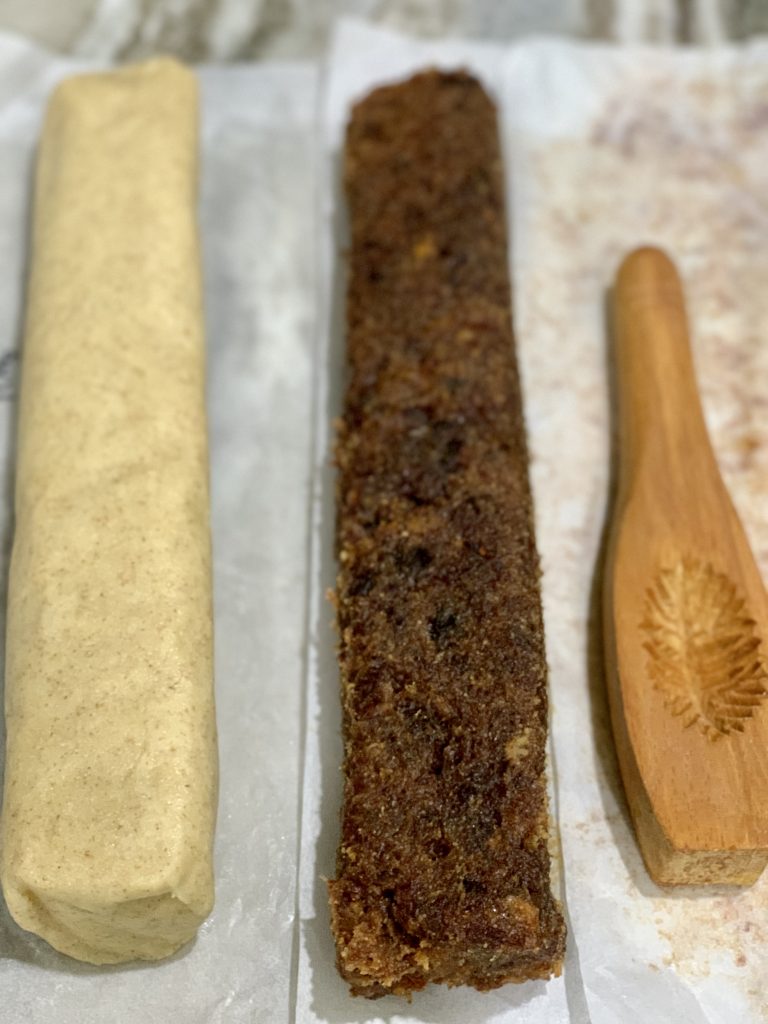
Then the dough is divided into equal size balls, as is the date paste into much smaller balls.
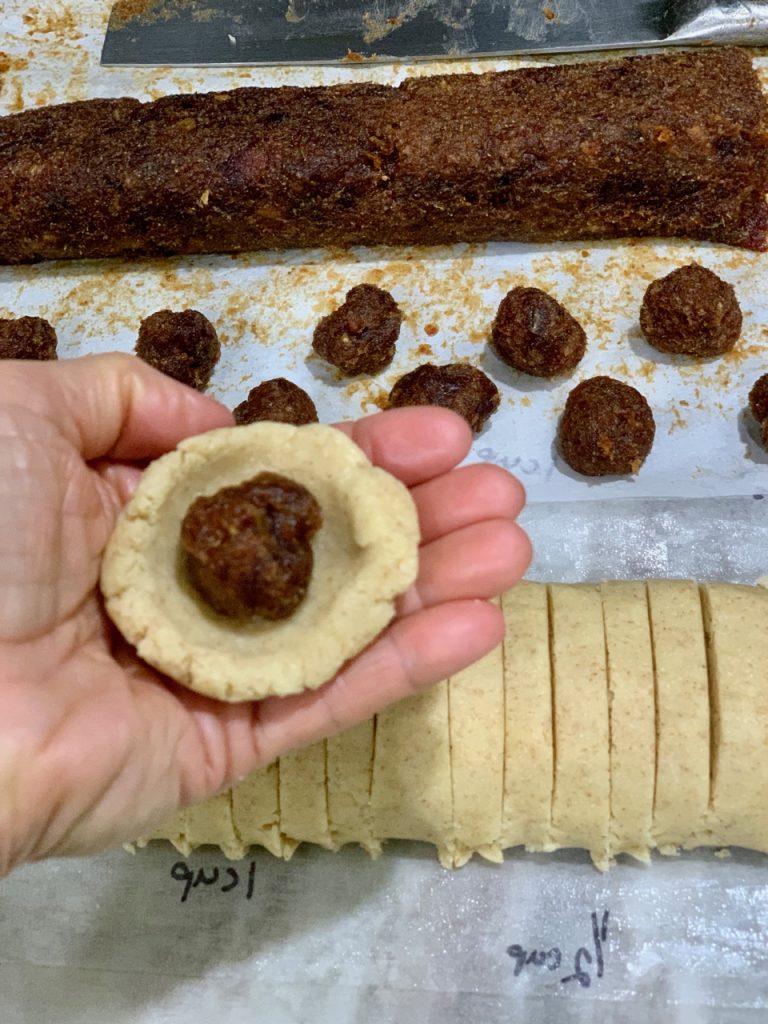
Finally, the ball of dough is pressed into a flat round, setting the smaller date ball into the center and forming the dough completely around the ball.
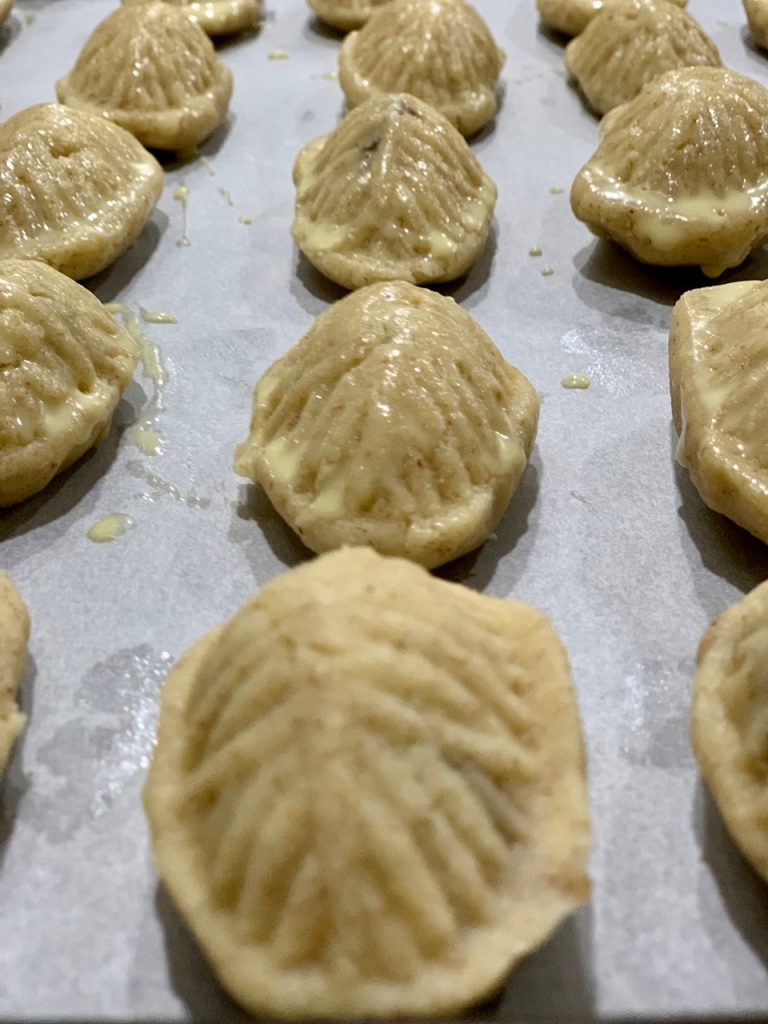
This step can then be pressed into the wooden mold for a decorative finish, are shaped into a crescent moon shape, which is also traditional.
Traditional Arab Cooking Finds New Friends On Social Media
I would like to close this story by sharing a beautiful social media story with you.
Ma’moul (also spelled maamoul), is another type of Arabic cookie filled with nuts, as opposed to dates. It is probably the most known cookie of the Arab world.
A beautifully carved wooden mold is used to press the cookie dough into the mold to create design on the cookie before it is baked.
The mold my mom once had, long ago disappeared as my sisters and I became more interested in American desserts, popular back in the 50’s and 60’s.
Now, as a mom and grandma, I wanted to pass on recipes to my family from their grandma and great grandma’s traditions. I needed to find that wooden mold!
Arab Moms Share Traditional Cooking
One day, while on Instagram, I made a new social media friend, I live in Maryland and she lives in South Dakota.
She was born in Damascus, while I was born in America, trying to cling to my mother’s heritage.
I asked her where I might find this ma’moul mold, she asked for my address and in less than a week, she had sent me two molds right from her kitchen.
This, is something family does, and what new friends, of the same roots, will do for each other.
The Best Traditional Foods
Thank you Sanaa Abourezk, my new friend and ethnic sister. Oh!! Do you all want to know another common link that brought us together to become friends?
Sanaa whopped Bobby Flay on Beat Bobby Flay, while I, as well, walked away with the prize on Guy’s Grocery Games. One day Sanaa and I will cook something amazing together for you!
The Ingredients That Bring Maamoul Cookies To Life
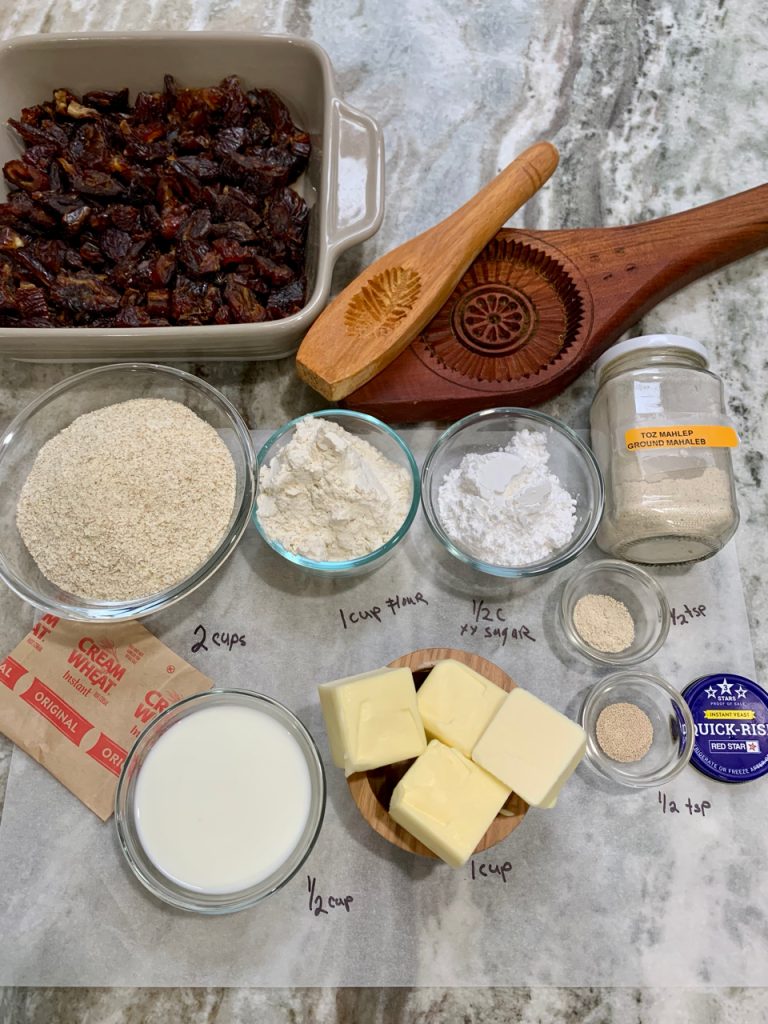
- Farina (Cream of Wheat), gives Maamoul its signature crumbly-yet-tender texture, that melt-in-the-mouth feel that’s unlike any other cookie. It adds a delicate graininess and warmth, helping the dough hold its beautiful pattern once pressed into the traditional mold.
- Flour – All-purpose flour blends with the farina to create the perfect balance of structure and softness. It’s what gives the dough strength while still allowing each bite to dissolve gently, releasing all the buttery, aromatic flavors within.
- Butter – Melted or softened butter infuses the dough with richness and depth. It’s the soul of the Maamoul, giving it that golden hue, velvety taste, and heavenly aroma that fills the kitchen as they bake.
- Confectioners Sugar – A touch of confectioners sugar sweetens the dough just enough without overpowering the date filling. Its fine texture also helps create that silky smoothness that makes Maamoul feel luxurious and comforting all at once.
- Milk adds a bit of moisture to bring the dough together softly. It enriches the flavor and helps form that pliable texture, easy to shape, yet sturdy enough to hold the intricate molds and beautifully encase the filling.
- Mahlab – (from the stones or kernels of black cherries), or fennel seed can be used, however the mahlab is traditional and offers a sweet and nutty flavor unlike any spice you’ve tasted.
- Yeast – A small amount of yeast helps tenderize the dough and gives it a subtle lightness. While Maamoul isn’t meant to rise like bread, the yeast adds that touch of airiness that keeps the cookies from feeling too dense.
- Salt – Just a pinch brings balance. It heightens the buttery sweetness, deepens the flavor of the farina, and allows every other ingredient, from spice to date to sing in harmony.
- Pitted dates – The heart of every Maamoul cookie is its date filling, sweet, soft, and rich. The dates are often simmered or mashed into a paste, sometimes with a little butter or oil, becoming a smooth, jam-like center that contrasts beautifully with the delicate exterior.
- Orange blossom – Orange blossom water brings a floral brightness to the filling, awakening the natural sweetness of the dates. It adds a fragrant lift, a note of sunshine that reminds you these cookies come from a place where hospitality is flavored with scent and memory.
- Arak or Ouzo – A splash of Arak or Ouzo adds a subtle anise undertone, deepening the aromatic profile of the Maamoul. It’s a traditional touch, one that enhances the complexity and connects the recipe to the Mediterranean roots where these cookies have long been a cherished part of holiday and family gatherings.
The Tools That Help Shape Traditional Maamoul
- Mixing Bowls – The mixing bowls are where the Maamoul dough begins its journey — a blend of farina, flour, butter, and fragrant spices coming together by hand. There’s something timeless about working in a large bowl, gently rubbing the butter into the grains until the mixture feels like soft sand. This step connects you directly to the tradition of generations before us who made Maamoul the very same way.
- Food Processor – The food processor makes quick, even work of turning the pitted dates into a silky paste for the filling. With just a few pulses, the dates transform into a smooth, spreadable mixture that’s ready for orange blossom water and a splash of Arak or Ouzo. It’s a modern shortcut that preserves the authenticity of the flavor.
- Measuring Cup – Precision is key in Maamoul dough, and the measuring cup ensures the perfect balance of farina to flour, just enough butter, and the right amount of milk to bring everything together. These small measurements ensure the dough comes out tender, pliable, and easy to shape.
- Measuring Spoons – Those tiny spoons play a big role — measuring out the maheb, salt, yeast, and orange blossom water with accuracy. Their exactness is what keeps the Maamoul subtly aromatic instead of overpowering, allowing the delicate spice and floral notes to complement the sweetness of the dates.
- Chopping Board – A sturdy chopping board gives you space for preparing the dates if you dice them before processing, or for cutting parchment, dividing dough, or shaping small portions of filling. It’s a quiet but dependable helper.
- Chopping Knife – A simple kitchen knife is useful for slicing the dough into equal pieces, trimming parchment, or roughly chopping the dates if needed. Its role may be small, but it keeps the process neat and organized — especially when shaping many cookies at once.
- Parchment Paper – Lining the cookie sheet with parchment makes for even baking and easy cleanup. It prevents sticking, protects the intricate patterns of the Maamoul, and helps the cookies bake gently without over-browning on the bottom.
- Maamoul mold (optional) – A traditional Maamoul mold adds that iconic pattern, the deep grooves that mark each cookie with a design of heritage. Whether it’s a moon, a flower, or a simple geometric pattern, the mold presses beauty into the dough and makes every cookie look like a tiny work of art. Even though it’s optional, using a mold adds a sense of ceremony and nostalgia to the process.
- Cookie sheet pans – The cookie sheet is the stage where the shaped Maamoul rest before entering the oven. A heavy, sturdy sheet ensures they bake evenly, holding their shape and preserving the delicate patterns you’ve worked so carefully to create.
- Oven – The final step, where the Maamoul transform. The oven gently bakes the dough until it’s just set, lightly golden on the bottom but still pale on top, preserving the tender crumb that makes Maamoul so beloved. As they bake, the scent of butter, anise, and dates fills the kitchen, a reminder that these cookies are as much about memory as they are about flavor.
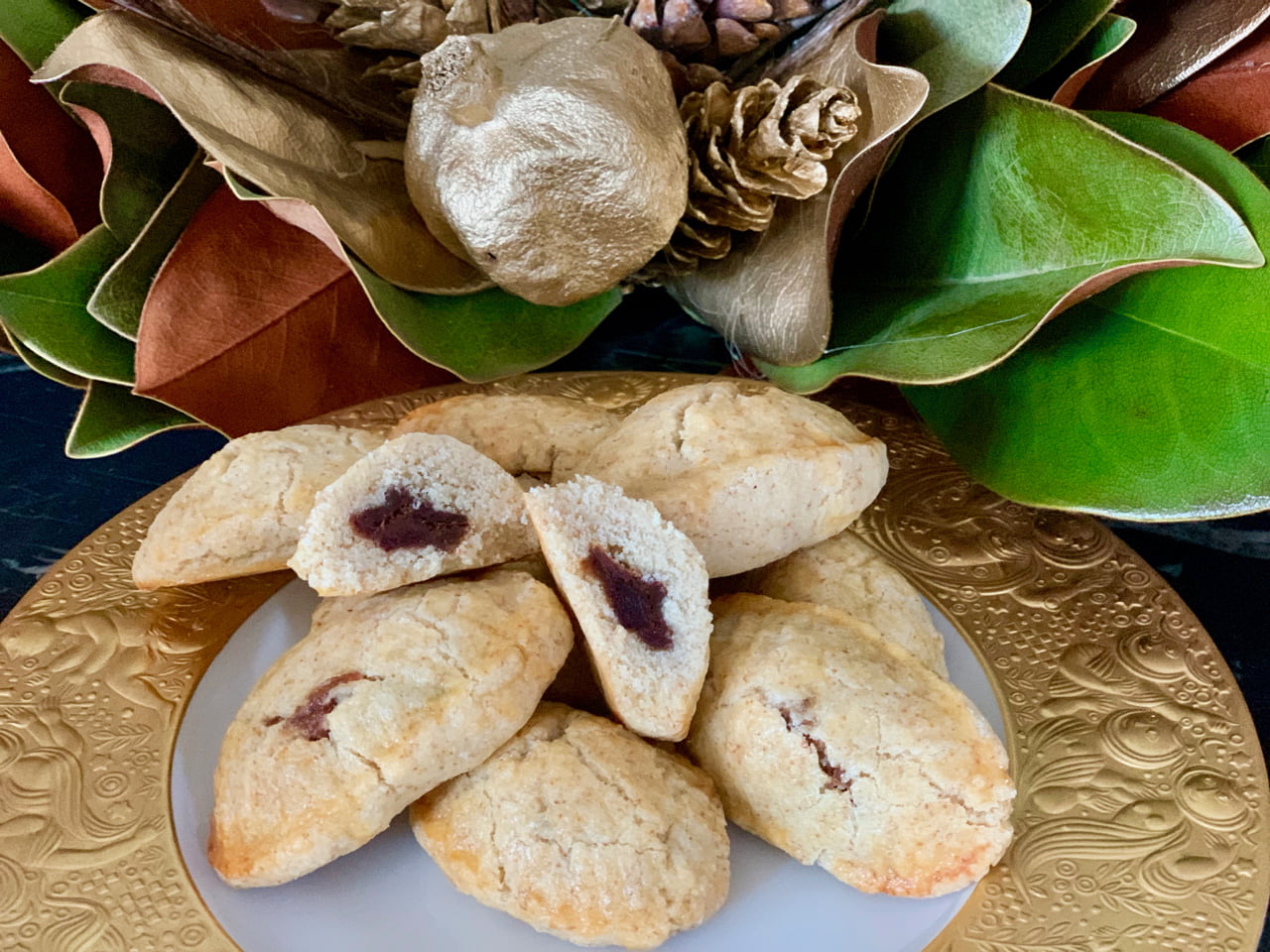
Maamoul Traditional Date Stuffed Arab Cookie
Equipment
- Wooden Maamoul Mold optional
- Food processor
Ingredients
- 2 cups Farina or Cream of Wheat
- 1 cup All purpose flour extra for shaping
- 1 cup Butter softened
- 1/2 cup Confectioners sugar
- 1/2 cup Milk
- 1/2 tsp Mahleb – 1/2 tsp (cardamom as a substitute) fennel or anise seed, or cardamom
- 1/2 tsp Active Yeast
- 1/2 tsp Salt
- 1 lb Pitted Dates
- 1/2 tsp Orange blossom
- 1/3 cup Arak or Ouzo or liquor of choice
Instructions
- In a large mixing bowl, place the milk and yeast and allow to sit for 5 minutes.
- Into the milk, whisk the sugar, mahlab (or spice of choice), salt, farina and flour. Work the soft butter into the mixture until a dough is formed. Shape the dough into a long log, wrap in parchment paper, cover and allow to sit out for an hour.
- In the bowl of the food processor, place the rough chopped, pitted dates, orange blossom and Arak or Ouzo. Allow to stand for 10 minutes. Puree into a paste. Form the paste into a long log, wrap in parchment paper and place in the fridge until ready to shape.
- Slice the dough into 24 pieces. Shape into balls. Slice 24 pieces of the date paste into balls 1/3 the size of the dough balls. Flatten the dough ball, place the date ball in the center and form the dough completely around it. Do the same for the remaining balls.
- Preheat oven 325. Place parchment paper onto a cookie sheet.
- If you have the wooden mold, press each prepared dough ball into the mold, tap it against the counter to pop it out and place them on the cookie sheet. If you have no mold, simply place the cookie balls on the baking sheet.
- Bake until the cookies are light gold and the dough feels dry, about 15-minutes. Cool and serve.
Video
Notes
- The cookies will keep in an airtight container for up to 2 weeks or can be frozen for about a month.

I believe the table... that place that draws people to gather, is the most powerful symbol of togetherness. All that happens before the table is set, the planning, the gathering, the preparing, are all an intricate part of the dance that create the mood of celebration to share with friends and loved ones.