
Savory Herb Egg Crepes For Wraps Omelettes Or Tapas will become your favorite, easy to make, homemade wrap for a variety of favorite fillings.
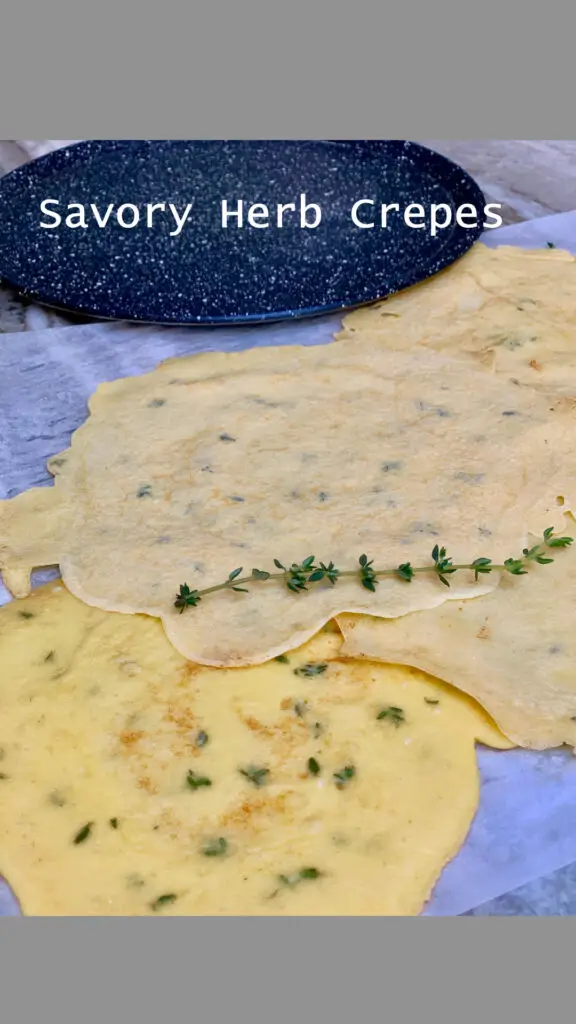
Savory Herb Crepes
Oh, the things these delicate savory herb crepes can wrap around or be stuffed with!
These savory herb egg crêpes are wonderfully versatile. Light yet resilient, they make an attractive, nourishing alternative to traditional wraps, folding easily around both warm and cold fillings.
At the same time, they shine in more classic kitchen roles, such as serving as a protective lining for Beef Wellington, gently wrapping the meat to hold in its juices and prevent moisture from seeping into the outer pastry. Simple in ingredients, yet quietly essential, these crêpes adapt beautifully to whatever the dish requires.
Who needs burrito or tortilla wraps, often made with flour and water, when you can have a gourmet wrap that is durable and delicious!
What Is A Crepe?
So many cuisines around the world make some type of a thin dough to wrap around ingredients or fill with a mixture of ingredients.
Crepes, originally from France, are thought of as a very thin pancake.
Though the texture of a crepe appears thin and delicate, the dominance of eggs in the batter makes it very strong and resilient when stuffed.
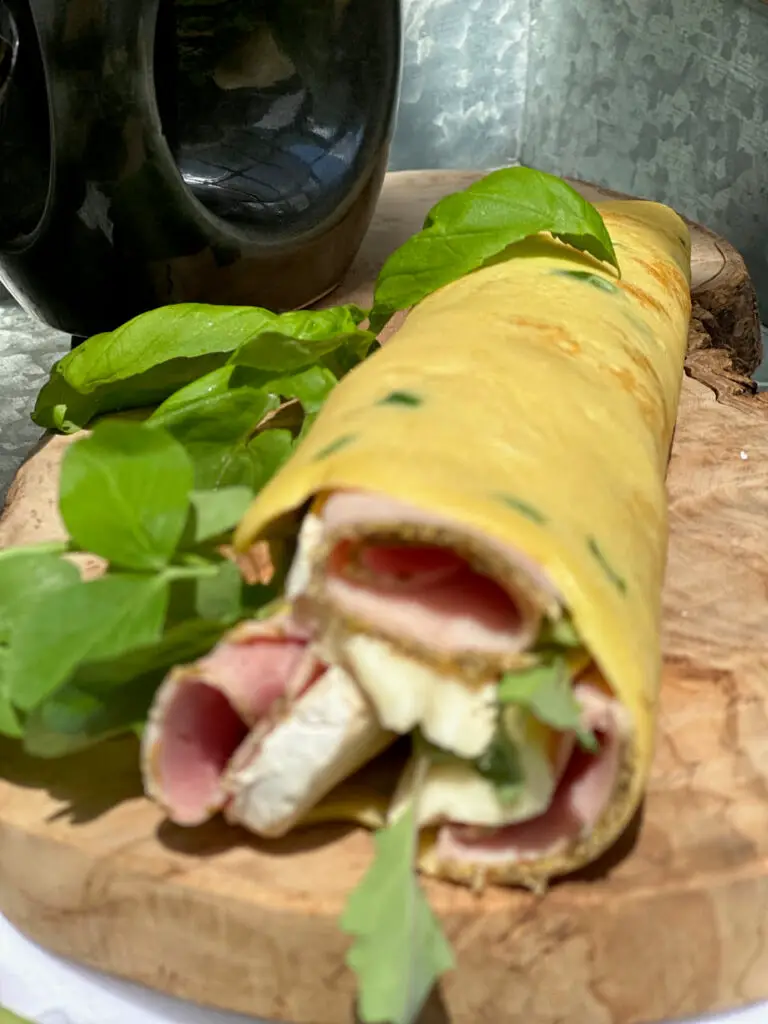
Savory Crepes
A savory crepe, with any variety of preferred fillings, is lovely to serve as the main course for a brunch or light luncheon.
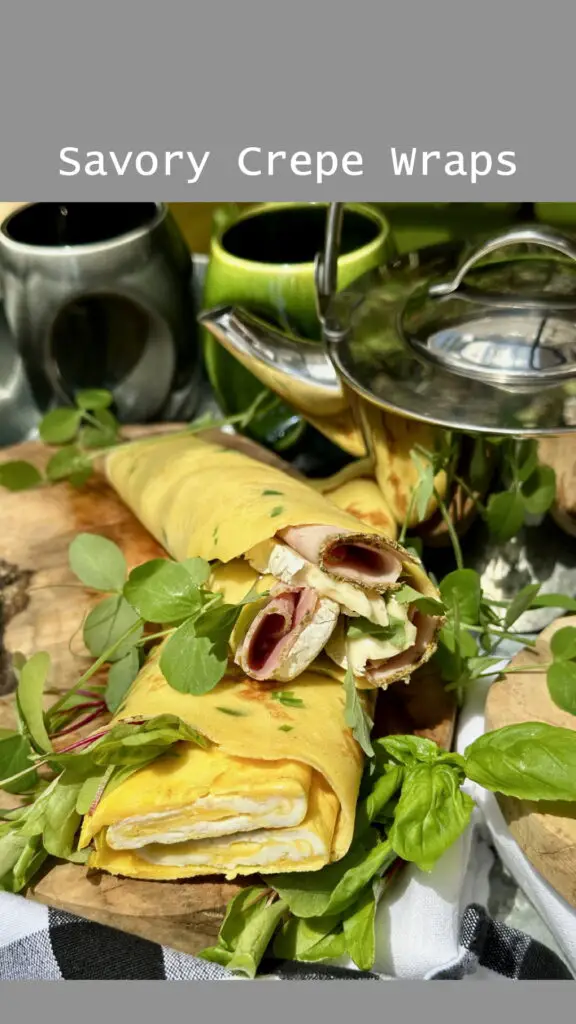
Wrap a savory crepe around a slice of prosciutto, slice of cheese and a spear of cooked asparagus.
Fill and wrap with sautéed vegetables or a cheesy scrambled egg.
Make these in advance and simply warm before serving.
Garden Fresh Herb Crepes
As an avid grower of fresh herbs, both in my yard during summertime months, several pots during the indoor months and microgreens most every time of year, I love to add these homegrown treasures to my crepes.
The choices of fresh herbs at your local farmers markets are bound to inspire the various fillings you will want to put in these delicious savory crepes.

What Makes A Savory Crepe Batter Special?
If you are wondering what makes a savory crepe batter special, it is simply the smooth batter made of mostly eggs and whole milk, with very little all purpose flour.
Are crepes really just thin pancakes? Absolutely not!
The special aspect about ‘perfect crepes’ is that, even though thin, the eggs in the batter make for a resilient thin crepe and wrapper.
Whether sweet fillings or savory fillings, these beauties hold the ingredients inside without falling apart.
For this reason, savory crepes are perfect for the final wrapping of a Wellington, before the puff pastry is wrapped around and baked.
Having the crepe wrapped around the many layers of a Wellington, acts as a security blanket to keep the juices from dissolving the dough of the puff pastry.
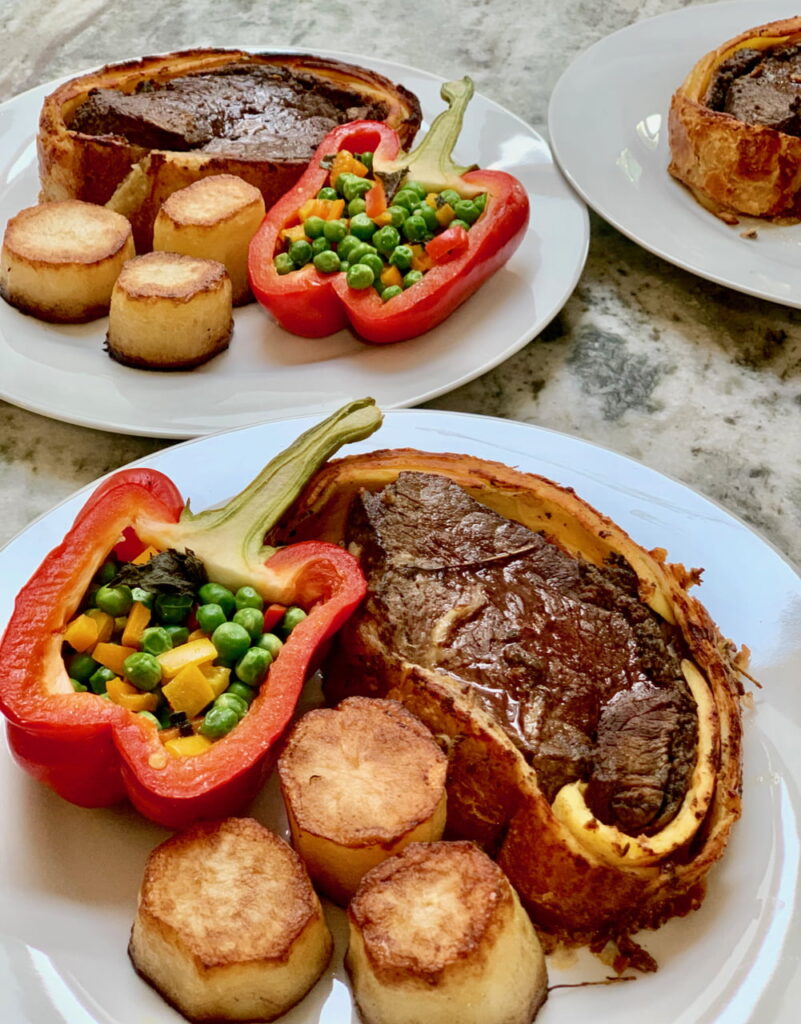
Savory Herb Crepes For Beef Wellington
If you are a lover of Beef Wellington (or perhaps my Venison Wellington), then these savory herb crepes are a must.
Why, you ask, since you will be wrapping the meat with puff pastry?
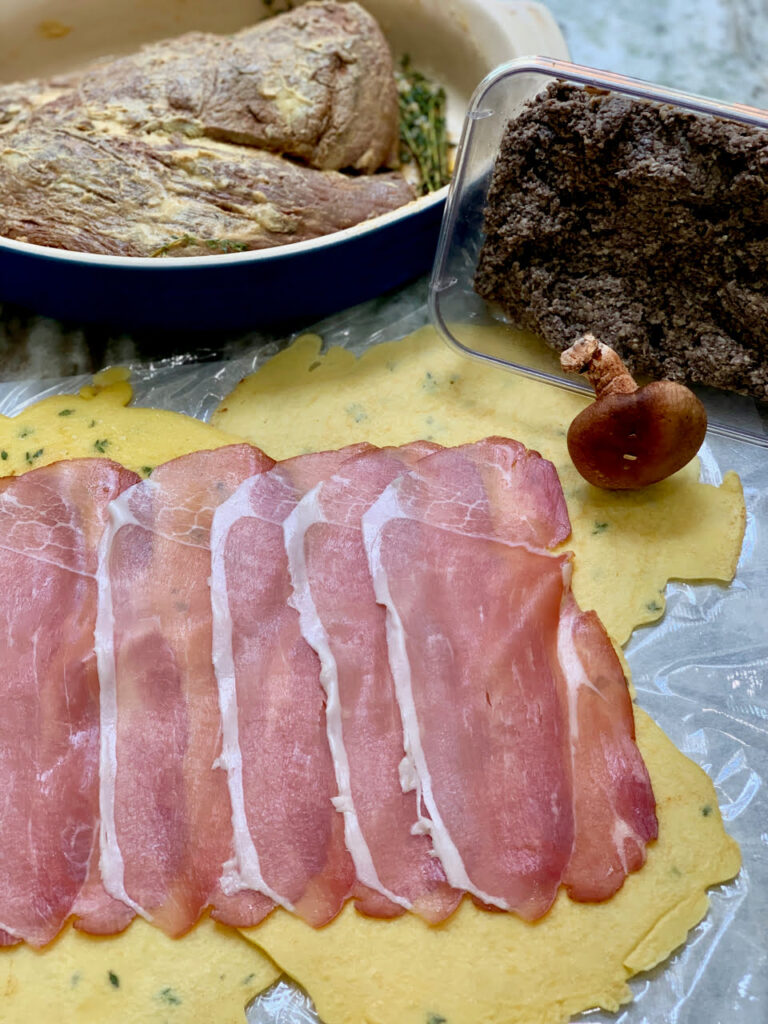
The first Beef Wellington I ever made, I went all out; mushroom pate, prosciutto and a rub of Dijon mustard on the seared tenderloin.
The puff pastry did not hold up well with all these ‘wet’ things tucked inside.
The job, of a Wellington, is so much easier when using the crepes as a security blanket!
Savory Crepe Filling Ideas?
The short answer to this, is to think of a savory crepe the same as you would a ‘wrap’ for any of your favorite filling options.
If breakfast crepes are what you’re after, then you might just opt for a lovely egg omelette (as I do often), with a bit of gruyere cheese and perhaps a little fresh spinach.
Make the omelette in the same crepe pan or a nonstick skillet, fold the omelette before removing it from the pan and wrap inside of the already prepared crepe.
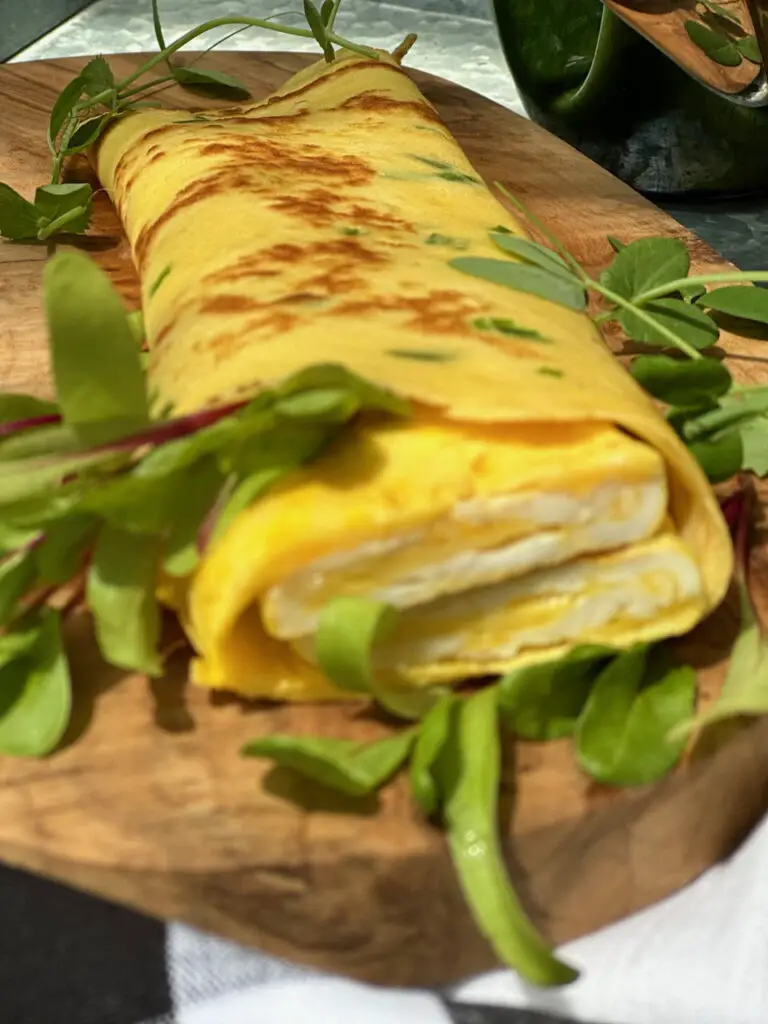
This makes for a delicious savory breakfast or an easy to pack and go, midday meal!
Another option for a fast savory crepe is to have your crepes made in advance, and spread a little sour cream or cream cheese on the crepe, with a few slices of smoked salmon (for a seafood lover), and some chopped green onions.
The quickest savory crepe filling, is one I made for my grandkids; ham and cheese, wrapped with a few microgreens tucked inside, wrapped in plastic wrap, and off to school they went!
Can A Savory Crepe Recipe Be Used As Sweet Crepes?
This easy, delicious recipe can absolutely be used for a sweet filling.
Simply omit the herbs, use less salt and add a pinch of sugar into the batter.
The possibilities are endless.
Saute a handful of finely chopped apples with a pinch of sugar and cinnamon and use this filling inside the crepes.
You would think you are eating an apple pie without the long hours spent making a pie crust and long bake time.
Or, simply fill the crepe with fresh fruit, a dusting of powdered sugar and you’ve got quick French Crepes.
How To Make Crepes
There are a few options, in the way of pans, used to make crepes, however, a nonstick crepe pan or non-stick skillet, makes the job much easier.
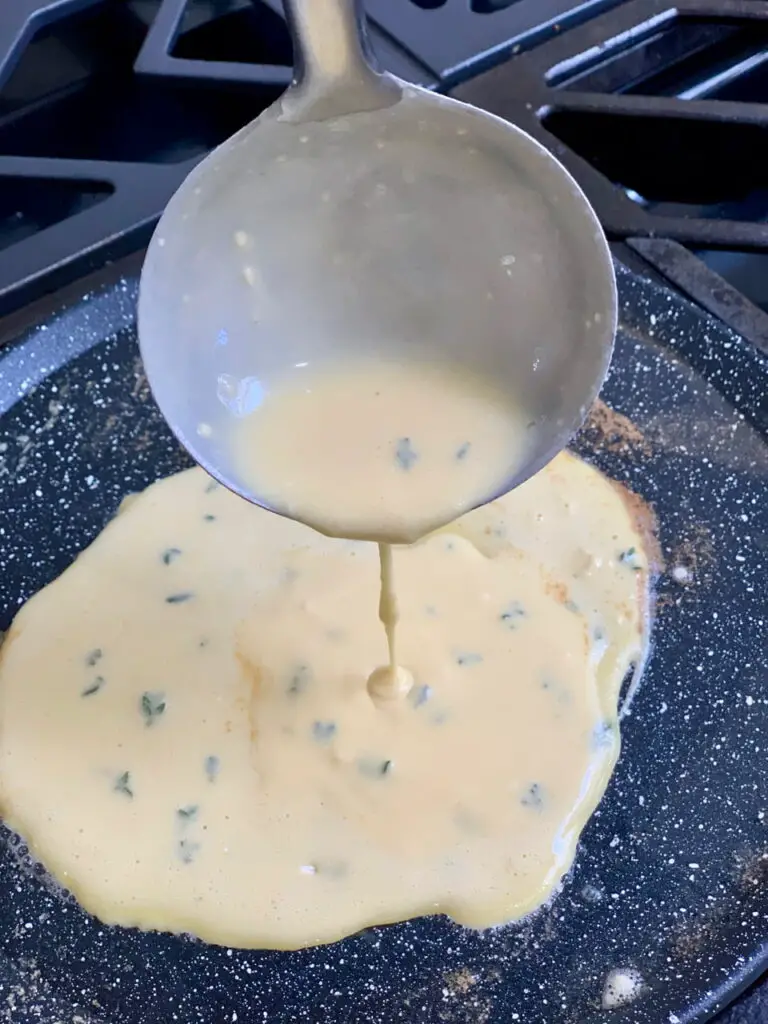
Even though you only make one at a time, the cooking time is fast, while maneuvering a thin layer of the batter over the pan, which makes each crepe thin and perfectly cooked.
While raw eggs and milk are the primary liquid in the batter, with not very much flour going into the wet mixture, it helps to let the batter rest and thicken a bit, before cooking.
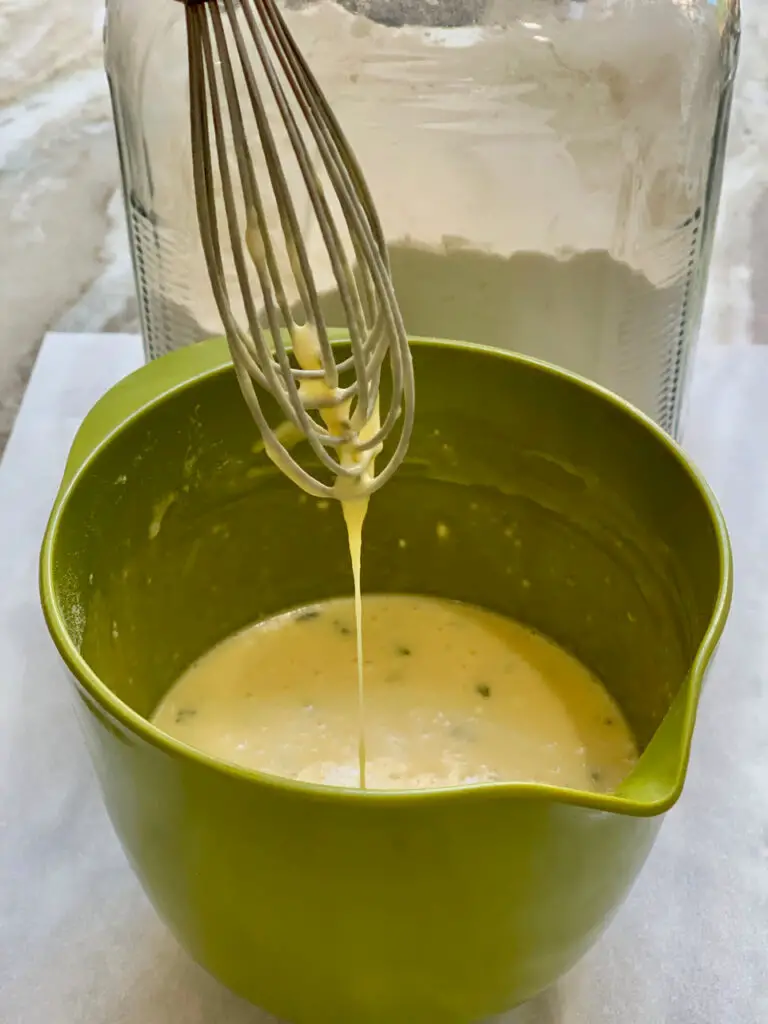
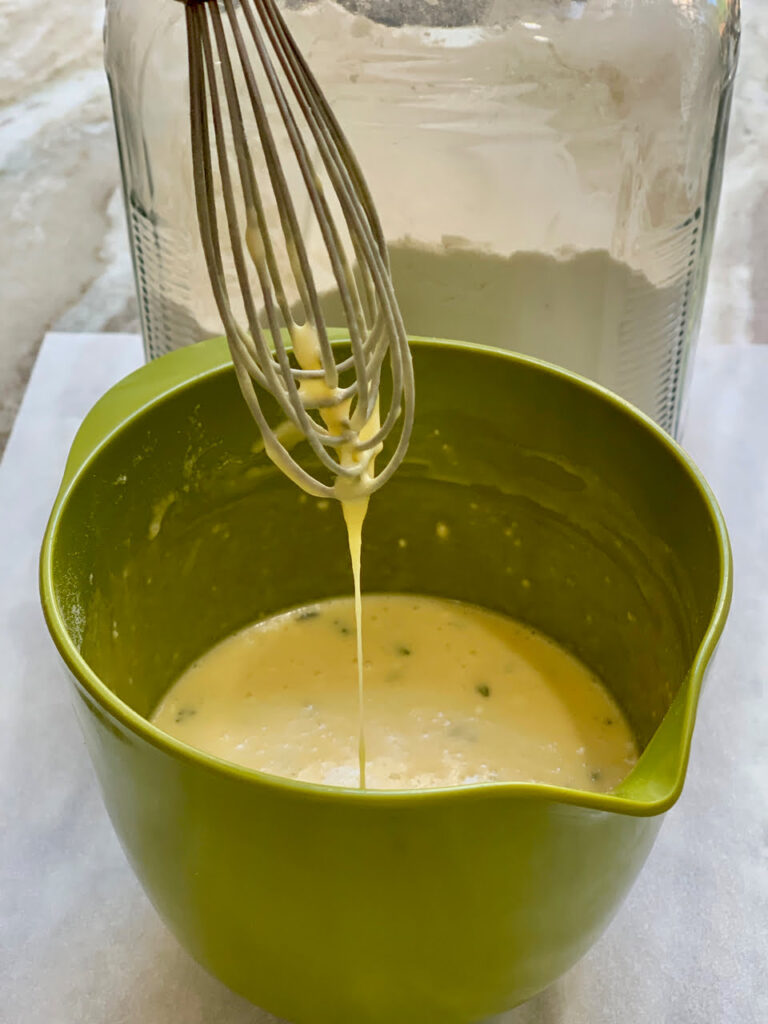
- Step 1 – Whisk the batter together in a large bowl, in which you will need a ladle to pour a small amount onto the pan, or use a bowl with a spout.
- Step 2 – Once the pan is hot, on medium heat, place a small pat of butter, a thin layer of oil or cooking spray, over the heated pan, spread over the entire pan and then pour the excess off to use as needed.
- Step 3 – Tablespoons of batter are quickly poured into the center of the pan, turning the pan quickly to coat it with the batter. The cooking time goes fast, barely a minute.
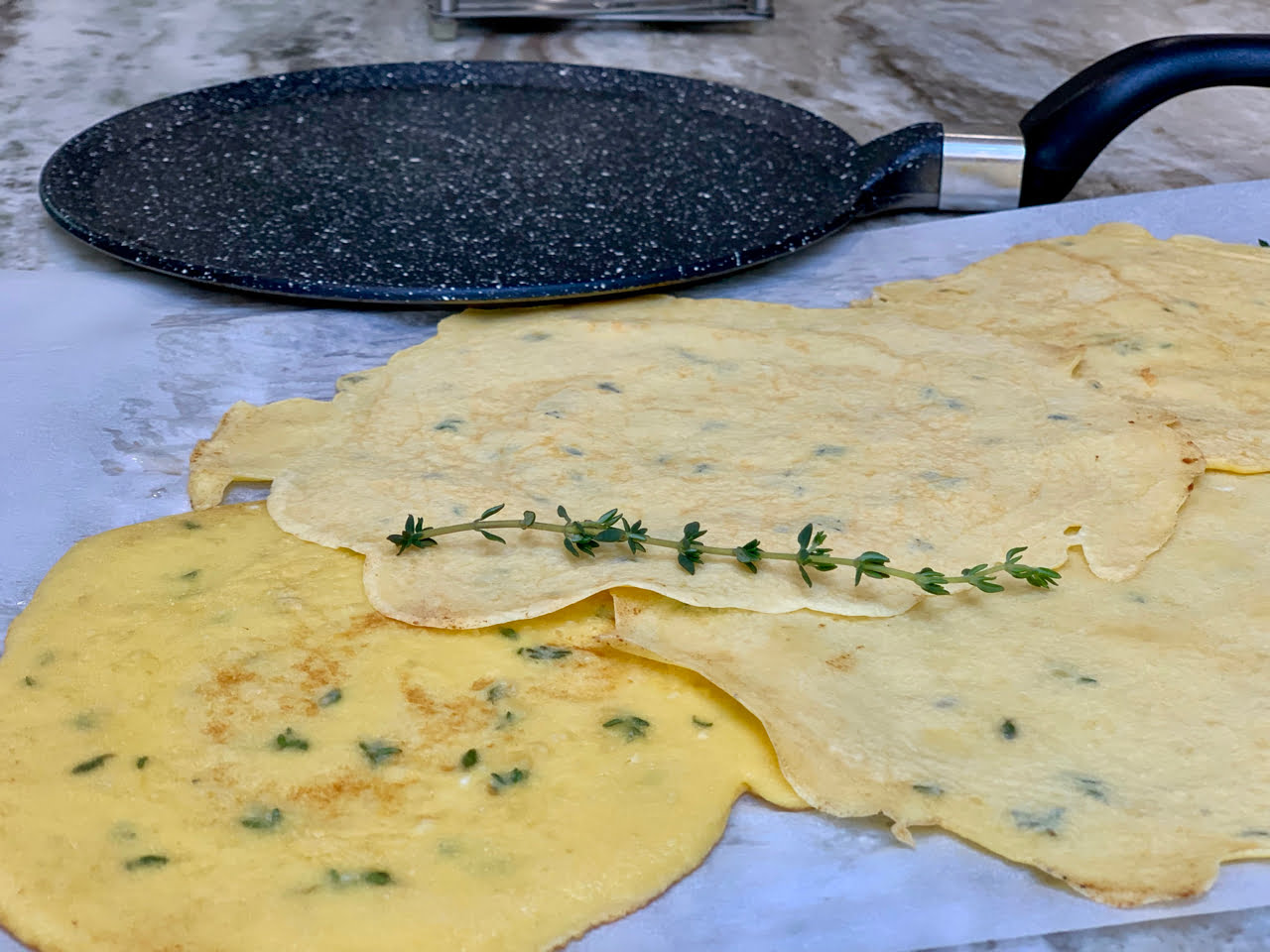
- Step 4 – With a rubber spatula or a very thin metal spatula, flip the crepe over for maybe 10-seconds more to cook the second side, making sure the edges of the crepe begin to look lacy.
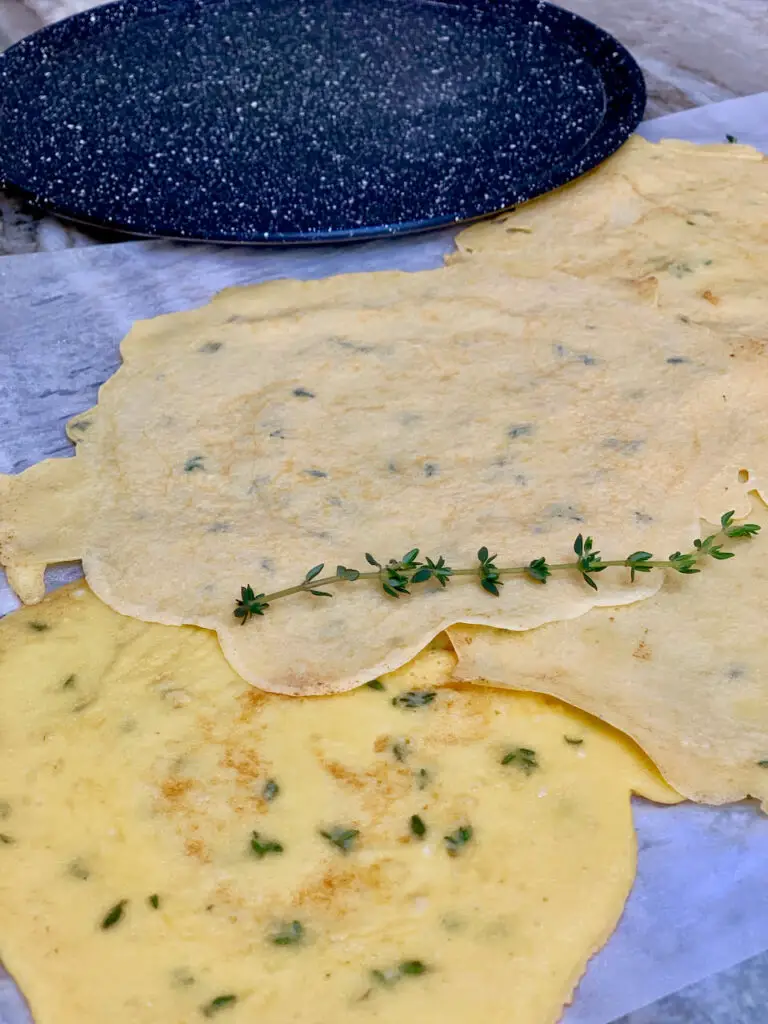
- Step 5 – Slide the cooked crepe onto a sheet of parchment paper and continue with the remaining crepes.
- Step 6 – Once the crepes are made and separated with a piece of parchment paper between each, they can sit out room temperature for several hours or be stored in an airtight container in the fridge.
Can Crepes Be Made In Advance?
Crepes can absolutely be made in advance.
In fact, when these crepes are chilled, they become even more durable to work with.
The trick to making crepes in advance is to be certain to place a piece of parchment paper or wax paper between each layer so they don’t stick together.
Store the cooked crepes in an airtight container until ready to use.
When using to wrap around something, like a Wellington, wrap with cold crepes.
Should you want them warm, fill and wrap the crepes and warm over a slightly warm pan, just to warm but not to cook.
Ingredients Options
Not everyone will want to use whole milk in their crepes, and so a whole coconut milk can definitely be used instead.
The flavor of the coconut milk will add a sweeter taste to savory crepes recipe, so be certain to add herbs that have flavor or even a pinch of crushed garlic to the batter.
Opting to use rice flour instead of all purpose flour can work, and makes for a lacier, more delicate crepe.
I would not, however, recommend if the crepes are going to be used to wrap around a Wellington.
A bit more structure, that comes from a gluten flour, is needed and not a delicate crepe.
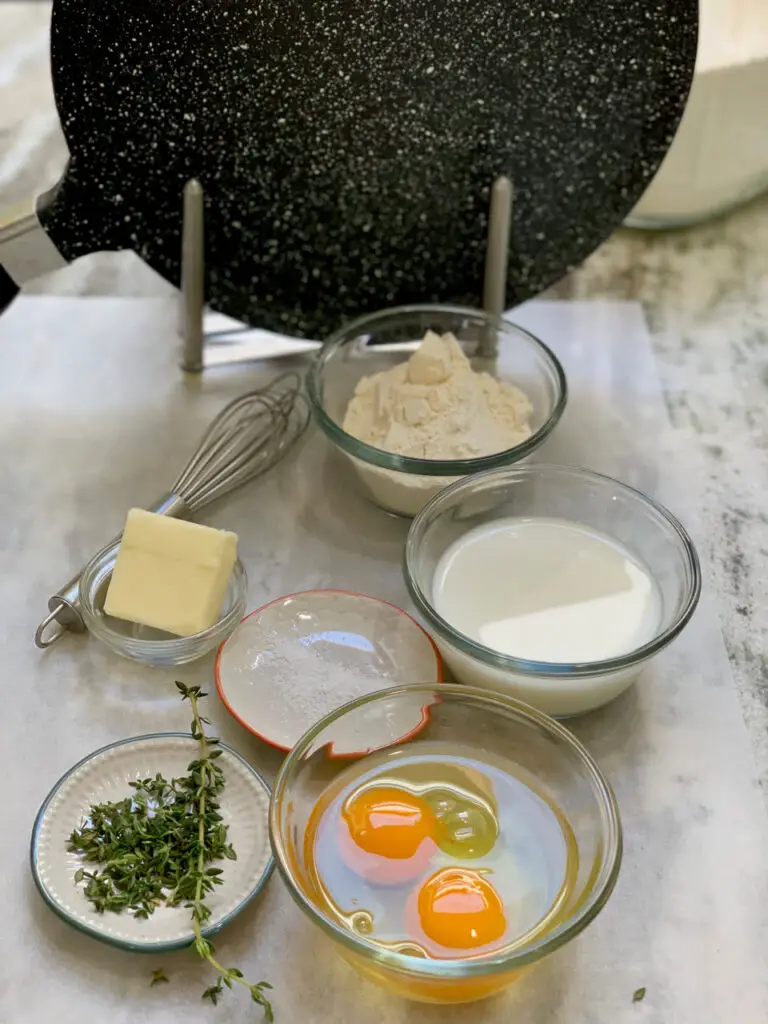
Ingredients Needed
- Eggs are the heart of these crêpes, doing most of the work that flour usually does in traditional wraps. They provide structure, flexibility, and protein, creating a tender yet sturdy wrap that holds fillings beautifully. Using good-quality eggs, ideally pasture-raised, adds richness in flavor and a deeper golden color that makes these crêpes feel especially inviting.
- Butter, a small amount of butter brings depth and comfort to the crêpes. It adds a subtle richness and helps prevent sticking while cooking, giving the crêpes delicate, lightly crisp edges. Butter also carries the flavor of the herbs, rounding everything out without overpowering the eggs.
- Milk softens the eggs and creates a smooth, pourable batter. It helps thin the mixture just enough to make those whisper-thin crêpes that bend easily without tearing. You can use dairy milk or a favorite alternative, each will slightly shift the flavor and texture, making the recipe adaptable to your kitchen and lifestyle.
- Flour, though eggs take the lead here, a modest amount of flour provides balance and stability. It helps the crêpes hold together, especially when used as wraps, without tipping them into heavy or bread-like territory. This small inclusion keeps the crêpes light, flexible, and far gentler than standard flour-based wraps.
- Herbs are where these crêpes truly come alive. Finely chopped parsley, chives, dill, thyme, or basil infuse the batter with color, aroma, and freshness. Instead of being a topping, the herbs are woven directly into the crêpe itself, turning a simple wrap into something fragrant and savory, perfect for both breakfast fillings and light lunches.
- Salt makes these crepes savory rather than sweet, and intensifies the flavors of each ingredient.
Equipment Needed
- Mixing bowl, a simple mixing bowl is where everything begins. It gives the eggs room to be whisked smooth and airy, allowing the milk, flour, butter, and herbs to come together into a unified batter. Nothing fancy is needed, just enough space to work comfortably and without rushing.
- Whisk, a whisk is essential for creating a silky batter. It helps break up the eggs, smooth out the flour, and evenly distribute the herbs so every crêpe has the same delicate flavor. Whisking by hand also gives you control over the texture, keeping the batter light, rather than overworked.
- Measuring cup and measuring spoons, these tools ensure balance. With a recipe like this, where eggs take the lead and flour plays a supporting role, accurate measurements help maintain the perfect ratio for tender, flexible crêpes that won’t tear when used as wraps.
- Crepe pan, a crêpe pan, with its shallow sides and wide surface, makes flipping and swirling the batter effortless. It allows the batter to spread thinly and evenly, resulting in crêpes that cook quickly and stay beautifully soft.
- Non-stick spray – if not using a non-stick pan, a light coating of non-stick spray prevents sticking and encourages clean release without adding excess fat. It’s especially helpful when working with egg-forward batters that can be more delicate than traditional flour crêpes.
- Spatula, a thin, flexible spatula is your quiet helper at the stove. It gently loosens the edges, assists with flipping, and keeps the crêpes intact, important when you want them strong enough to wrap but tender enough to fold.
- Small ladle helps portion the batter consistently. This keeps each crêpe the same size and thickness, making them easier to stack, fill, and roll once cooked.
- Parchment paper is perfect for stacking finished crêpes. It prevents sticking, protects their delicate surface, and makes it easy to store or reheat them later without losing their soft texture.
- Stovetop or burner is where the transformation happens. Gentle, even heat is key, allowing the crêpes to set without browning too quickly. Cooking them slowly and attentively ensures they remain supple and wrap-ready.
Savory Herb Crepes – For Wraps Omelettes Or Tapas
Equipment
- Nonstick Crepe Pan
- Parchment paper
Ingredients
- 3 Eggs
- 1 1/2 tbsp Butter
- 3/4 cup Milk
- 3/4 cup Flour
- 2 tbsp Herbs finely chopped
- 1/2 tsp Salt
Instructions
- In a mixing bowl, preferably with a spout, whisk the eggs and milk until light and creamy in color.
- With the crepe pan set to medium on top the stove, place the butter on the pan to melt it, swirling it around the pan to lightly grease the pan. Slowly whisk the melted butter into the egg/milk mixture.
- Whisk in the flour, salt and fresh herbs.
- Ladle about 1/4 cup of batter onto the center of the medium warm crepe pan. Swirl the pan all around so that the batter spreads thinly on the pan. Wait until the top begins to form bubbles, gently flip it over and cook for just another 10-20 seconds, remove and place on parchment paper. Continue until all the crepes are made.
Video

I believe the table... that place that draws people to gather, is the most powerful symbol of togetherness. All that happens before the table is set, the planning, the gathering, the preparing, are all an intricate part of the dance that create the mood of celebration to share with friends and loved ones.