
Garden fresh basil almond pesto, with Pecorino and lemon, is a bright, bold twist on classic pesto, with nut-free or dairy-free options.
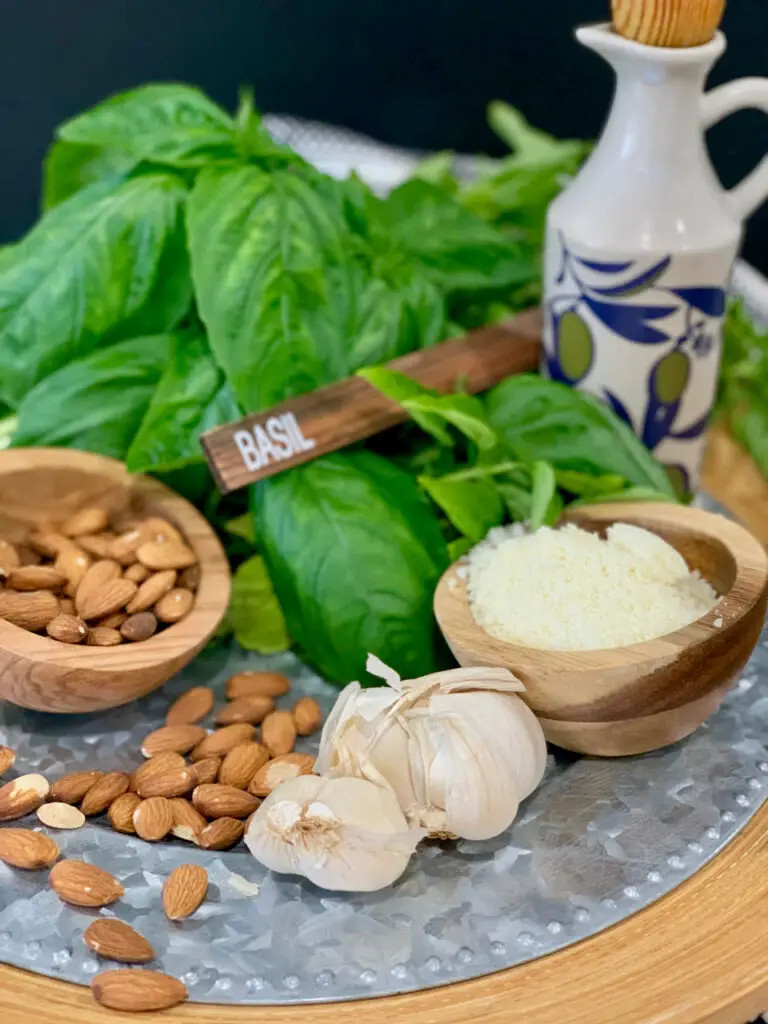
Pesto With A Twist
This homemade basil pesto with almonds is bright, garlicky, and bursting with fresh lemon flavor. Made with garden basil, pecorino cheese, and simple pantry ingredients, it’s a bold twist on traditional pesto, with easy dairy-free and nut-free options.
Almond Basil Pesto – Easy Homemade Pesto Without Pine Nuts
There is nothing quite like homemade basil pesto made from fresh garden basil, fragrant, bright, and alive with flavor. This almond basil pesto is a bold twist on traditional pesto, made with toasted almonds instead of pine nuts, sharp pecorino cheese instead of parmesan, and finished with plenty of fresh garlic and lemon for lift.
It’s everything you want in a pesto sauce: silky, vibrant green, and intensely aromatic. The lemon wakes up the basil. The garlic gives it backbone. The pecorino adds a salty, sheep’s milk tang that lingers beautifully.
Unlike classic pesto alla Genovese, which traditionally calls for pine nuts and Parmigiano, this version is a little more rustic, a little more accessible, and in my opinion, even more flavorful.
What Is Pesto?
Call it the green dressing in your egg salad, the sauce on your summer pasta, but let’s call it green brilliance! A hefty schmear on a slice of homemade bread, or an even better topping on a summertime Pesto Pizza is how I like to indulge in pesto.
I call pesto; the best creation of any sauce made from garden herbs. Whirl into a sauce to eat on just about anything.
When you crush fresh basil leaves between your fingers, summer releases its perfume. That scent, green and almost sweet, is the real magic of this sauce. The almonds bring warmth and body, the lemon keeps it bright, and suddenly you have something that tastes like sunlight in a bowl.
Almonds In Pesto
Since I like lots of garlic in my pesto (fabulous immune booster), I find the sweetness of almonds, a great balance to the tang of the garlic.
Furthermore, I’ve come to love garlic more, now that I’ve started growing my own and found that the scapes (the green shoots above ground), grow in winter for all my soups!
Lightly roasted and ground almonds, in the pesto, also gives a little crunch to the texture, and depth to its taste. The uses are endless but keeping it simply, it makes for a lovely dressing in egg salad, or a spread on celery sticks.
And let’s talk, for a moment, on the cost effective use of almonds in a pesto sauce instead of pine nuts… I knew that would get your attention!
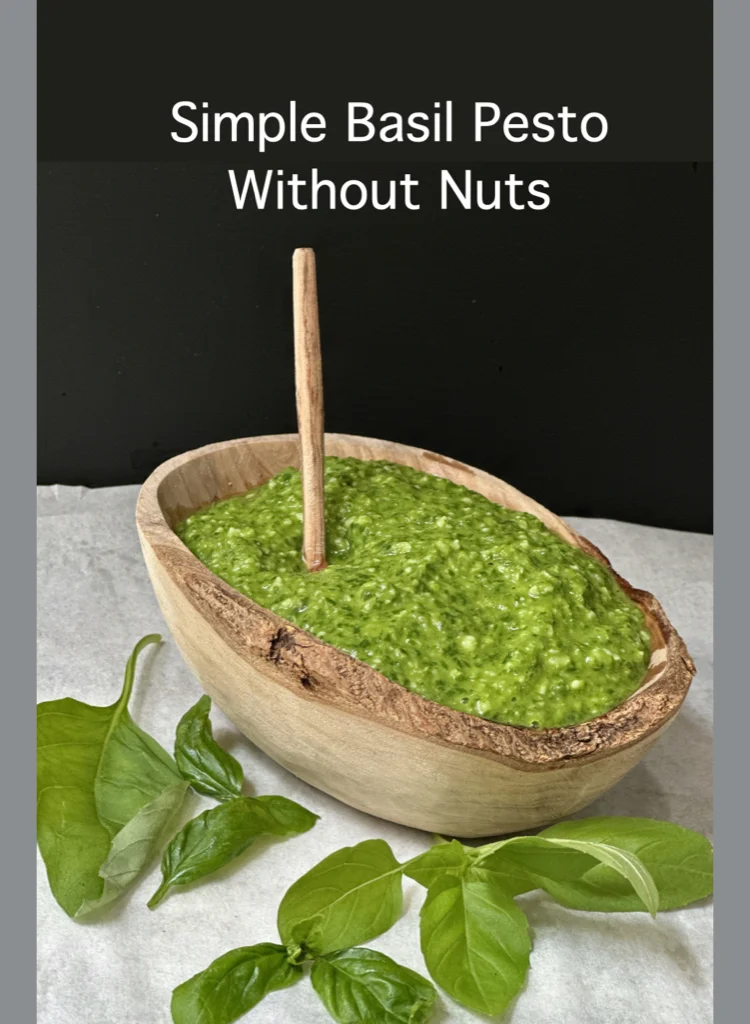
Nut Free Basil Pesto
Not everyone likes nuts, some folks don’t like the texture of nuts in their sauce.
There is also the concern of nut allergies, and for this concern, especially since my granddaughter has nut allergies, I’ve also made nut free pesto but simply swapping nuts for cannellini beans. They are buttery, creamy and offer substance to a pesto without interfering in the star of this sauce, the basil.
Simply follow the recipe I’ve given to you here and leave out the nuts!
Summertime Basil Pesto
Can you think of a more delicious use for the abundant basil growing in your summertime pots? The delicate leaves puree easily into a smooth spread. Almonds, being also delicate in flavor, will not detract from the taste of the basil.
But don’t forget to make lots now to stash away in the freezer for winter recipes. It seems the deeper we go into the short, cold winter months, the more I long for the flavors of my summer gardens.
For this reason, think ahead and stash some away now, while the fresh flavors of summer herbs are still available.
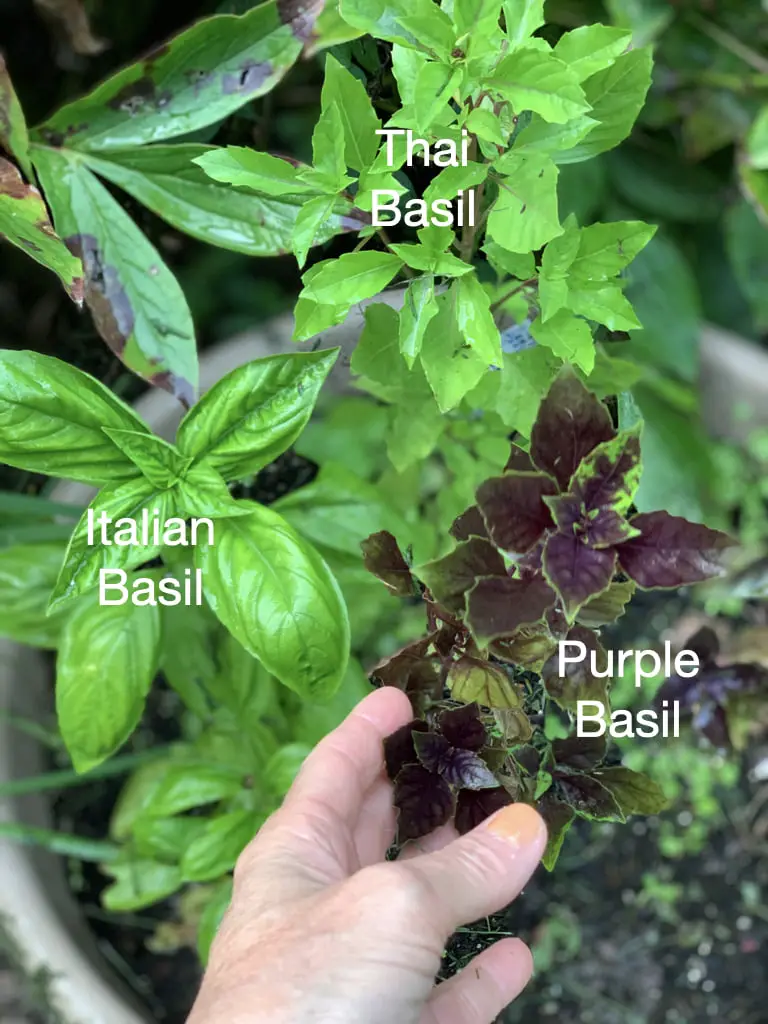
What Type Of Basil For Pesto
Most commonly used basil for pesto is the gentle flavored, almost sweet Italian basil. Soft, floppy leaves of green, make this basil sweetest for sauces and pasta dishes.
Thai basil can also be used in pesto, but be prepared for a very different flavor! This very aromatic basil smells and tastes a bit more like fennel with a slightly spicier flavor.
If making pesto with Thai basil, I would definite go with an earthier tasting nut, like walnut, or even peanuts. What a great flavor for a delicate white fish!
Purple basil is also a great choice but again, with a different flavor. This basil has a strong clove flavor. Pesto is a good use for purple basil because it remains raw and keeps its color. Cooking purple basil, however, turns the leaf to an unappealing black color, not a problem if tomato sauce is being used.
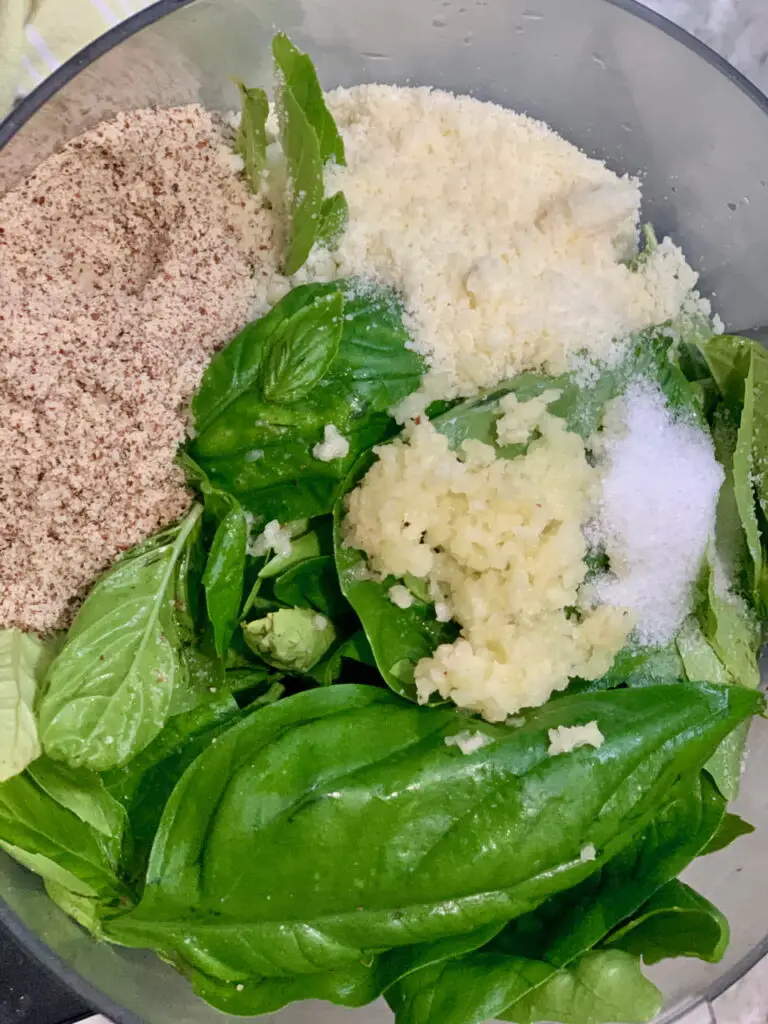
How To Make Pesto
- First, pick the fresh leaves from your basil plant or store bought bundle. Wash and pat dry.
- Second, lightly toast the almonds on top of the stove to deepen their flavor. Cool before continuing so as not to wilt the basil leaves.
- Last, place all the ingredients into the blender or food processor, placing the wet ingredients in first and top with almonds, whirl until the desired paste is obtained. Remove and serve or store in a closed container
Tools You’ll Need to Make Almond Basil Pesto
You don’t need much to make homemade basil pesto, just a few simple kitchen tools and a little patience while everything comes together into something vibrant and green.
- Food processor – A food processor makes pesto effortless. It quickly breaks down the almonds, garlic, and basil into a smooth, spoonable sauce while allowing you to stream in the olive oil for the perfect creamy texture. Pulse gently, over-processing can heat the basil and dull its bright green color. If you don’t have a food processor, a high-powered blender works too. Traditionally, pesto is made with a mortar and pestle, but for ease and speed, the processor wins.
- Garlic press – A garlic press helps distribute the garlic evenly throughout the pesto, giving you bold flavor without large chunks. If you prefer, you can finely mince the garlic with a knife, but the press saves time and keeps the texture silky.
- Citrus press – A simple citrus press ensures you get every drop of fresh lemon juice without seeds. Since lemon is key to brightening this pesto and preserving its vibrant color, freshly squeezed juice makes a noticeable difference.
- Measuring tools – Even though pesto feels rustic and intuitive, measuring helps maintain balance, especially between the almonds, cheese, olive oil, and lemon. Once you’ve made it a few times, you may start adjusting by instinct (the best kind of cooking), but for consistent results, measuring tools keep everything in harmony.
- Rubber spatula – A rubber spatula is essential for scraping down the sides of the food processor and making sure none of that fragrant basil mixture goes to waste. It also helps transfer every last spoonful into your storage jar, and trust me, you won’t want to leave any behind.
- Glass jars with lids (for storing) – Store your homemade basil pesto in clean glass jars with tight-fitting lids. Glass keeps flavors fresh and prevents staining. Once filled, smooth the top of the pesto and pour a thin layer of olive oil over the surface before sealing, this helps preserve color and prevent oxidation. Refrigerated, your pesto will stay vibrant for several days. It also freezes beautifully in small portions.
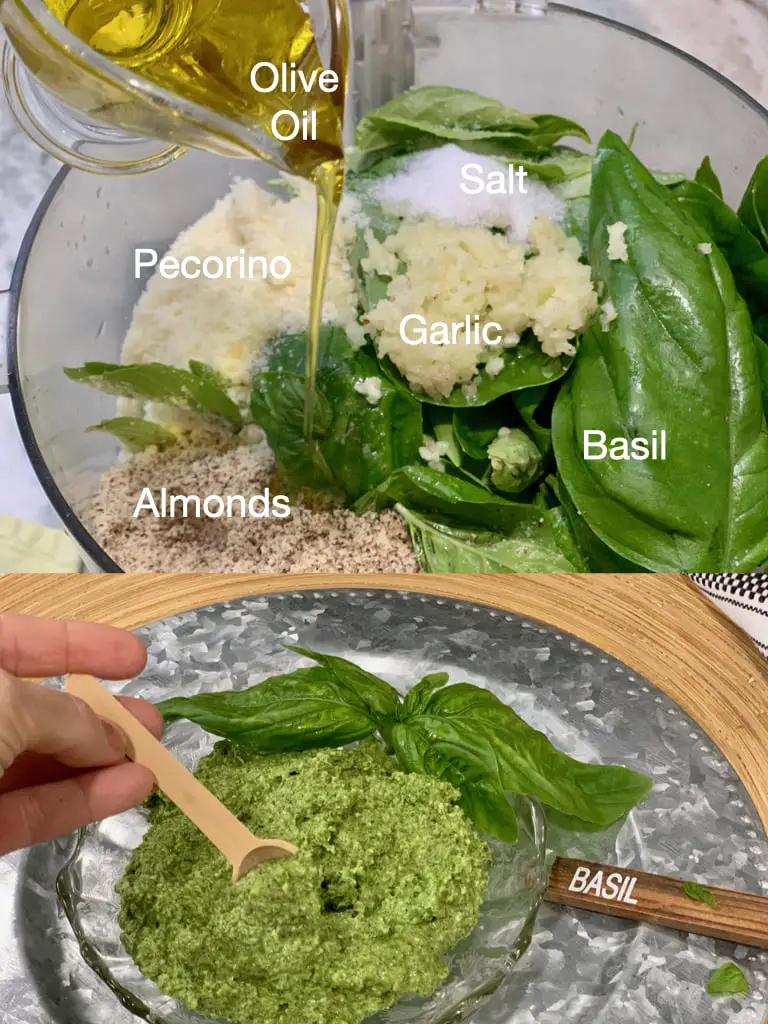
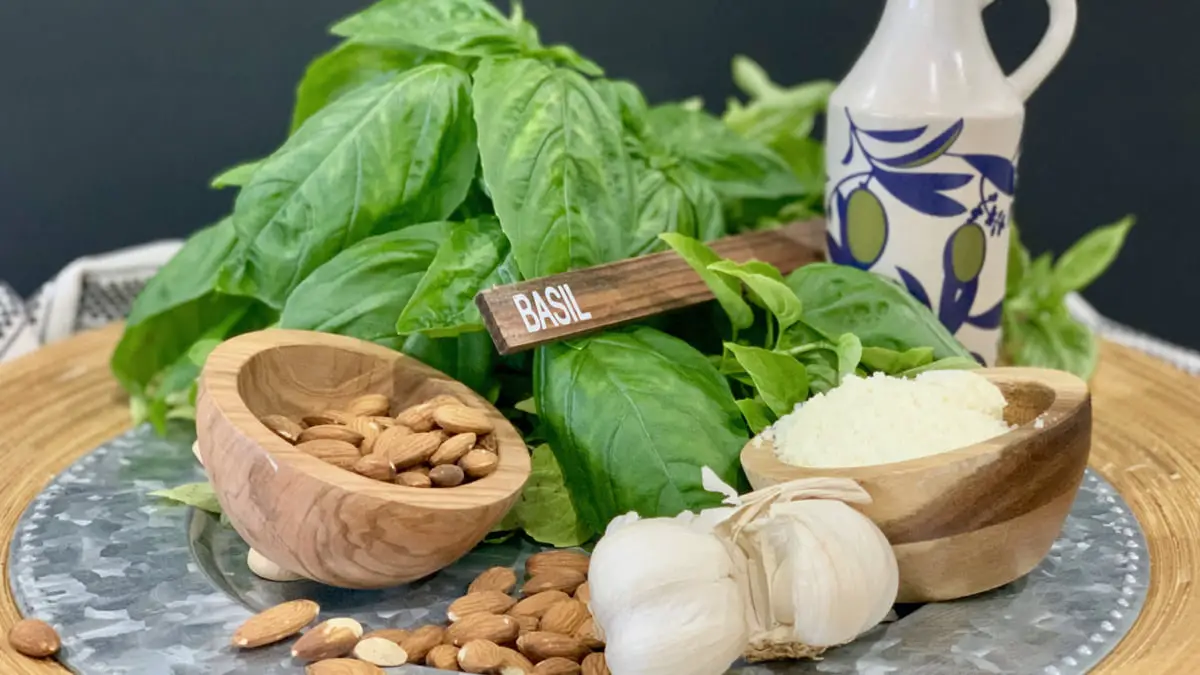
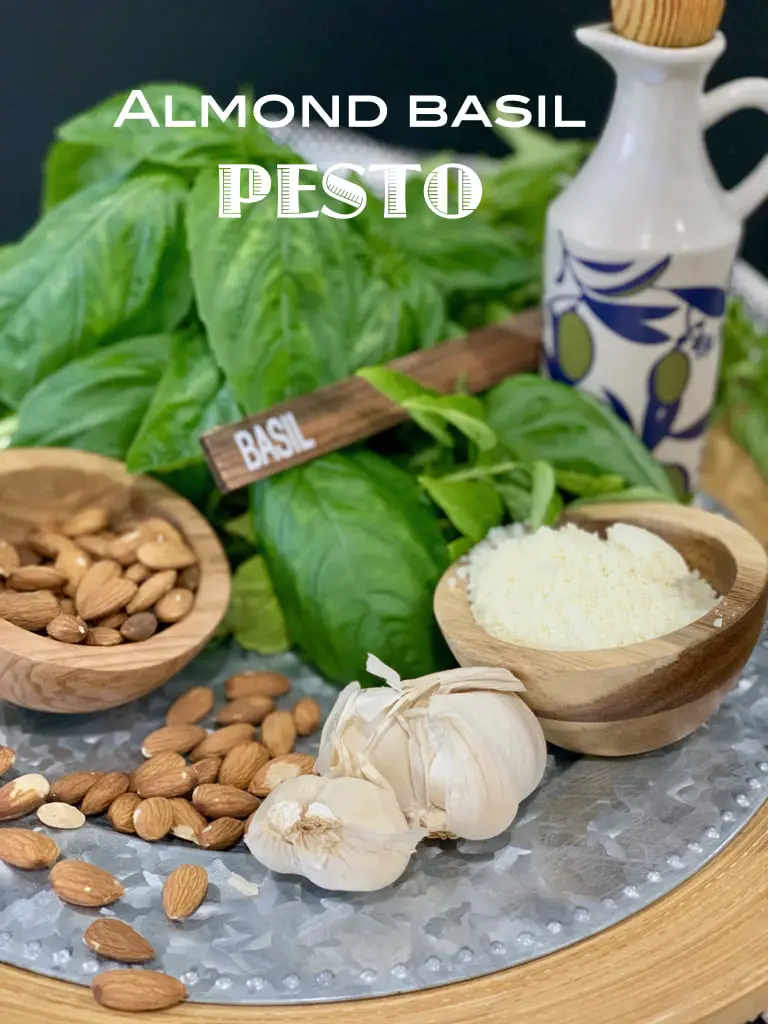
Ingredients for Almond Basil Pesto
- Basil Leaves – Fresh basil is the heart of any true basil pesto. Sweet, peppery, and intensely aromatic, the leaves are where all the magic lives. When crushed, they release an unmistakable summer perfume, green, slightly spicy, and almost floral. Use only fresh, vibrant leaves. Avoid wilted or bruised basil, which can darken the sauce and dull its flavor. If you grow basil in your garden, this is its moment. The more fragrant the basil, the better your homemade pesto will taste.
- Almonds – Instead of traditional pine nuts, this pesto uses toasted almonds for a deeper, slightly buttery richness. Almonds are more affordable and easier to find, but they also add body and subtle sweetness. Lightly toasting the almonds before blending enhances their flavor and gives the pesto a warm, nutty backbone. The result is a pesto with structure, creamy, but not heavy.
If you need a nut-free option, cannellini beans make a surprisingly silky substitute. - Pecorino Cheese (or Dairy-Free Alternative) – For bold flavor, I use Pecorino Romano instead of traditional Parmigiano Reggiano. Pecorino is sharper and saltier, made from sheep’s milk, and it gives this lemon garlic pesto a slightly tangy edge that pairs beautifully with fresh herbs and citrus. If you’re dairy-sensitive, a good dairy-free parmesan-style alternative works well here. You can also substitute nutritional yeast for a fully vegan pesto, just adjust the salt to taste.
- Garlic – Garlic gives pesto its backbone. Raw and assertive, it cuts through the richness of the olive oil and cheese while amplifying the basil’s natural brightness. Use fresh cloves, not pre-minced garlic. And if you love a bold pesto (I always do), don’t be shy. Garlic and basil were meant for each other.
- Olive Oil – Extra virgin olive oil binds everything together into a silky sauce. Choose a good-quality oil with a fresh, grassy flavor, not overly bitter, not overly mild. Stream it in slowly while blending to create that luscious, spoonable texture. The oil doesn’t just add richness; it carries the aroma of the basil throughout the sauce.
- Lemon Juice – Lemon juice is what makes this pesto sparkle. Just a squeeze brightens the basil, balances the garlic, and lifts the pecorino. It also helps preserve the pesto’s vibrant green color by slowing oxidation. If you want even more citrus aroma, add a little fresh lemon zest.
- Salt – Salt sharpens everything. Because pecorino is naturally salty, add sparingly at first, then adjust to taste. A small pinch can make the basil sweeter, the almonds toastier, and the lemon brighter. It’s the quiet ingredient, but without it, pesto falls flat.
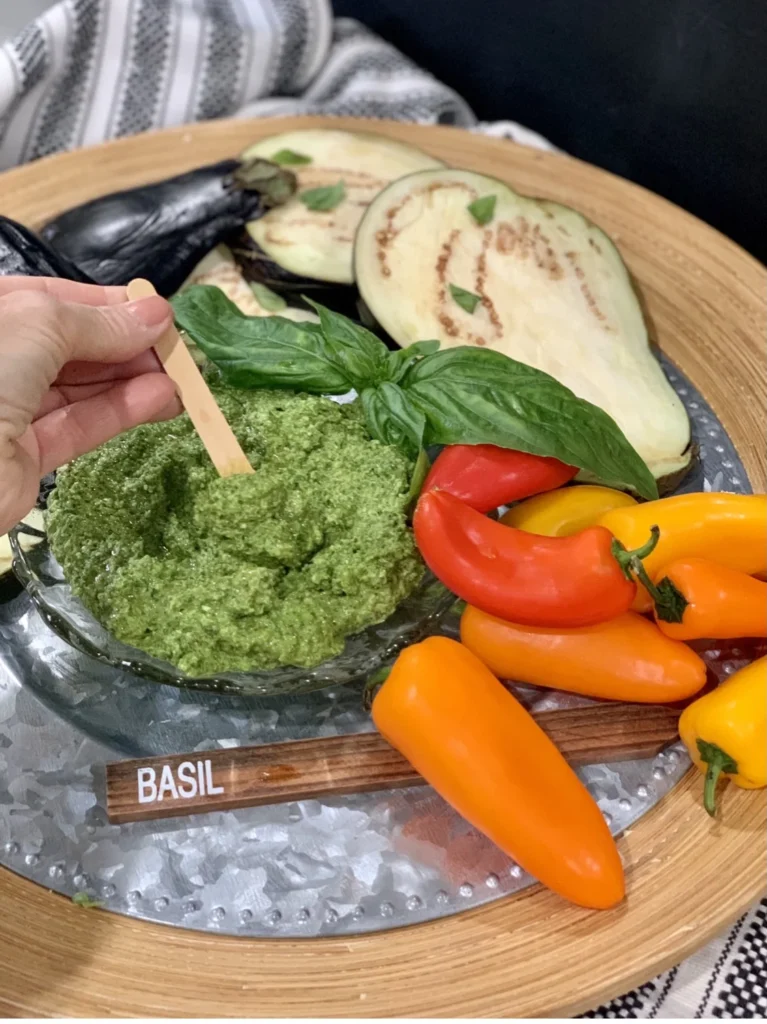
Almond Basil Pesto with Pecorino and Lemon
Equipment
- Food processor or blender
Ingredients
- 2 cups Fresh Basil leaves
- 1/2 cup Almonds
- 1/3 cup Pecorino cheese or non-dairy
- 2 Garlic cloves
- 1/3 cup Extra Virgin Olive Oil
- 1 tbsp Lemon juice
- 1/2 tsp Salt or to taste
Instructions
- Lightly toast the almonds on top of the stove in a saute pan on medium, just enough to deepen their flavor. Shake the pan over the heat to keep the almonds from sitting too long over the hit, a minute or two is enough. Allow to cool before using the almonds in the pesto sauce.
- Place the leaves, almonds and garlic in a processor or blender. Grind until the nuts are broken.
- Add the salt, lemon juice and cheese and puree. While the machine is running, pour in the olive oil. Taste to adjust the salt.
Video
Notes

I believe the table... that place that draws people to gather, is the most powerful symbol of togetherness. All that happens before the table is set, the planning, the gathering, the preparing, are all an intricate part of the dance that create the mood of celebration to share with friends and loved ones.