
These savory nasturtium leaf scones are tender, cheesy, and naturally peppery, similar to arugula or watercress. Unique and perfect for brunch, tea, or spring baking.
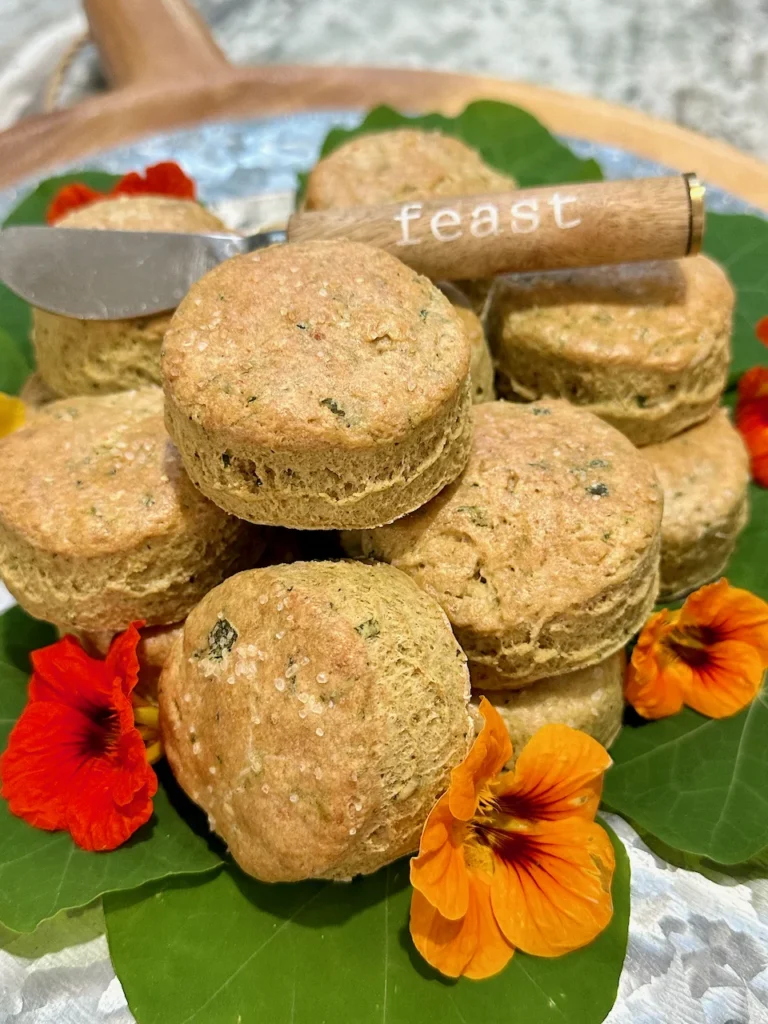
Nasturtium Leaf Scones – From Dirt To Dish
There’s something quietly magical about cooking from the garden, stepping outside, gathering a handful of leaves, and turning them into something warm and golden from the oven.
Nasturtiums are often admired for their bright, cheerful blooms, but it’s the leaves that hold a hidden secret. Soft, round, and vibrant green, they carry a gentle peppery bite, somewhere between arugula and watercress, that transforms beautifully in baking.
An Unexpected Scone That Is Both Rustic Yet Refined
These nasturtium leaf scones are tender and savory, with hints of lemon, parmesan, and fresh herbs woven through every bite. They feel rustic yet refined, like something you’d serve at a spring brunch or a slow afternoon tea.
If you’ve ever wondered what to do with those abundant garden leaves… this is your answer.
What Do Nasturtium Leave Taste Like?
Nasturtium leaves have a fresh peppery flavor, similar to arugula or watercress, but softer and slightly more herbal. When baked into scones, that sharpness mellows into a delicate savory note that pairs beautifully with:
- Parmesan cheese
- Lemon zest
- Butter-rich doughs
- Fresh herbs
They add both flavor and visual interest, making them ideal for unique, garden-inspired baking. Seeds from the nasturtium plant have been made into nasturtium capers, or ‘poor man’s capers‘ as they are called, simply by pickling them.
Why You’ll Love These Savory Scones
These aren’t your typical sweet scones. They’re:
- Lightly crisp on the outside, tender inside
- Packed with savory, herbaceous flavor
- A creative way to use edible garden plants
- Perfect for brunch boards or tea spreads
- Beautiful enough for Pinterest-worthy presentation
They also feel elevated while still being incredibly simple to make.
Nasturtium Plants Are So Easy To Grow
Whether poor soil or nutrient rich potted soil, nasturtium leaves grow heartily nearly any time of year.
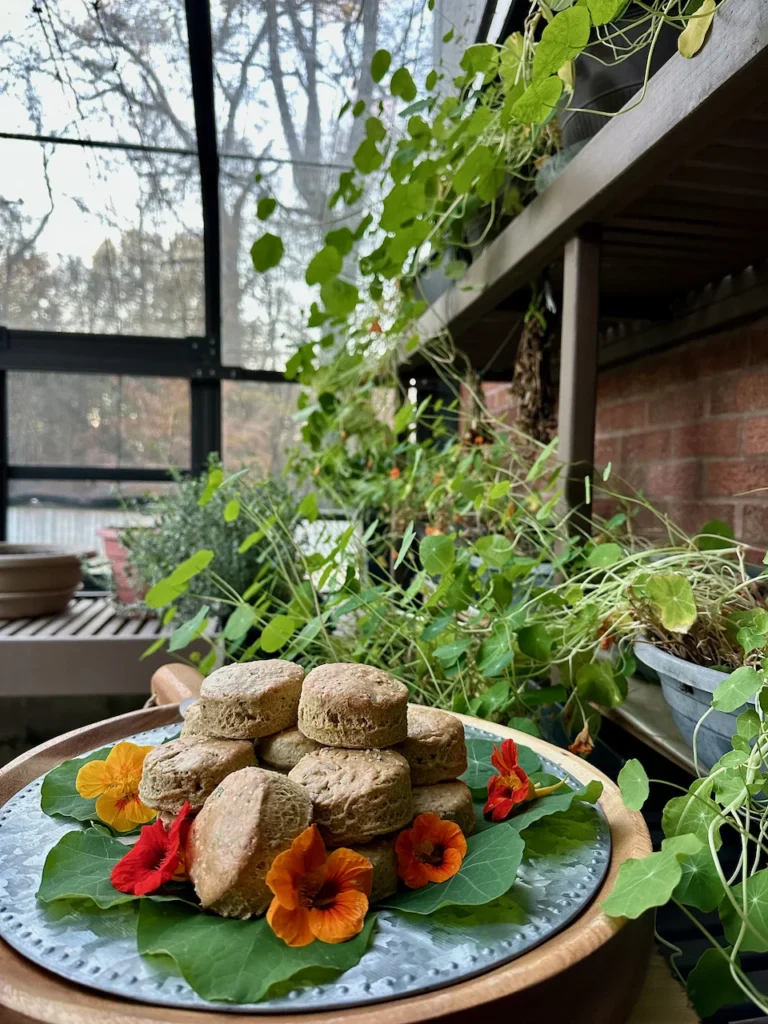
Hanging baskets in the summer or a few pots indoors in the winter, the Nasturtium leaf bring both color and a lovely scent to the home.
This of course, makes them a great option to grow for the nutritional properties as well as their ambiance and beauty.

Nutritional Properties Of Nasturtium Leaves
Leafy green nutrients, found in nasturtiums are rich in fiber, antioxidants and oddly have 10 times more vitamin C than lettuce, also boasting vitamin D and iron.
As if that isn’t enough to cook with these delicious peppery leaves, they also provide antibacterial and antibiotic properties.
If these are not nutritional reasons enough to bring nasturtium leaves into your kitchen, perhaps you’d prefer to trust the wisdom from Lord of the Rings films, as this leaf was introduced as a healing plant; probably taken from ancient Greek mythology!
What’s Not To Love About A Leaf Scone
While scones are often thought of as a flaky type of bread to lather butter and jam on for breakfast or tea, a savory scone should be just as celebrated with a lunch or dinner meal.
In my American home with a British hubby, words become humor. A scone vs a biscuit, a biscuit vs a cookie, but suffice it to say that once any of the above is served at my table, chatter ceases (wink).
Adding finely chopped, nutrition rich nasturtium leaves to this easy scone batter makes for a lovely quick bread to serve with soups, salads or even sliced open and stacked as tea sandwiches.
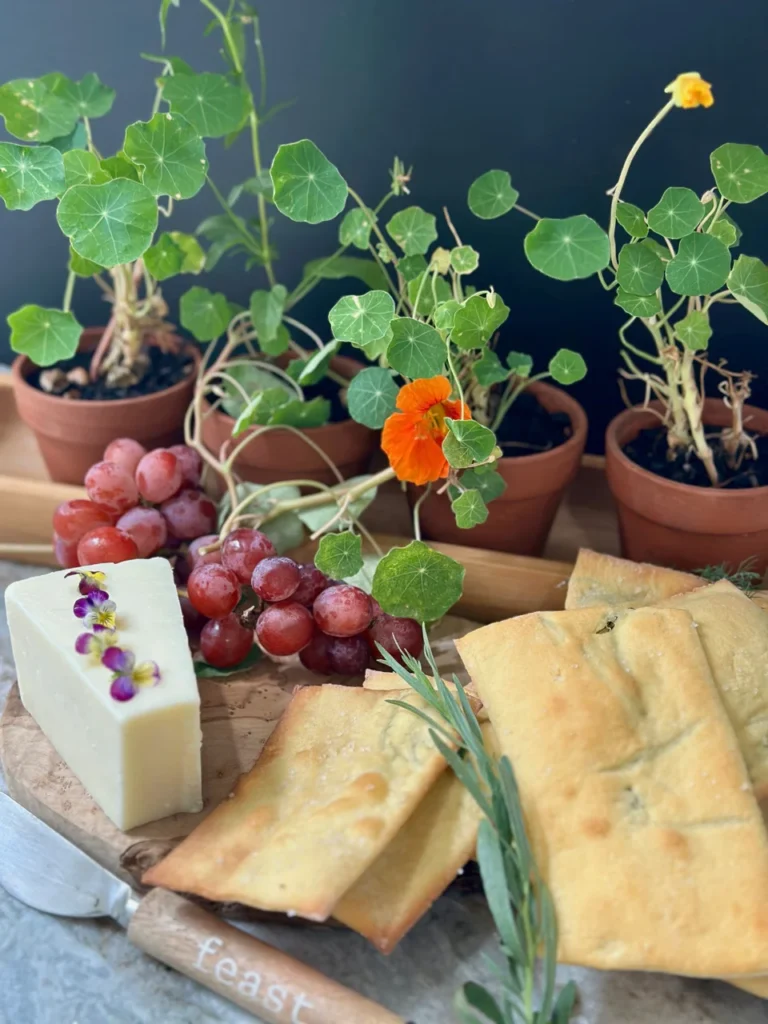
More Scone Recipes To Try – Savory and Sweet
There was a time, when I was growing up, that bread or biscuits were made plain, rarely anything in them unless they were being made with raisins for a sweet bread.
How far we’ve come in bread making, as you may already know from the many types of bread, scones and biscuits here at Whisk and Dine.
- Carrot Ginger Scones – An American Carrot Ginger Scone recipe that’s NOT a carrot cake trying to be a scone!
- Rustic Lemon Mint Scones – Bright in flavor from lemon and mint, rustic in appearance with the help of oat flour and quick to make.
- Blueberry Scones – Plump with fresh blueberries, a buttery oat dough with lemon glaze, for an afternoon tea or ladies gathering.
- Cheesy Beer Biscuits – Are an easy ‘quick bread’ recipe with olive oil, herbs, cheese and beer, which aerates the dough, making them light and fluffy.
- Herb Biscuit – Made to serve over the top of a variety of Pot Pie recipes instead of a pie crust.

Tools to Make Nasturtium Scones
- Baking sheet and parchment paper – A parchment paper lined baking sheet makes for easy removal and cleanup.
- Rolling pin – This dough rolls out easily enough so if you don’t have a rolling pin, grab a wine bottle and use it (wink).
- Hand mixer, pastry cutter or a fork – Scone dough is easy to work with and doesn’t need over mixing, so even a strong fork can work the dough.
- Measuring tools, though in truth I often eyeball measurements and it works just fine.
- Mixing bowl if mixing with a hand mixer. A food processor can also be used.
- Cookie cutter or biscuit cutter for specific shaped scones or simply a knife for rustic cuts.
- Basting brush – Brushing cream or whole milk across the tops of the scones before baking makes for a golden color once baked.
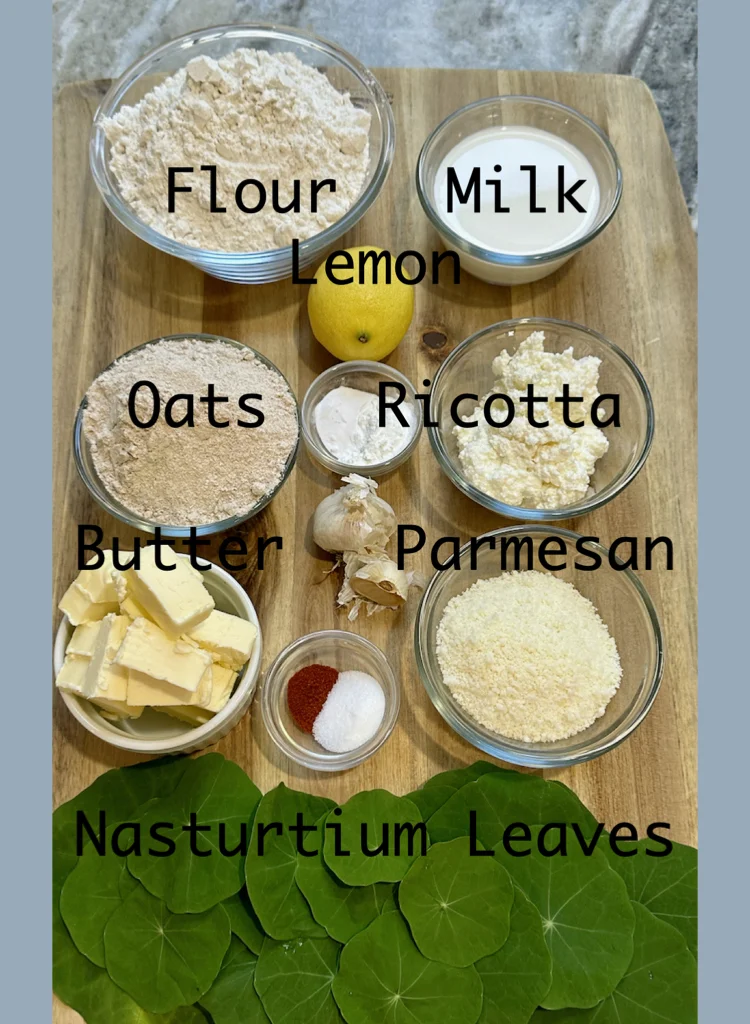
Ingredients Needed For Nasturtium Leaf Scones
- Cold Butter – the colder the better for an airier bake on the scones.
- Cold Whole Milk – whole milk with its natural fat content, makes for a dreamier scone.
- Ricotta, cream cheese or mascarpone, keeps the scones moist and delicate. Kept cold until ready to use.
- Parmesan cheese adds a savory, umami depth.
- Lemon juice and zest, brightens and balances the richness.
- Garlic, if roasted it brings a nuttier flavor, if raw it will add a bit of heat and zing.
- All purpose flour, preferably one with a higher protein count, or a mix of all purpose flour and semolina flour which adds a nuttier taste and golden color.
- Oat flour, simply obtained by grinding oats in the blender or food processor.
- Baking powder and baking soda.
- Smoked chili paprika, though optional it adds a lovely depth of flavor.
- Nasturtium leaves, washed and dried.
How to Make Savory Nasturtium Leaf Scones
1. Prepare the Ingredients – Finely chop the nasturtium leaves and mince the garlic. Keep butter cold until ready to use.
2. Mix Dry Ingredients – In a large bowl, combine flour, oats, baking powder, salt, and pepper.
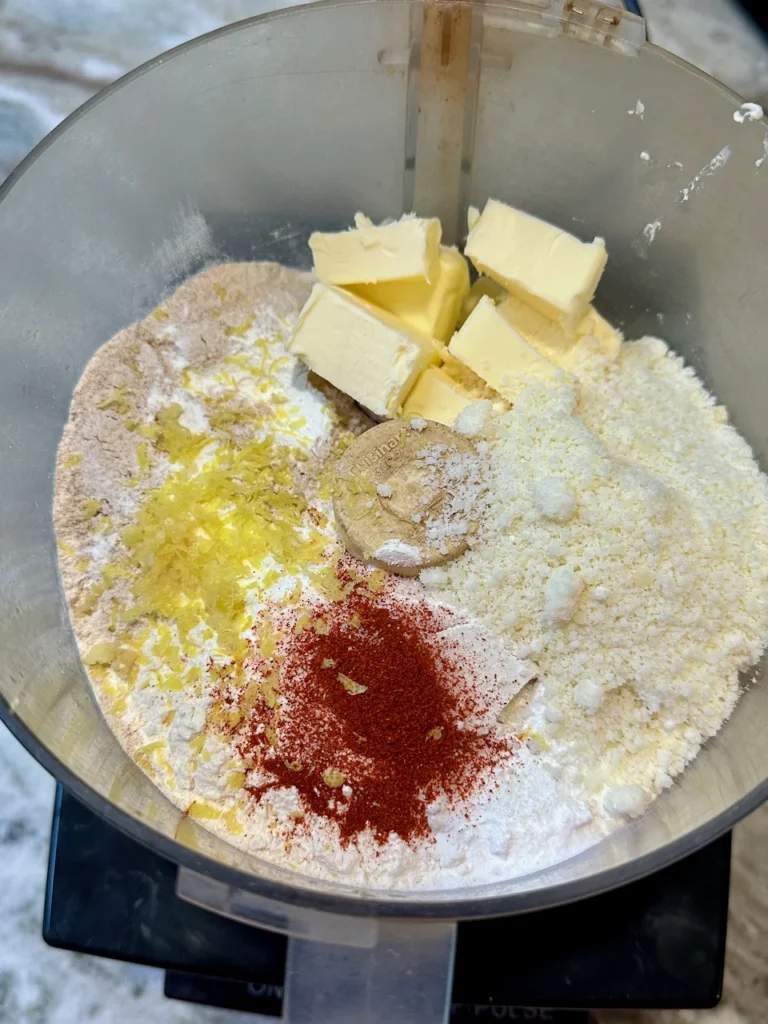
3. Cut in Butter – Add cold butter and cut it into the flour until the mixture resembles coarse crumbs.
4. Add Flavor Elements – Stir in parmesan, ricotta, lemon zest, garlic, and chopped nasturtium leaves.
5. Bring Dough Together – Slowly add milk, mixing gently until a soft dough forms. Do not overmix.
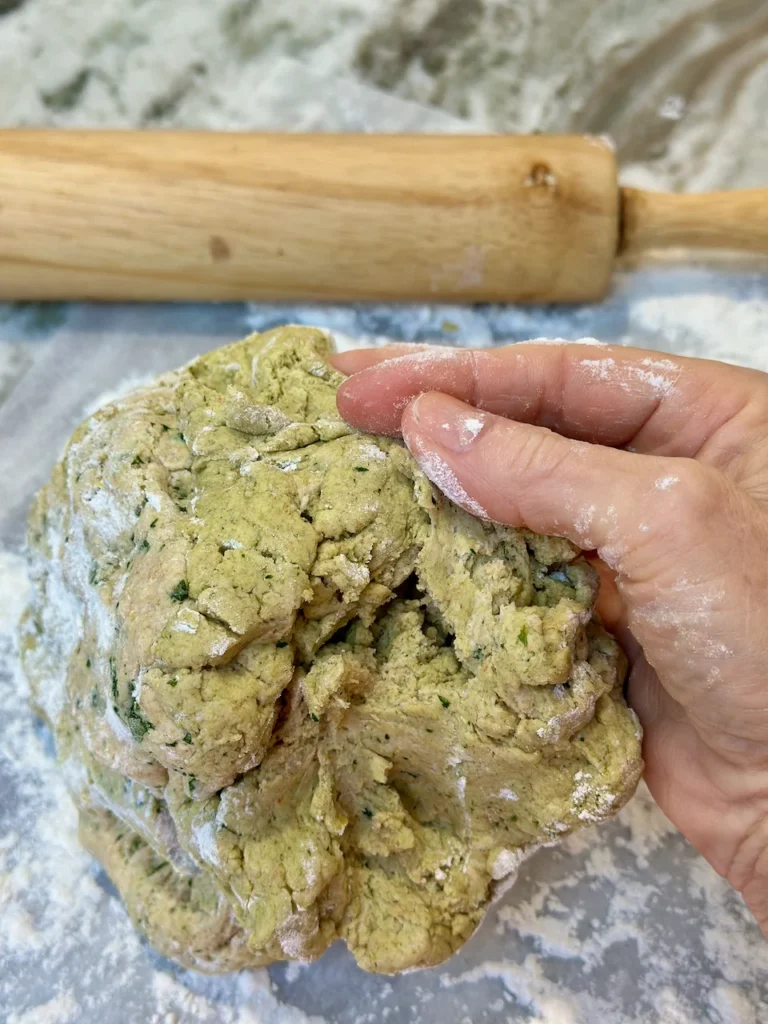
6. Shape the Dough – Turn onto a lightly floured surface and gently press into a 1-inch thick round.
7. Cut the Scones – Use a biscuit cutter to form rounds, pressing straight down without twisting.
8. Bake – Place on a lined baking sheet and bake at 400°F (200°C) for 15–18 minutes, until golden.
9. Cool & Serve – Let cool slightly and serve warm with butter or soft cheese.
Frequently Asked Questions
Can you eat nasturtium leaves raw or cooked? – Yes, nasturtium leaves are completely edible and can be eaten both raw and cooked.
What do nasturtium leaves taste like in baking? – They mellow when baked, creating a subtle peppery, herb-like flavor.
Can I substitute another green? – Yes, arugula or watercress are the closest substitutes.
How do I store savory scones? – Store in an airtight container for up to 2 days, or freeze for longer storage.
Can I make these ahead of time? – Yes, prepare the dough, cut the scones, and refrigerate until ready to bake.
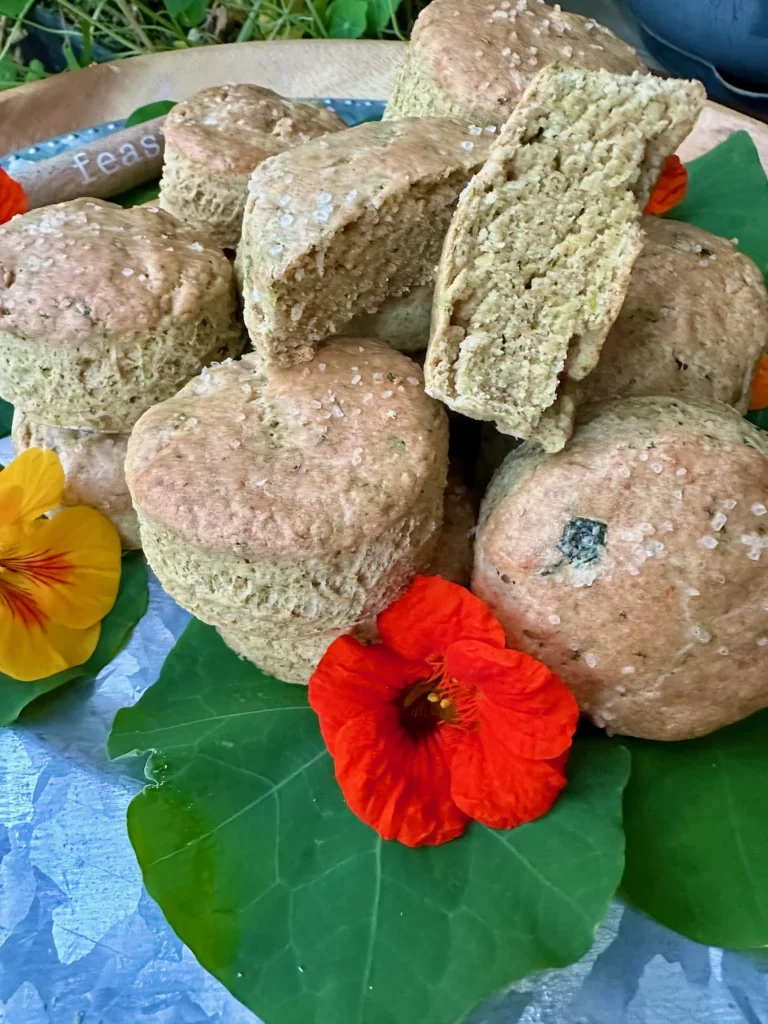
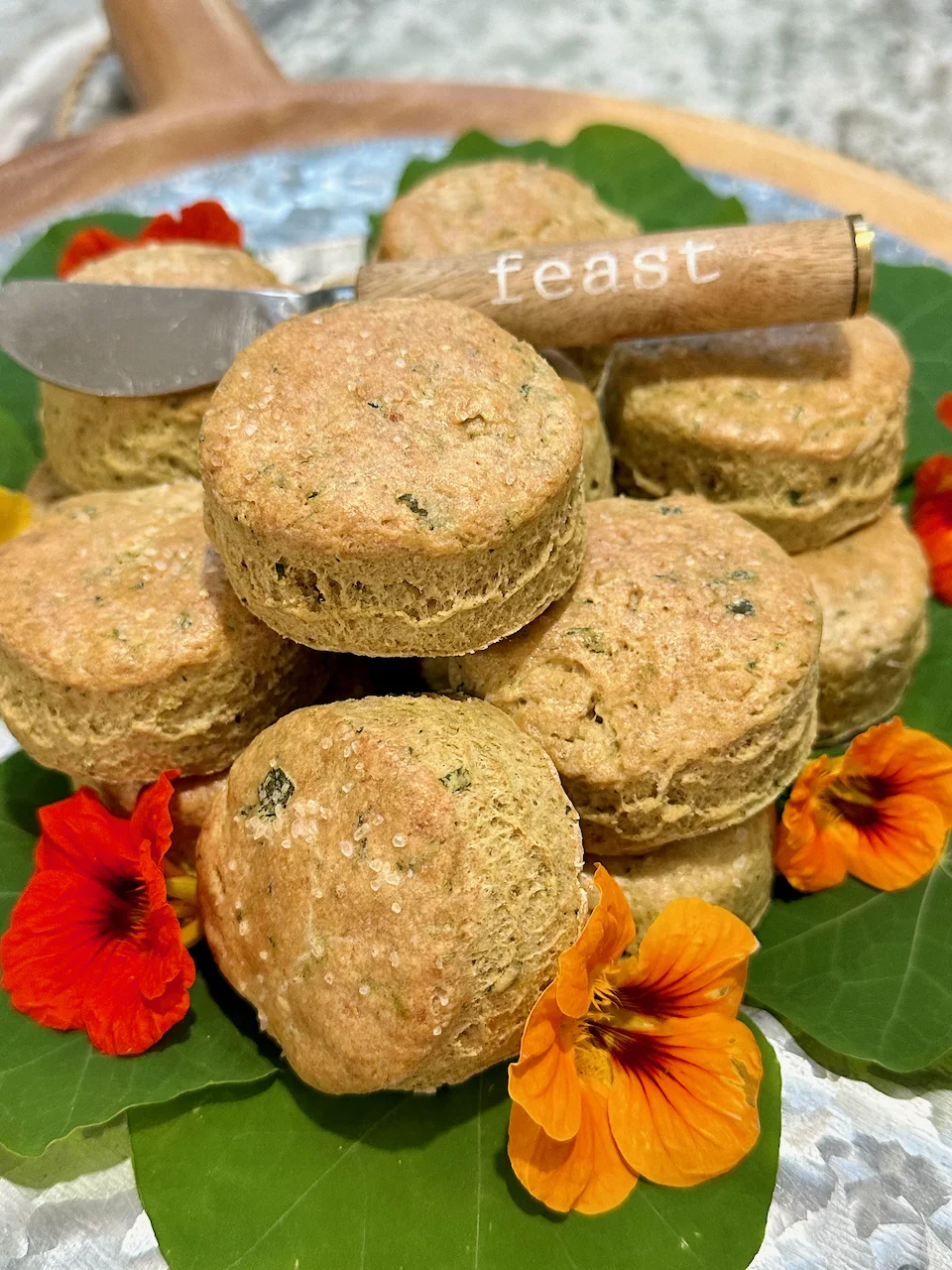
Nasturtium Leaf Scones
Equipment
- cookie sheet with parchment paper
- Basting brush
- Rolling Pin
- cookie or biscuit cutter
Ingredients
- 8 oz Cold butter cut into pieces
- 1/2 cup Whole milk, cold extra for brushing
- 1/2 cup Ricotta or cream cheese cold
- 1/2 cup Parmesan cheese grated
- 4 tbsp Lemon or lime juice
- 1 tbsp Lemon or lime zest
- 1 Garlic clove crushed
- 2 cups All purpose flour extra for dusting
- 1 cup Oat flour see notes
- 1 1/2 tsp Baking powder
- 1 1/2 tsp Baking soda
- 1/4 tsp Smoked hot paprika
- 1/2 tsp Salt
- 1/2 cup Nasturtium leaves chopped
- Nasturtium petals, optional for garnish
Instructions
- Preheat the oven to 350 degrees. Place a piece of parchment paper on top of a baking tray/cookie sheet.
- In a large bowl, or a food processor, place the all purpose flour and oat flour, baking powder, baking soda, paprika and salt. Work the butter pieces into the flour mixture until it resembles coarse meal. Whisk in the cold milk, ricotta, cheese, cold lemon juice, zest and finely chopped nasturtium leaves, taking care not to over work the dough.
- Once the dough forms a soft dough ball, transfer to a lightly floured surface and with a rolling pin shape the dough into a round disk, about an inch thick. With a biscuit cutter, press out the scones, or simply cut into wedges, transfer to the prepared baking tray. Brush with milk and chill for 15-minutes.
- Bake the scones for about 30-minutes or until they begin to look golden brown. Remove the baked scones from the oven, place scones on a cooling rack and serve shortly after.
Notes
- Useful tips: shaping or cutting scones is much easier if the dough has not become room temperature, so keep ingredients and dough cold. Extra scones can be stored in the fridge for up to a week.
- Oat flour is simply crushed rolled oats in a blender or food processor.
If you try these nasturtium leaf scones, I’d love to hear how they turned out!
Leave a comment below, share your photos, or tag me on Pinterest so I can see your beautiful creations.
And if you have nasturtiums growing in your garden… this might just become your new favorite way to use them.

I believe the table... that place that draws people to gather, is the most powerful symbol of togetherness. All that happens before the table is set, the planning, the gathering, the preparing, are all an intricate part of the dance that create the mood of celebration to share with friends and loved ones.
These look so good
Great Winter Nutrients!
Such a lovely and enchanting recipe
Savory treat to enjoy, keeps well.
Excellent! Savory, melt in your mouth scones! Different and DELISH!!!!!
So beautiful!
Thank you so much!
The best tastes scones and nutritional value! 5 ⭐️ plus!!
Thank you so much Silvia, we’ve gotta stay healthy all year!
YUM!
I love this cookbook! Everything I’ve made so far is so good!
So grateful for your support and encouraging words!
These scones look amazing!!!
Loaded with nutrients for the winter my friend!
Love the way your food looks and the edible flowers are beautiful and delicious. Thank you for sharing!
Thank you for enjoying a little of my passion!