
How to reuse wilted roses, from homemade rosewater for cooking, beauty or home, to rose-infused honey or syrups for desserts, cocktails and more.
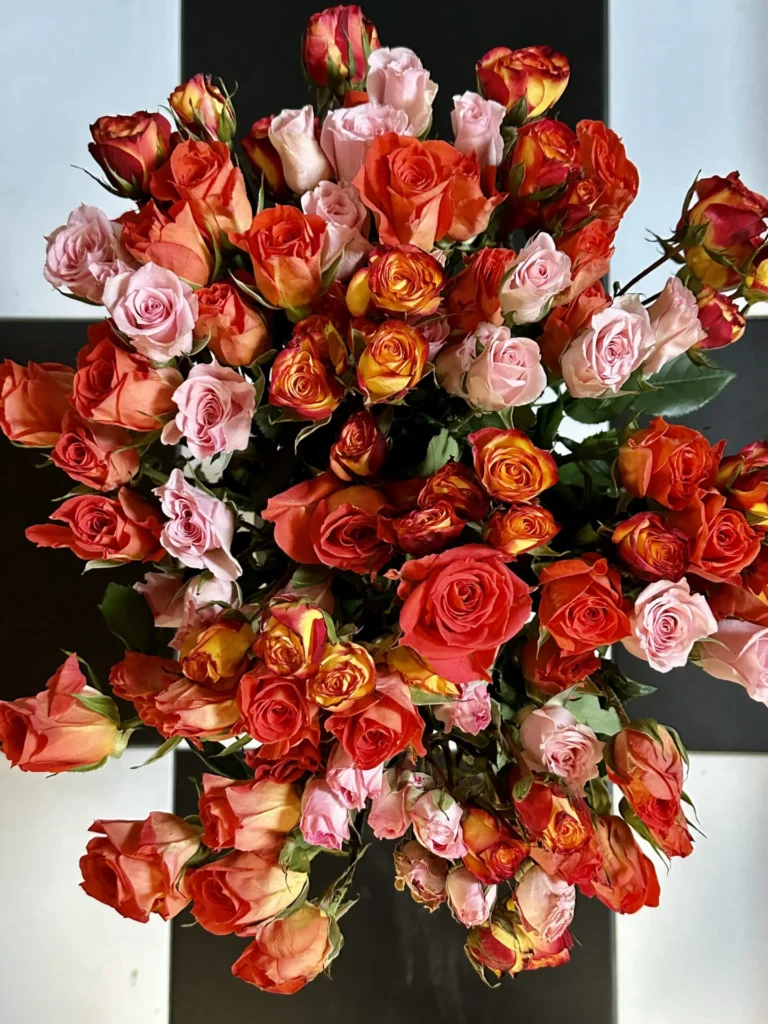
When Roses Begin To Wilt
Valentine’s Day arrives in a blur of red ribbons, handwritten cards, heart-shaped boxes, and armfuls of roses. We fill vases. We trim stems. We breathe in that unmistakable fragrance that feels like love made visible.
And then, a few days later, the petals begin to soften.
The edges darken slightly. The blooms bow their heads. Water clouds in the vase.
Most people toss them.
But I never do.
Because when roses begin to wilt, they are not finished. They are transforming.
And that, perhaps, is the truest love story of all.
Today I’m sharing the many ways to reuse Valentine’s roses, ways that turn fading petals into rosewater for desserts or beauty treatments, potpourri for the home, infused honey, and delicate culinary creations that carry their fragrance forward.
If you’ve ever wondered what to do with wilted roses, this is your invitation to begin again.
DIY Homemade Rosewater
When roses soften, their fragrance deepens.
This is the perfect time to extract their essence and make homemade rosewater, one of the simplest and most luxurious things you can create in your kitchen.
Gently remove the petals, rinse lightly, and simmer them slowly in just enough water to cover. Keep the heat low. Let the color fade from the petals and transfer into the liquid. The water will blush pink and smell like a spring garden after rain.
Strain and store in the refrigerator.
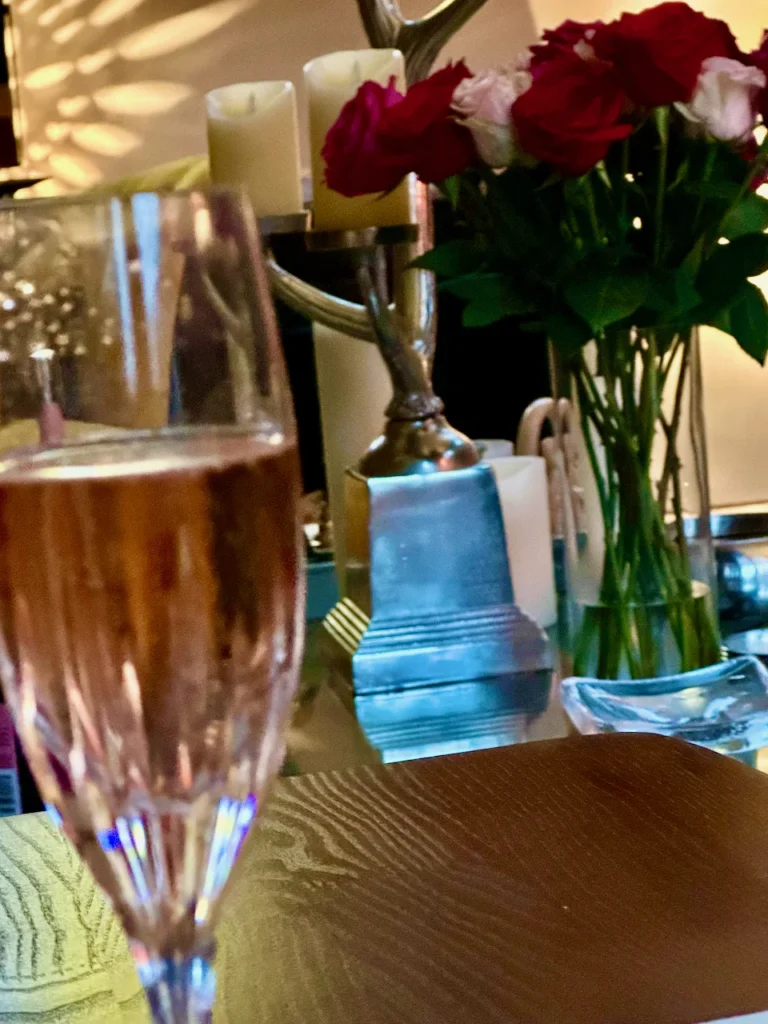
Steam Distillation For Concentrated Rosewater
This easy DIY Steam Distillation Rosewater technique has so many uses for cooking, skin enhancement, calming aromatherapy, even a cup of rose tea, is worth extracting your own rose water for.
I am excited to share with you the new toy I’ve purchased, Steam Distillation Kit, for the cold steam distilling method of extracting concentrated essence from my plants.
It has become the easiest way I’ve tried to obtain an intense natural fragrance from the roses, and essential properties from other plants.
Far better than simply boiling, which I’ve tried and it really tastes mostly of water.
But, let’s talk about many of those uses you are going to want to extract from these rose blossoms so that you will be as excited to try as I am.
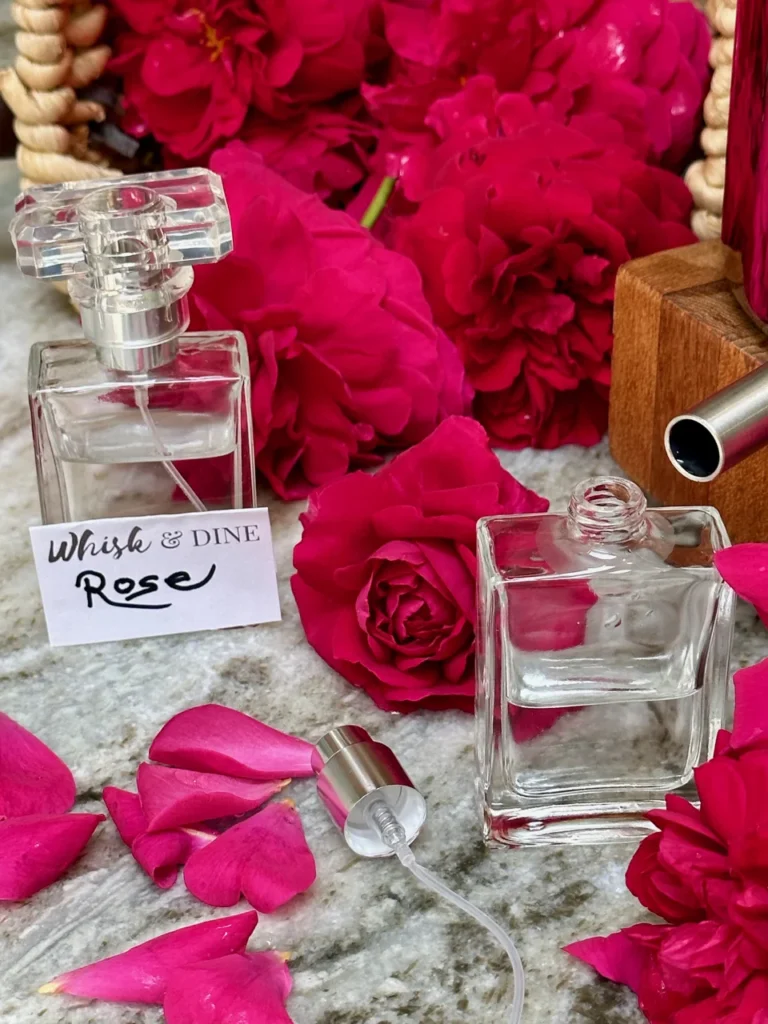
Different Ways To Use Rosewater In Cooking
Having grown up with a first generation Syrian mom, we cooked different foods in our home than many of my school friends did in theirs.
Rose water (or rosewater), recipes are numerous throughout Middle Eastern and some Mediterranean homes.
Most often you will find rose water used in desserts, or teas, so let’s explore the essence of roses in a variety of nibbles and sips.
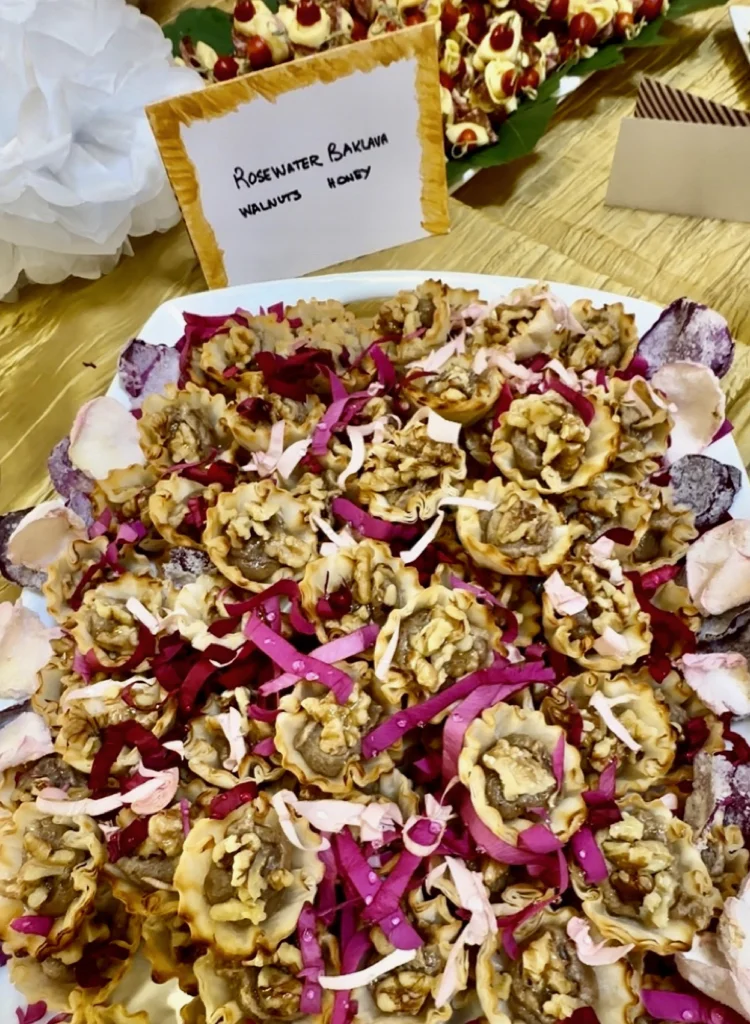
Rosewater Baklava Tarts
There is something magical about pairing rosewater with honey and nuts.
The floral note lifts the richness. It makes the sweetness feel lighter, almost ethereal. When you drizzle rosewater syrup over crisp layers of phyllo and toasted walnuts, the fragrance rises in delicate waves.
It’s the sound of crunch.
The shimmer of honey.
The whisper of petals in syrup.
If your roses are beginning to fade, make the rosewater first, then turn it into Rosewater Baklava Tarts.
Suddenly your Valentine’s bouquet becomes dessert.
And that? That’s poetry.
Fold Rose Petals Into Nuts and Honey For A Floral Muffin Recipe
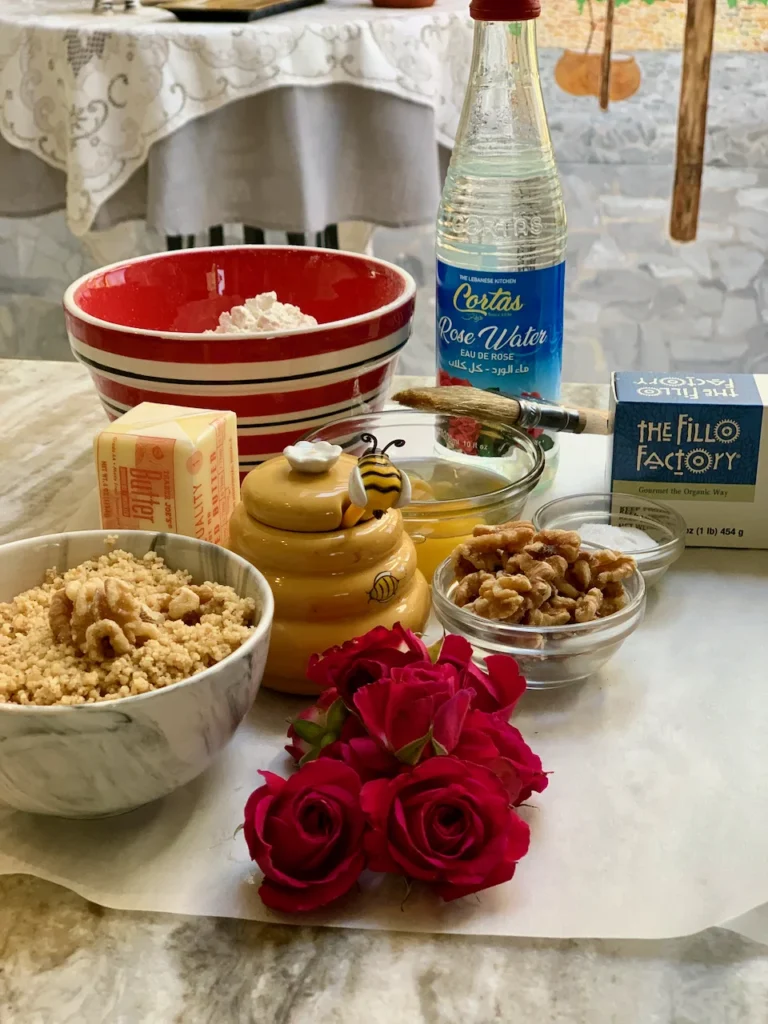
Soft petals can be finely chopped and folded into my homemade muffin batter, especially when paired with warm spices, citrus zest, and honey, for my favorite Rosewater Baklava Muffins.
The flavor is subtle, never overpowering, but unmistakably floral. The scent blooms gently as the muffins bake, filling the kitchen with something that feels nostalgic and romantic all at once.
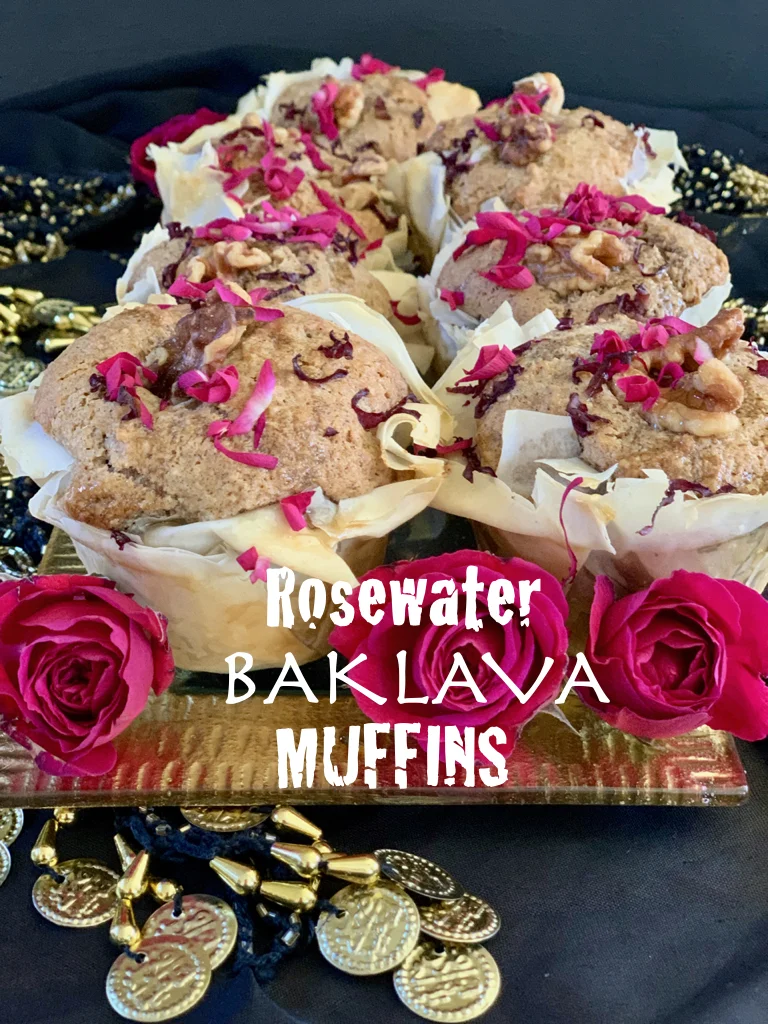
Paired with walnuts or pistachios, roses add a delicate complexity that makes everyday baking feel elevated.
Roses, nuts and honey muffins are a celebration of texture and warmth. Adding real petals deepens that story, transforming them from beautiful to unforgettable.
Cooking With Fresh Petals
As you look throughout my recipe collections, you will notice more and more recipes being created with edible flowers in mind. In fact, I now grow flowers specifically for cooking.
Below you will find a growing list of the many recipes I adore using essence of flowers.
- Pink Peony Colada Cocktail – with homemade peony syrup, rum and coconut milk, ornamented with peony blossom ice cubes.
- Dandelion Flower Bread – from early spring dandelion flower petals, lemon and banana, for a moist quick bread.
- Edible Flower Shortbread Cookies – with the petals baked on top of a cardamom flavored cookie dough.
- Cherry Blossom Wedding Cocktail – made with cherry blossom honey, Sake, Prosecco and cherry blossom ice cubes.
- Butterfly Pea Flower Tea Bread – a beautiful blue flower, dried into a tea and made into a delicious yeast bread.
Rose Petal Syrup and Infused Honey
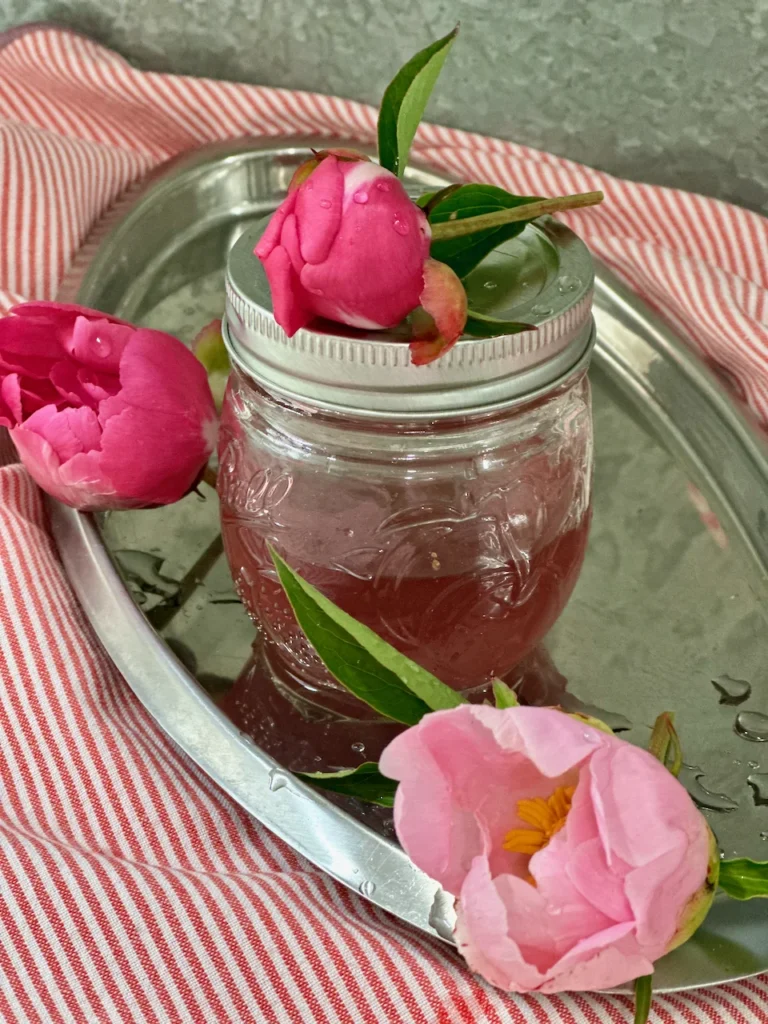
There is something quietly enchanting about making rose petal syrup, or Garden Flower Syrup from any edible flower. It feels less like cooking and more like preserving a moment.
A handful of fragrant, unsprayed rose petals, soft, velvety, blushing in shades of crimson or pale pink, are gently steeped in warm water, releasing their delicate perfume.
Sugar is stirred in slowly, dissolving like a whispered secret. As the petals surrender their color, the liquid transforms into the faintest shade of sunset, somewhere between rosé and memory.
Drizzle it into champagne and watch tiny bubbles carry the scent upward. Stir it into lemonade for a garden-party glow. Brush it over warm cakes to add a quiet floral note. Fold a spoonful into whipped cream. Swirl it through yogurt with fresh berries. Add it to tea in the late afternoon when the light turns golden and you feel reflective.
Sugared Rose Petals – Pure Fairytale Confection
Sugared rose petals are delicate little jewels, fragile, glistening, and impossibly romantic.
They begin with fresh, unsprayed rose petals, gently rinsed and patted dry as though you’re handling silk. Each petal is lightly brushed with beaten egg white, just enough to coat it in a whisper-thin sheen. Then comes the magic: a dusting of fine caster sugar, scattered like the softest snowfall. The petals are laid carefully on parchment and left to dry, where they slowly transform from velvety and pliant to crisp and crystalline.
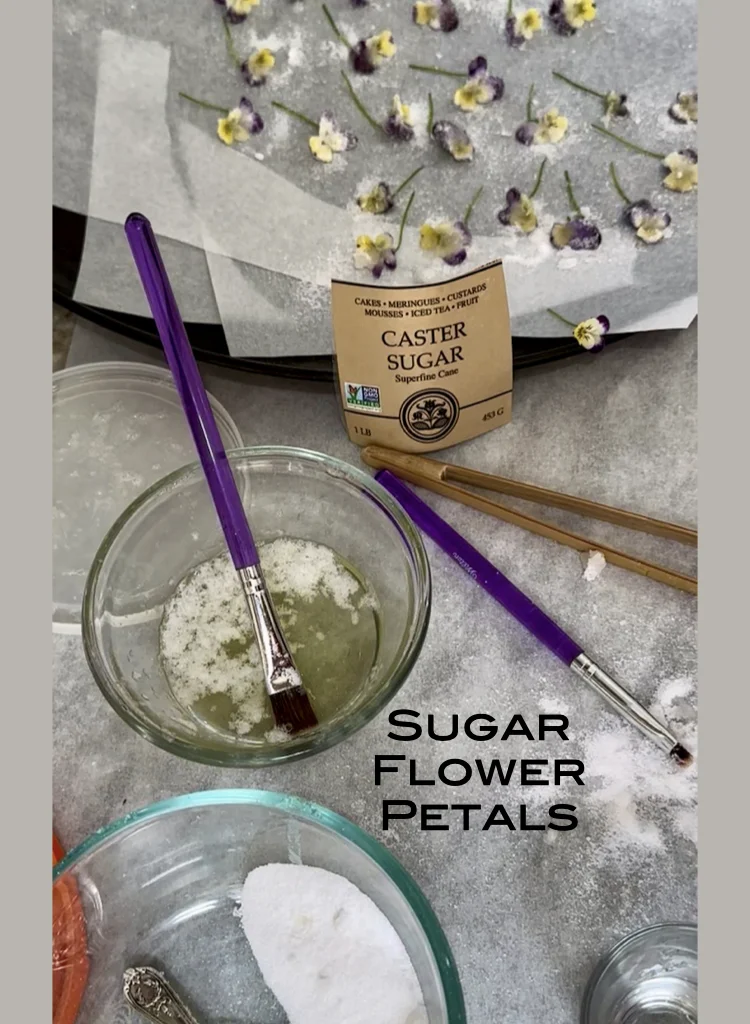
The sugar preserves their shape and intensifies their color, ruby reds deepen, blush pinks glow, ivory turns luminous. They crown cakes like edible lace. They rest atop frosted cupcakes. They float on buttercream and whipped cream. They perch delicately on champagne flutes, cling to the rim of a cocktail, or scatter across a dessert platter like confetti.
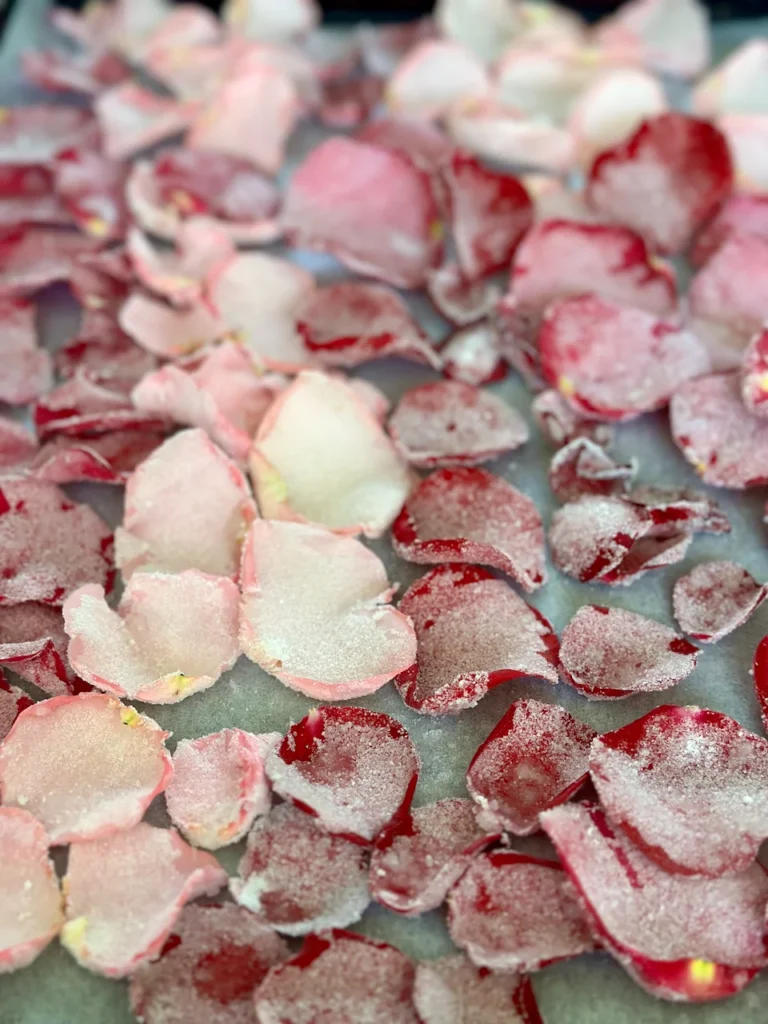
Don’t Toss Those Roses On A Cake – They Are Deliciously Edible
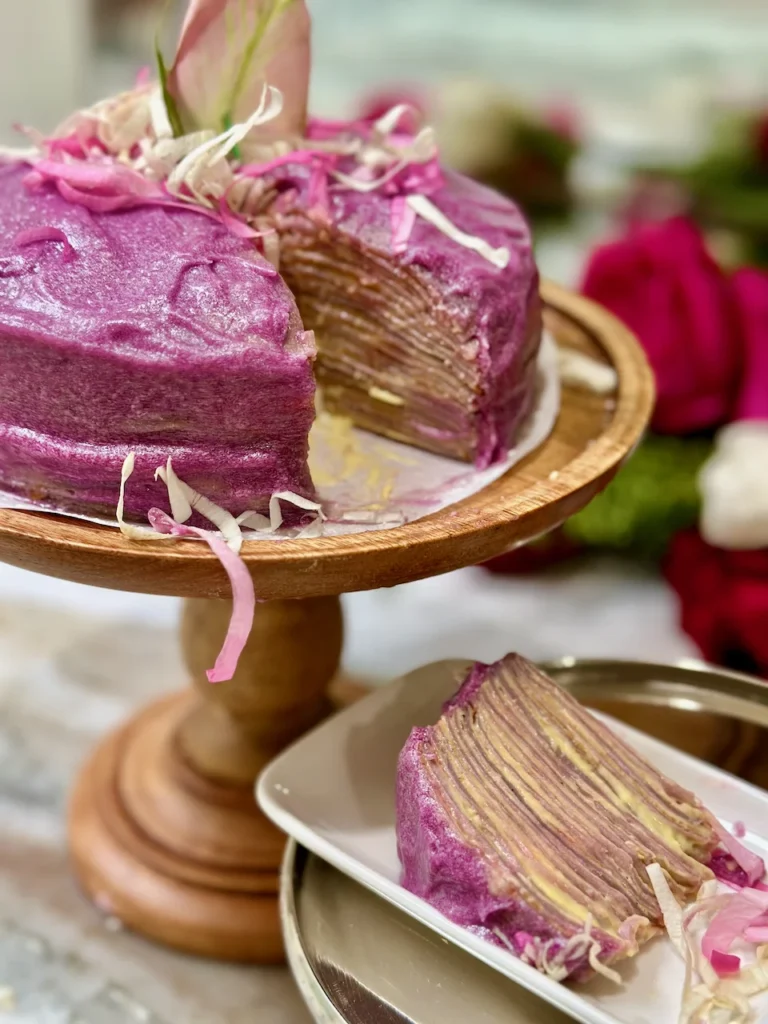
Sugared rose petals, bring texture and shimmer to the humblest of homemade cakes. They catch the light atop a frosted cake like tiny stained-glass windows. Both rose petal syrup and sugared rose petals do something extraordinary in baked goods, they engage more than just taste, as you will discover on my Purple Potato Crepe Cake with Roses in which petal syrup is brushed on each layer before stacking and finished with a dusting of rose petals.
Rose petal syrup seeps quietly into cakes and glazes, carrying with it a delicate floral perfume that rises before the first bite. It doesn’t overwhelm. It lingers. Brushed over warm sponge, layered crepes, or stirred into buttercream, it adds a softness, a gentle aromatic note that feels old-world and tender. The flavor is subtle, slightly honeyed, almost nostalgic. You don’t quite taste “rose” as much as you feel it.
Rose-Infused Vodka – Reuse Roses For Future Cocktails
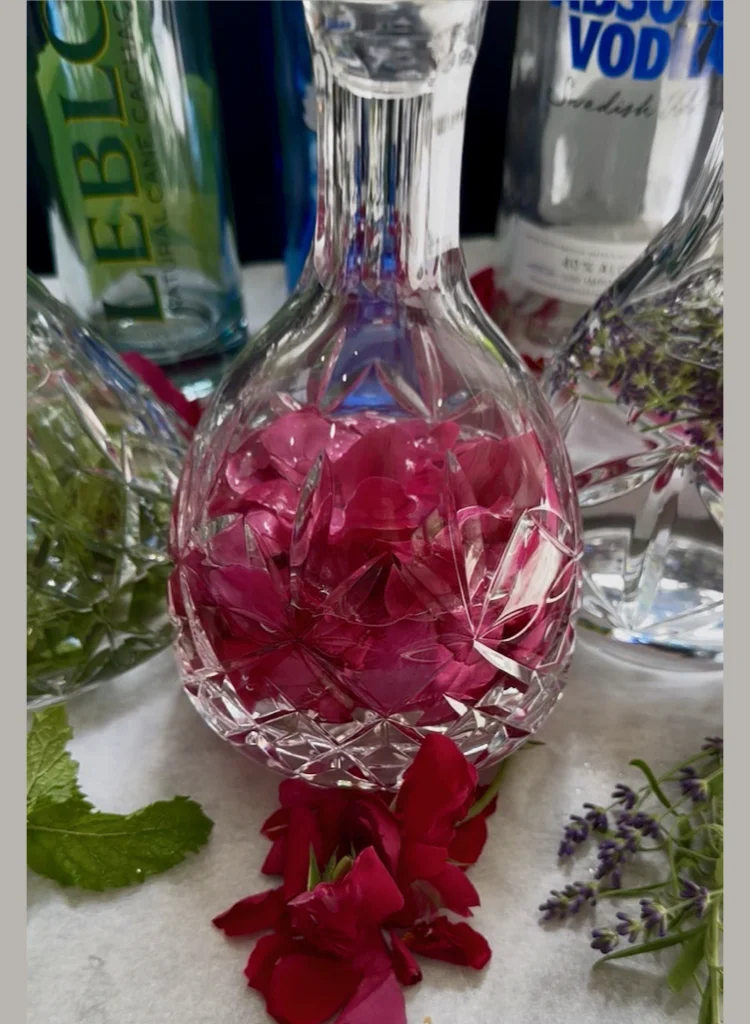
There is something undeniably alluring about steeping rose petals in vodka. It feels like crafting perfume for a cocktail.
Fresh, fragrant, unsprayed Edible Flower Petals are tucked into a clean glass jar and covered with vodka, clear and quiet, waiting to be transformed. Within hours, the liquid begins to blush. Within a day or two, it deepens, faintly pink, delicately aromatic, infused with the soft essence of the rose itself.
The vodka becomes less sharp, more rounded. The floral note doesn’t shout; it hovers. It lingers just at the edge of sweetness without actually being sweet. It is refinement in liquid form.
Strain the petals, and what remains is a homemade flavor enhancer that turns ordinary cocktails into something extraordinary.
A splash in a martini softens the edges.
A drizzle in sparkling wine makes it feel like a garden at dusk.
Mixed with lemon and honey, it becomes luminous.
Added to tonic, it transforms a simple pour into something that feels intentional and elegant. Floral Essence Cocktails are a beautiful thing!
Reused Rose Petals For Ice Cubes
If you truly want to elevate a cocktail, freeze a rose inside it.
Rose petal ice cubes are simple, and yet they feel impossibly luxurious. Fresh, unsprayed Edible Fresh Flower Petals are nestled gently into ice cube trays, then covered with distilled or boiled-and-cooled water (for crystal clarity). As they freeze, the petals suspend in time, crimson, blush, or ivory captured in glass-like transparency.
What emerges looks less like ice and more like sculpture.
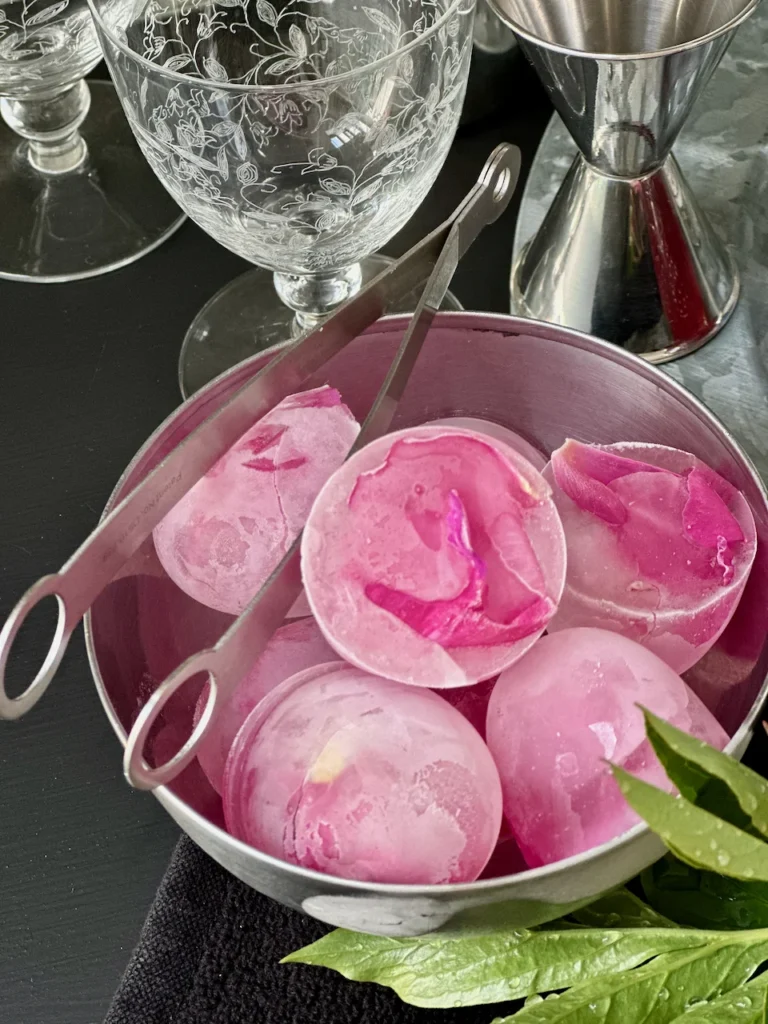
Dropped into a flute of champagne, the cube floats and slowly releases tiny air bubbles that cling to the petals. In a clear cocktail, gin, vodka, sparkling water, the rose seems to bloom all over again, drifting softly as the ice melts. Even a simple lemonade becomes something worthy of a linen napkin and candlelight.
There is something undeniably romantic about watching the petals of roses, or any other edible flower, reveal themselves as the cube dissolves, first faintly magnified, then gently freed.
Organic Roses For Beauty Products and Health Concerns
This list could go on and on, simply because the benefits of rose water are quite vast. Believe me, it is not the scent that makes rose water benefits so popular.
Let’s talk about Skin Irritation – Concentrated rose water extraction has strong anti-inflammatory properties.
While it has health benefits to help with internal inflammation, such as IBS or other agitated internal issues, let’s stick to the topical inflammation many of us wrestle with from time to time.
Sensitive skin is most prone to skin issues such as eczema (a dry, itchy, rash-like agitation on the skin), to rosacea (visible blood vessels in the face), of which these skin irritations need calming.
Spraying a mist of natural rose water on the agitated areas, using as a face toner or homemade rose water toner added to a witch hazel mist, will calm these flair ups and calm the symptoms.
Having been a professional cosmetologist for many years, I’ve come to devise many of my own products made from natural sources.
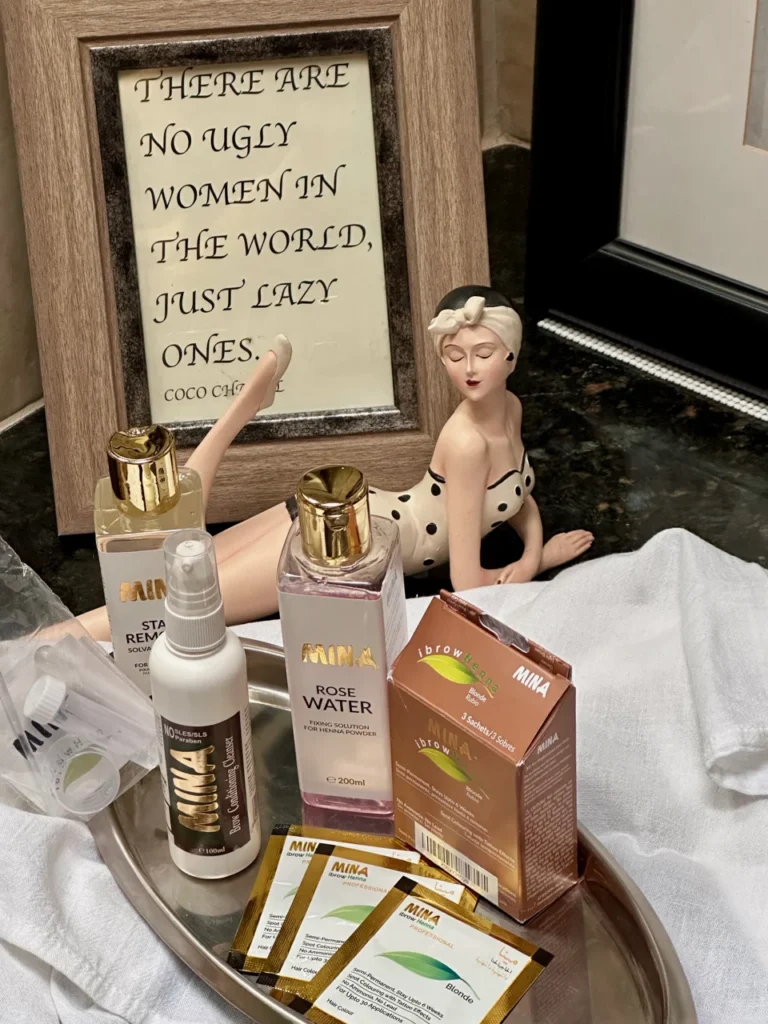
For example: I continue to use Henna, a natural hair dye, to tint my eyebrows. Rosewater is always used to both mix the henna powder and applied after this procedure, to eliminate possible skin irritations.
Wilting Roses – When Dried – Scent The Home With Luxurious Potpourri
Even when roses begin to wilt, they are not finished giving.
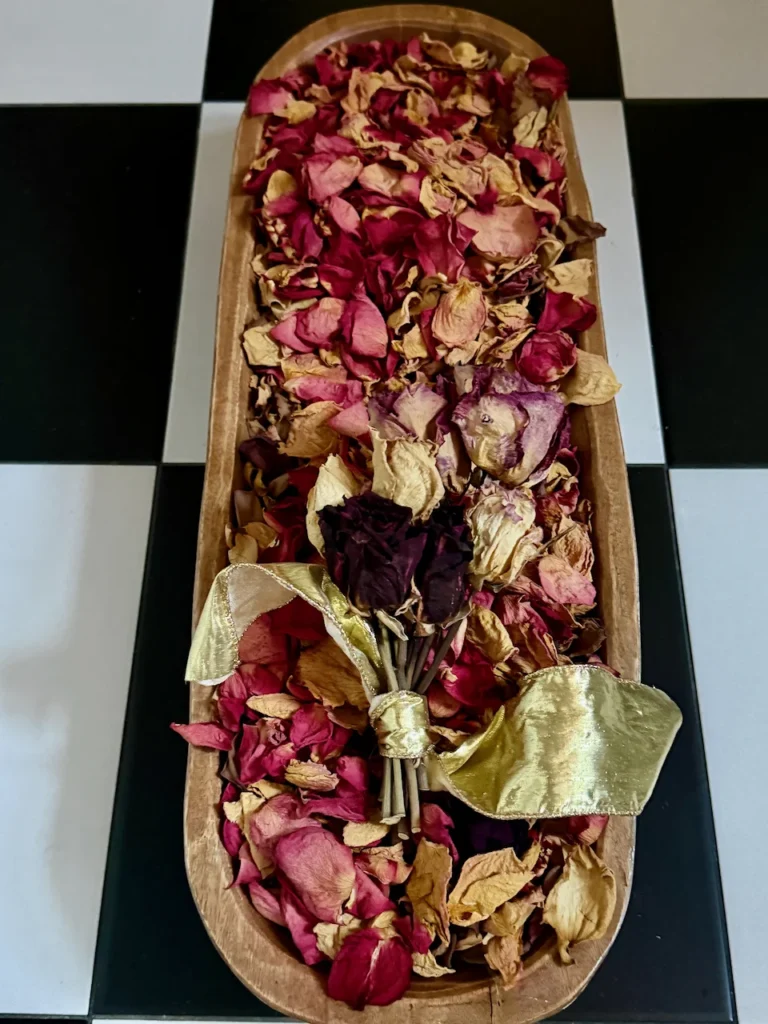
As petals soften and edges curl, there is a quiet kind of grace in drying them. Gather the fading blooms and hang them upside down in a cool, shadowed corner. Time does the rest. The petals deepen in color, blush turning antique, red turning wine, ivory becoming parchment. Their fragrance grows softer, warmer, more nostalgic.
Once fully dried, scattered in a shallow dish on a bedside table, it perfumes the room with the faintest floral whisper. Becomes a natural home fragrance idea, tucked into drawers, it leaves a trace of romance in folded linens. Poured into a glass bowl near the entryway, it greets guests not with bold fragrance, but with something subtle and intimate.
There is beauty in this transformation.
The roses you once received in full bloom, perhaps for Valentine’s Day, an anniversary, or an ordinary Tuesday made special, are not discarded. They are preserved. Their form changes. Their purpose shifts. But they remain.

I believe the table... that place that draws people to gather, is the most powerful symbol of togetherness. All that happens before the table is set, the planning, the gathering, the preparing, are all an intricate part of the dance that create the mood of celebration to share with friends and loved ones.
These ideas are exquisite, Robin! It has never crossed my mind before to make rose water, and now I can’t believe it hasn’t! I have a beautiful vase of Valentine’s roses on the table presenting this very opportunity. I love how these ideas extend the life of the gift of roses all the more! Special and meaningful, thank you!
Oh Wendy! Thank you so much for the visit and your kind words! While I have had a blast using my steam extractor (was under $100 on A when I bought it), any process you do will be wonderful! xx