
Create stunning Botanical Flatbread Crackers made with edible flowers and fresh herbs pressed into delicate artisan flatbread. Perfect for elegant entertaining.
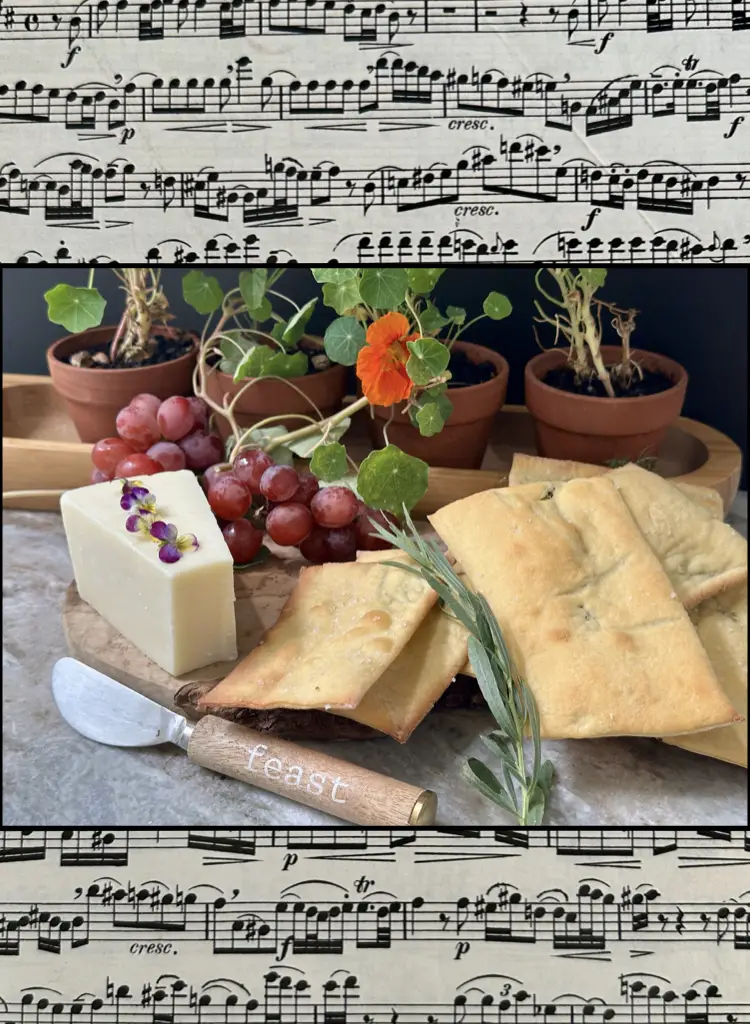
Botanical Flatbread Crackers with Edible Flowers & Herbs
One of my greatest joys in the garden isn’t simply growing herbs and edible flowers, it’s finding unexpected ways to bring their beauty to the table. These Botanical Flatbread Crackers may be one of my favorite creations because they blur the line between food and art.
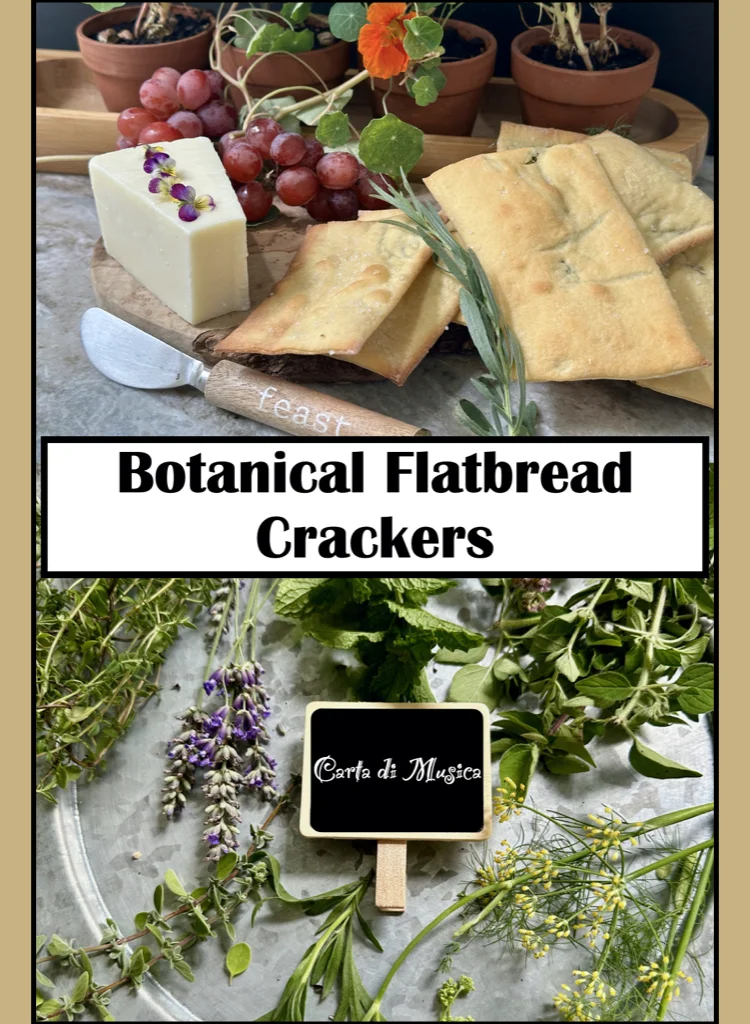
Inspired by the ancient Sardinian bread known as Carta di Musica, these whisper-thin crackers become little botanical canvases. Fresh herbs, delicate flower petals, and leafy sprigs are gently pressed into the dough before being rolled paper-thin and baked until crisp and golden. Every cracker emerges unique, as though nature signed her own masterpiece.
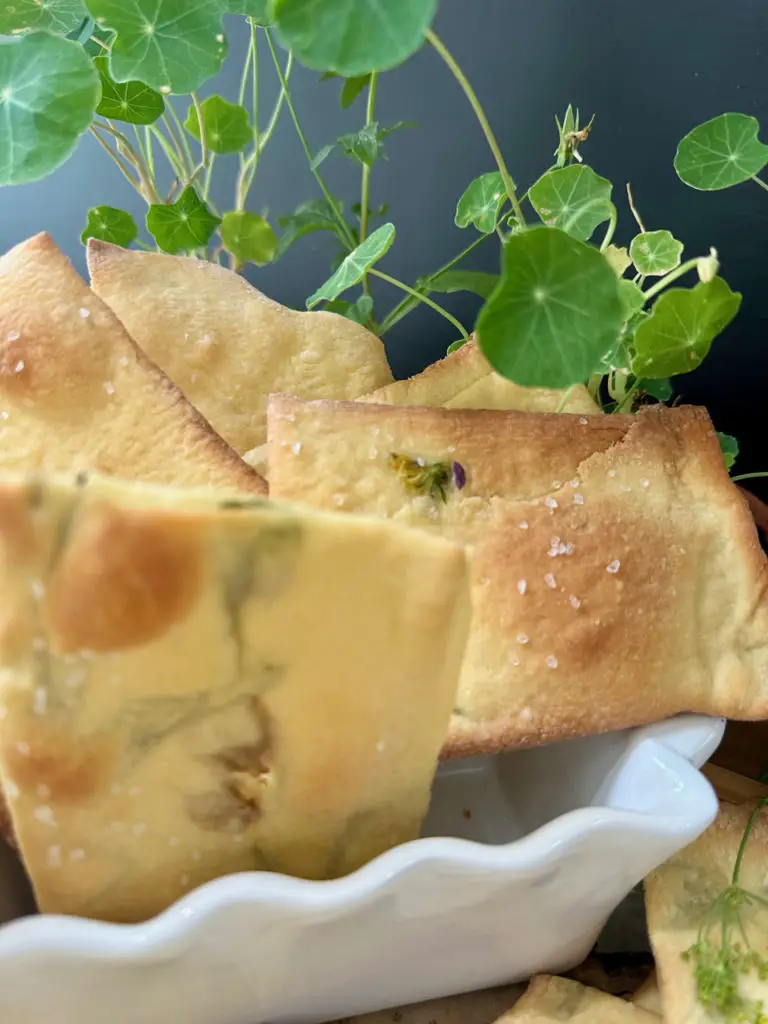
Artisan Flatbread Appetizers
Whether arranged on a charcuterie board, paired with creamy cheeses, or simply enjoyed with good olive oil and a glass of wine, these artisan crackers never fail to start conversations. They prove that beautiful food doesn’t require complicated ingredients, just a little imagination and a walk through the garden.
If you’ve been looking for a memorable edible flower recipe that celebrates both gardening and Mediterranean cooking traditions, these Botanical Flatbread Crackers deserve a place in your repertoire.
Why You’ll Love Botanical Flatbread Cracker
In this recipe, I’ve borrowed the traditional technique, rolling the dough paper thin, but brought a twist and practicality to it slightly; adding yeast for a more delicate structure, and using a pasta roller to achieve an even, and refined thinness.
The result is something between a cracker and a flatbread:
- crisp, but not brittle
- rustic, yet elegant
- simple, yet visually stunning
When to Serve Botanical Flatbread Crackers
These crackers are more than just a vessel for cheese or spreads, they become part of the presentation, looking almost like fabric or a painted scroll, resulting in the perfect artsy hors d’oeuvre crispy crackers.
Each batch is completely unique, making them ideal to use in place of:
- pita bread
- spelt or plain crackers
- flatbreads
Ingredients and Tools You’ll Need
Botanical Flatbread Crackers Have Simple Ingredients but They Matter
- Yeast gives life to the dough. Even though these crackers are rolled paper-thin, a small rise develops flavor and structure, preventing the cracker from being flat or brittle.
- Sugar, just a touch of sugar is used to wake the yeast and help it do its work.
- Sea salt, both fine and coarse – Fine sea salt seasons the dough from the inside. Coarse sea salt is sprinkled on top adds texture, and flavor.
- Extra virgin olive oil brings richness and unmistakable Mediterranean character.
- Water binds everything together and allows the flour to develop just enough gluten for strength and elasticity.
- All-purpose flour provides the structure.
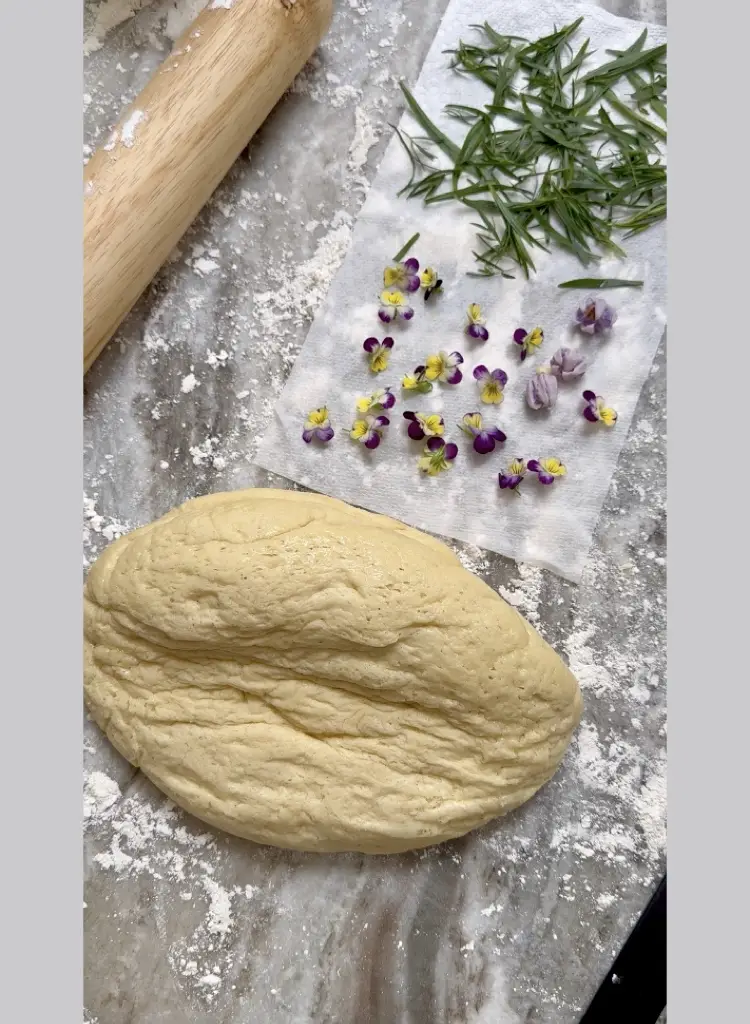
- Fresh herbs and edible flowers: tarragon, parsley, thyme, rosemary, pansies, rose petals, nasturtium flowers or leaves. Pressed into the dough, they add a rustic beauty to each cracker.
Tools You’ll Need
- Pasta machine is the secret to achieving that signature paper-thin texture.
- Mixer with a dough hook, or can be done by hand in a large mixing bowl.
- Rolling pin, even with a pasta machine, a rolling pin plays an important role. It helps flatten the dough into manageable portions before feeding it through the rollers.
- Basting brush is used to lightly coat the dough with olive oil, adding flavor and helping the surface bake into a golden, crisp finish.
- Knife – A sharp knife or pastry cutter allows you to cut the dough cleanly into rustic shapes or neat rectangles.
- Oven – The oven completes the transformation.
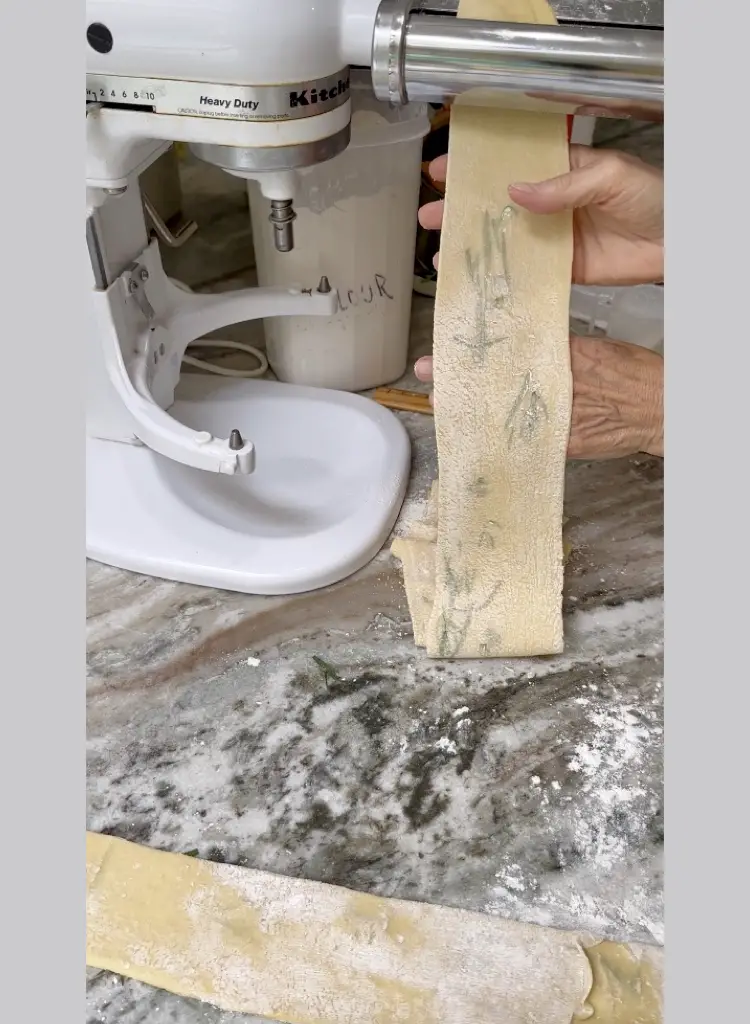
How To Make Botanical Flatbread Crackers
Step 1: Proof the Sponge – Combine yeast, sugar, and lukewarm water. Let sit briefly until dissolved and slightly foamy.
Step 2: Build the Dough – Add salt, olive oil, and flour gradually, mixing until a soft dough forms.
Step 3: Knead & Form – Continue adding flour until the dough becomes smooth and elastic, forming a soft ball.
Step 4: First Rise – Transfer to an oiled bowl, cover, and let rise until doubled, about 1 hour.
Step 5: Rest & Preheat – Punch down the dough, rest 5 minutes, and preheat oven to 350°F.
Step 6: Roll & Thin – Roll dough to about ¼ inch thick, then begin passing through the pasta roller, reducing thickness gradually.
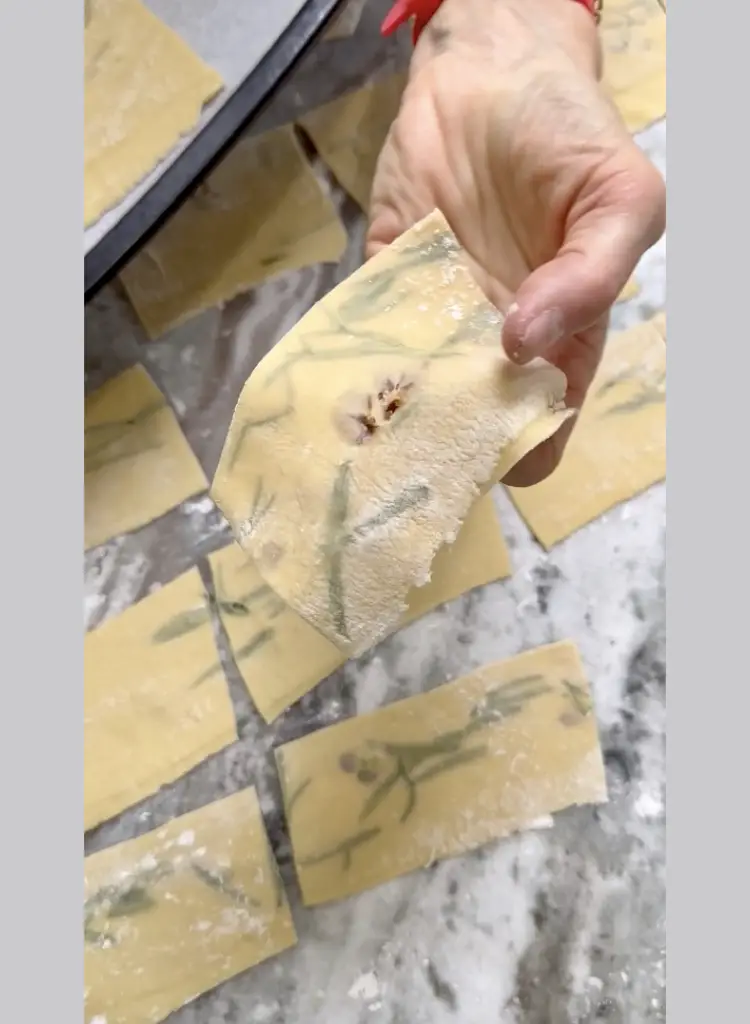
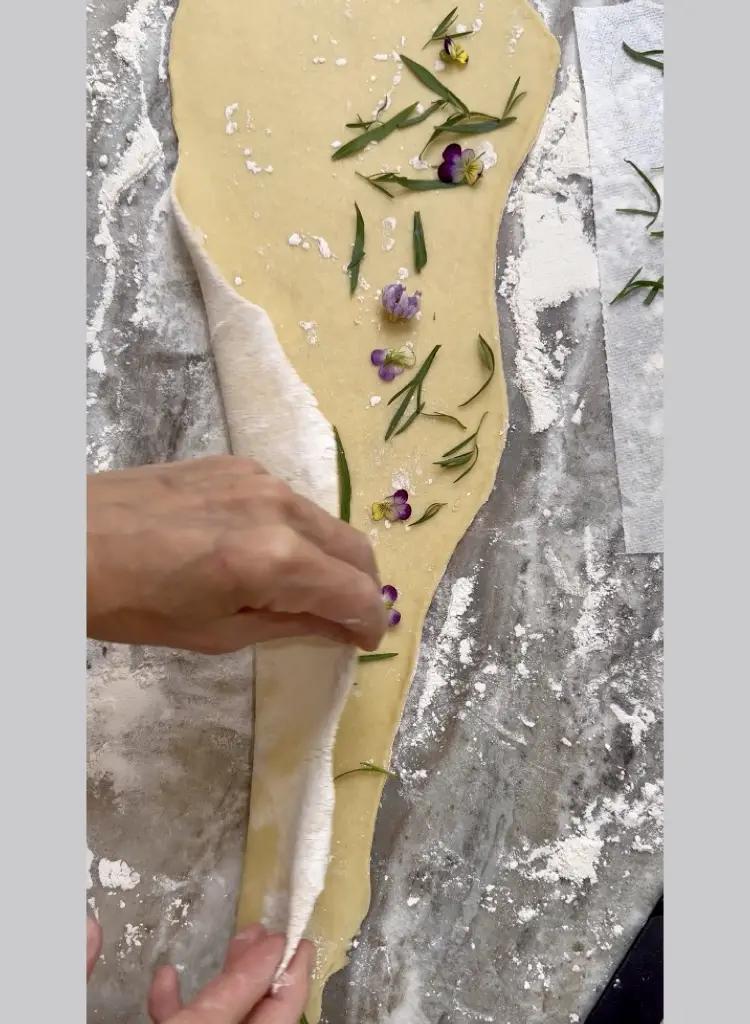
Step 7: Add Botanicals – Lay herbs and flowers over the dough, fold it, and pass through the roller one final time to press them in.
Step 8: Cut & Finish – Cut into desired shapes, brush lightly with olive oil, and sprinkle with coarse salt.
Step 9: Bake – Bake for about 10 minutes, watching carefully to avoid over-browning. Cool.
Frequently Asked Questions
Are all flowers safe to use? No, only use edible, food-safe flowers that are pesticide-free.
Can I make these without a pasta roller? Yes, but it will be more difficult to achieve the signature thinness and pressed effect.
Why add yeast to carta di musica? Traditional versions are unleavened, but yeast gives a slightly more tender, workable dough.
How thin should the dough be? Very thin, almost translucent for the best crisp texture.
How long do they keep? Stored in an airtight container, they stay crisp for several days.
From My Garden
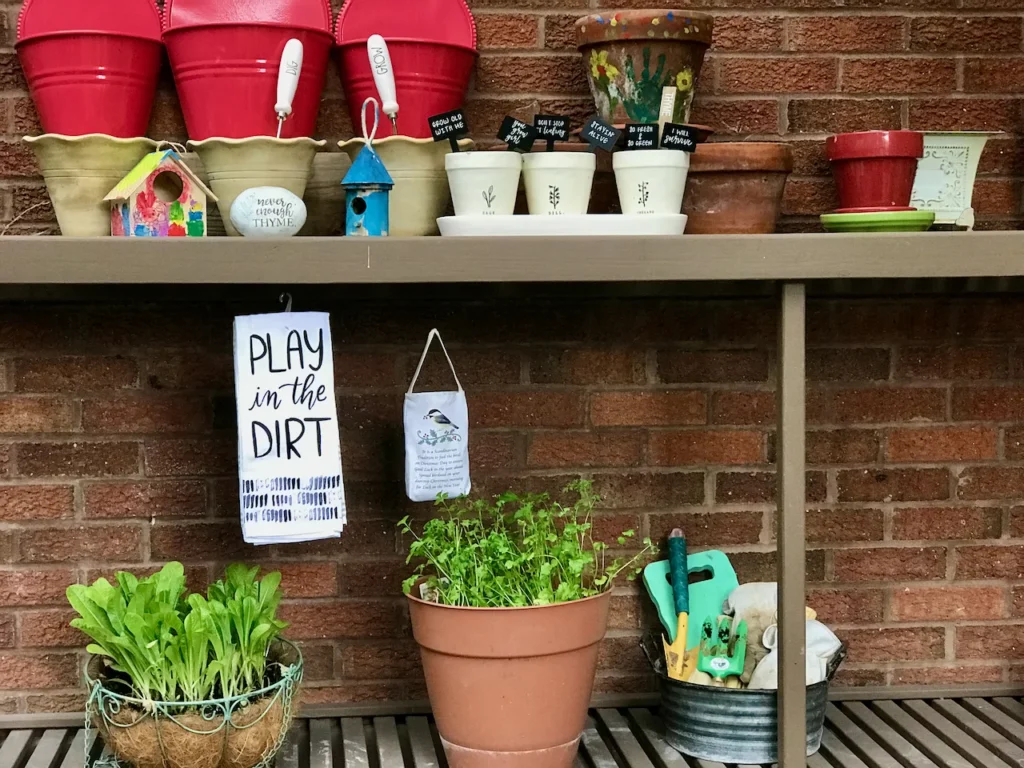
There’s a thrill I can’t deny when I put tiny seeds inside a pot of dirt inside my home during the dead and cold months of February and March and by April, life has emerged from this small effort on my part.
This thrill ultimately inspired my recent published book Dirt To Dish in which I share stories, some how-tos and recipes of things that happen in my gardens, throughout all four seasons.
Every Meal Has A Story
Leave it to the romantic storytelling of an Italian! This curiously named flatbread cracker – ‘Carta Musica’ or sheet music – came about because the dough is rolled so thin that one could read sheet music through it before cooking it.
Romanticize this bread even further; why not press herbs and edible flowers between the dough before rolling it so thin and cause the dough to look like art. Sometimes the most beautiful recipes come from honoring an ancient tradition. If you make these botanical flatbread crackers, I’d love to know what you pressed between the sheets of dough.
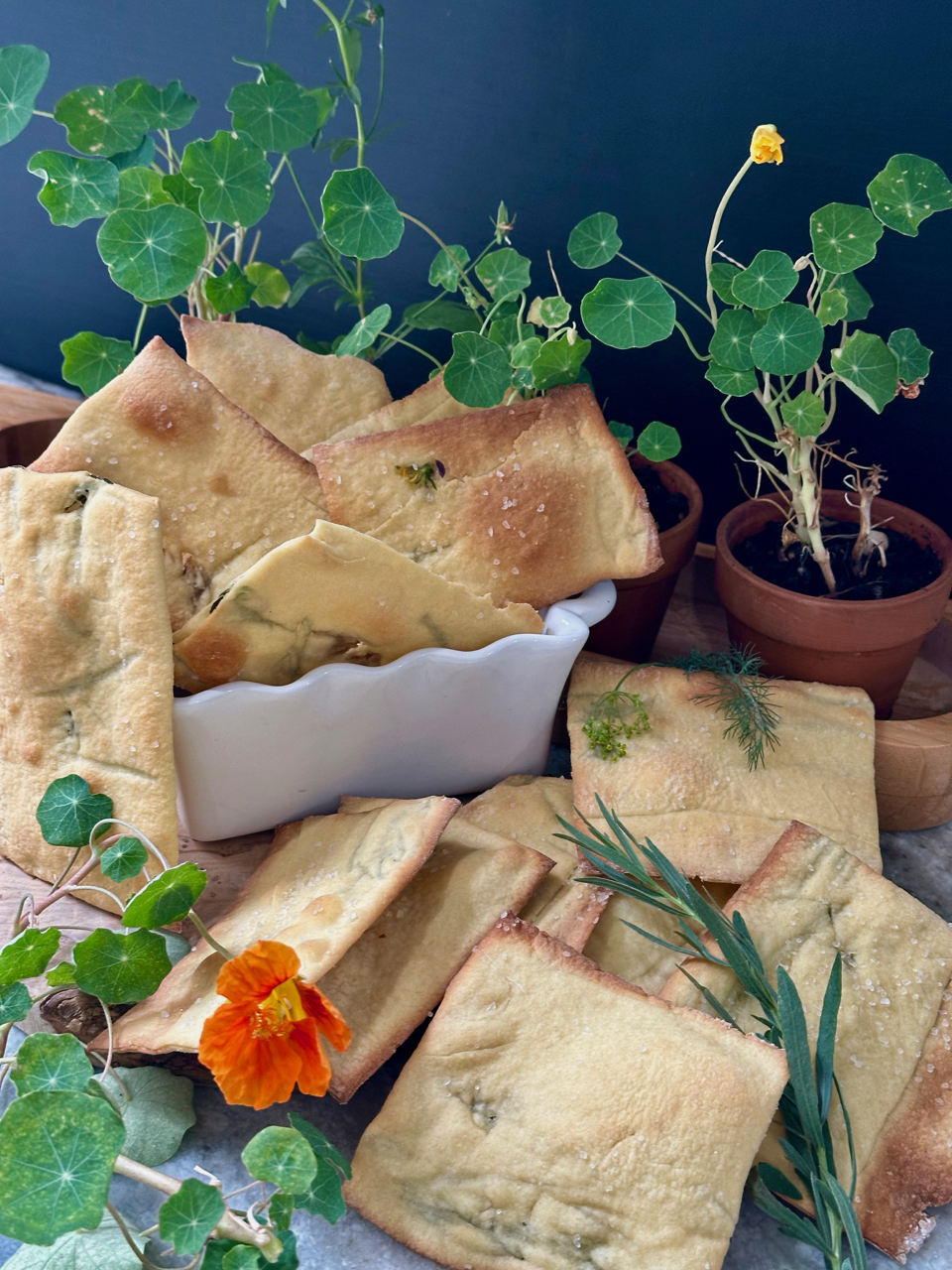
Botanical Flatbread Crackers with Edible Flowers & Herbs
Equipment
- Pasta roller
- Basting brush
- wire rack
Ingredients
- 2 tsp Yeast
- 2 tsp Sugar
- 1 tsp Salt
- 2 tbsp Extra virgin olive oil more for basting
- 1 1/4 cup Water
- 4-5 cups All purpose flour more for dusting
- 1 tbsp Coarse sea salt
- 1/4 cup Fresh herbs
- 1/4 cup Fresh edible flowers optional
Instructions
- Proof the sponge – In a stand mixer with a dough hook attachment, a mixing bowl or simply a large bowl with a wooden spoon, place the yeast, sugar and lukewarm water and allow to sit for 1-2 minutes to dissolve. Add the salt, olive oil and a cup of the flour, into the yeast mixture and stir on low speed to bring the ingredients together. Slowly add flour and stir until it becomes difficult to stir. If using a mixer with a dough hook make certain to scrape down the sides of the bowl.
- Forming a dough ball – At first you will have a sticky dough, but as you continue to work in more flour you will have an elastic dough, but continue to work in as much flour as needed until it forms a soft dough ball.
- Rising the dough – Transfer the dough to a clean and lightly oiled bowl, cover with plastic wrap and allow to sit out, room temperature, or a warm place until the dough doubles in size, about an hour. Once the dough rises, punch it down and let the dough rest for 5-minutes. Preheat the oven to 350.
- Shaping the risen dough– Sprinkle a little flour to create a lightly floured surface. Transfer the dough to the floured surface. With a rolling pin roll out the dough until it's about 1/4 inch thick. This thickness will fit easily through the opening of the pasta machine. Run the dough through the machine on its largest hole setting. Lightly dust flour on the surface of the dough, change the setting one notch lower and run the dough through a second time.
- Lay the long thin pieces of dough, about 6 inches wide, back onto the work surface with just enough flour to keep the dough from sticking, cut a few into shorter pieces if they are too long to work with. Place the flower petals and herb leaves of choice scattered on top of the dough, fold the dough over lengthwise and run the piece of dough through the pasta machine one last time. Do the same with the remaining dough. Cut the decorative dough into pieces and sizes you would want to display when serving. Transfer to the prepared sheet pan, brush an addition of olive oil lightly across the tops, and sprinkle a bit of coarse salt on top.
- Bake for about 10 minutes, watching closely so as not to brown too quickly. Transfer to a wire rack to cool. When completely cooled, the bread-crackers can be stored in an airtight container for several days.
Notes
- Soft herbs work best when folding inside of the dough so as not to rip the delicate dough as fresh rosemary might do.
If you make these botanical crackers, I’d love to see your creations. Tag your photos and share which herbs or flowers you used, each batch tells its own story.

I believe the table... that place that draws people to gather, is the most powerful symbol of togetherness. All that happens before the table is set, the planning, the gathering, the preparing, are all an intricate part of the dance that create the mood of celebration to share with friends and loved ones.
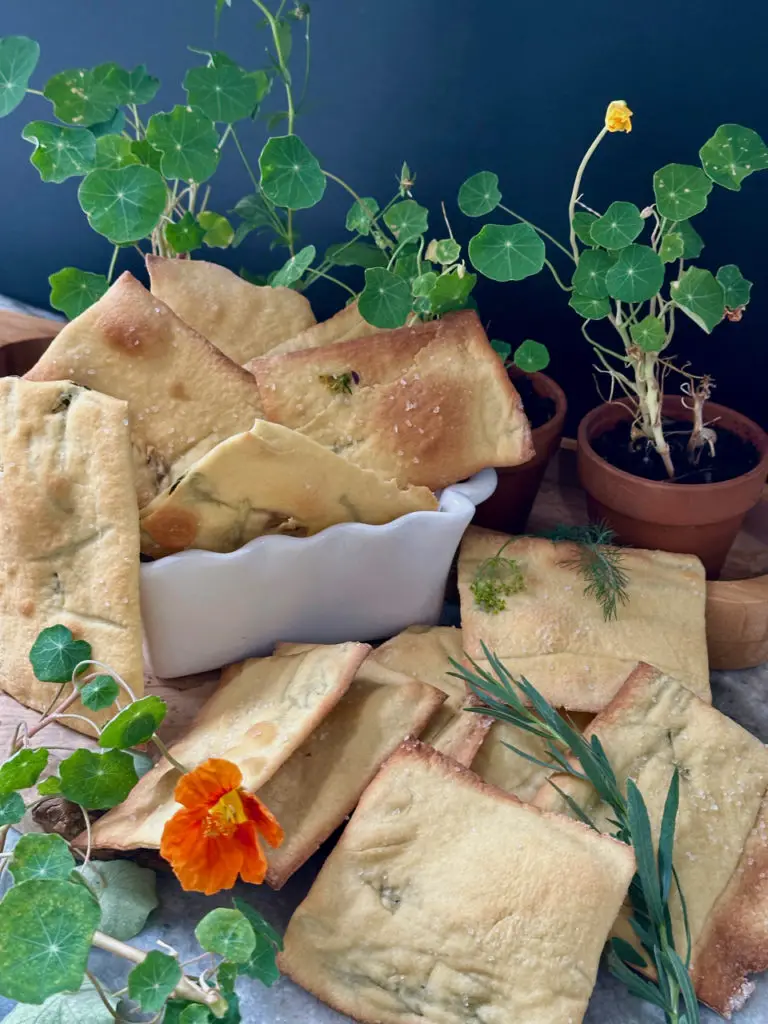
Artsy crisp crackers are perfect for my cheese boards and dips!