
Learn how to make authentic stuffed grape leaves (dolmas) with three methods: the traditional lamb and rice recipe, a quick cook’s version for busy kitchens, and a vegetarian lentil and barley option.
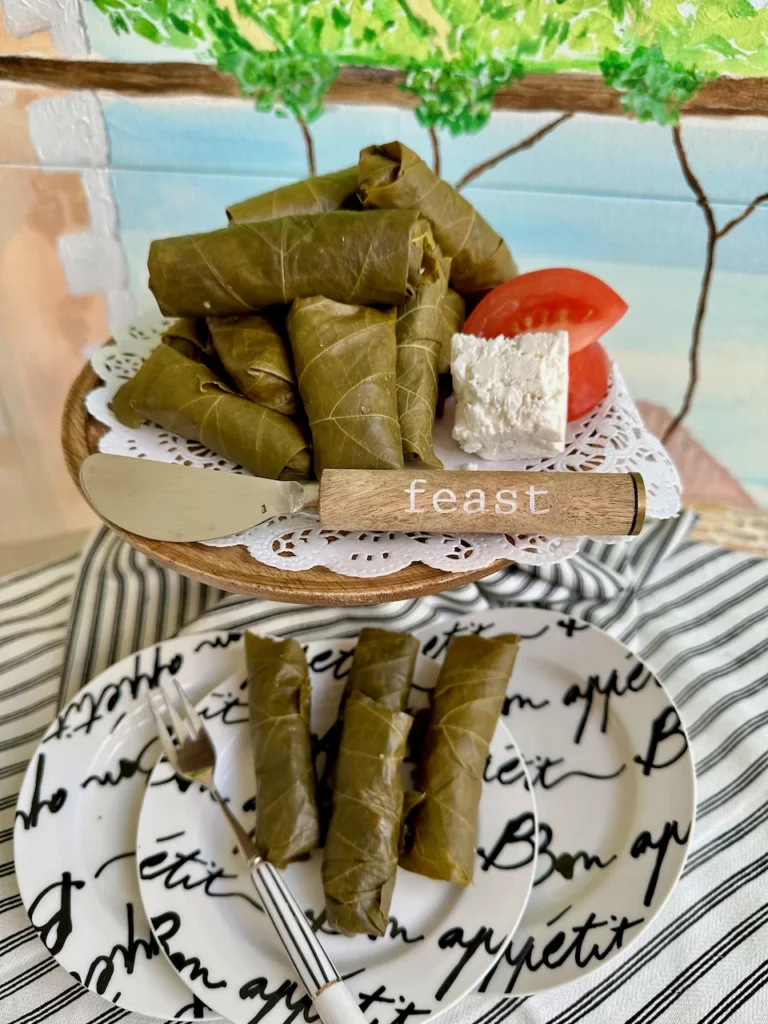
Mediterranean Stuffed Grape Leaves – A Tradition In My Kitchen
Whether you call them Dolmas, Lebanese stuffed grape leaves, Greek Dolmas or Palestinian Warak Dawali, stuffed grape leaves, are simply a classic comfort food of the various Mediterranean countries.
Having made stuffed grape leaves all my life, I have dabbled in perfecting the recipe I knew as a kid. While rice and ground lamb are the way I knew grape leaves, as a young girl making stuffed grape leaves with my Syrian mother, times now are a little different.
I now have a few vegans in my own family who want grandma’s yummy stuffed grape leaves, except without the meat. I found it just as easy to create a vegetarian twist on the traditional stuffed grape leaf recipe, using barley and French lentils. Both are delicious even if you are a meat lover.
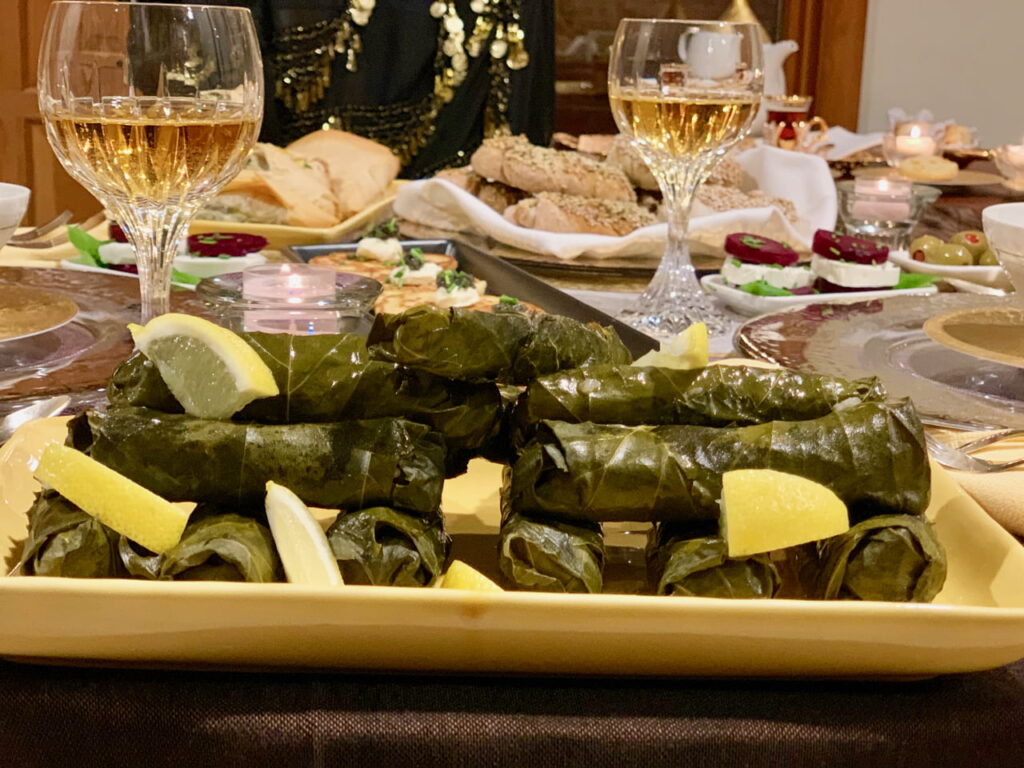
Grape Leaves
Buying grape leaves is so much easier today than it used to be when I was growing up. Living in a town along the Chesapeake Bay in Maryland, there were zero international markets, and certainly not an international section in the local grocery stores.
Our family would pile into the car a few times a year and drive into Washington, DC where there were a few Middle Eastern or Greek markets.
We would stock up on jars of grape leaves, rolled apricot sheets from Lebanon, which were fantastic and way ahead of the over-sugary fruit roll-ups we now have in the supermarket.
Of course there was a fantastic selection of olives in large barrels, floating around in a salted brine, and to-die-for cheeses, mostly goat and sheep milk cheeses. Yep, we stocked up!
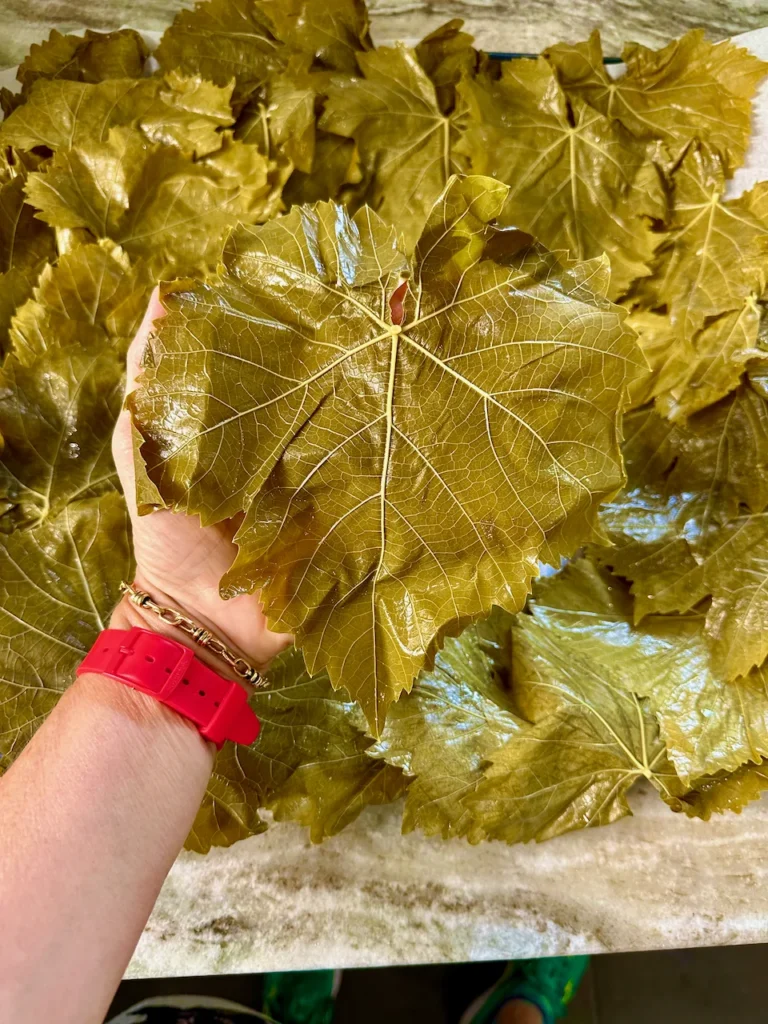
Can You Use Fresh Leaves From Grape Vines?
Freshly picked grape leaves can be used, if you have access to them, but they need to be softened, blanched, for the making of stuffed grape leaves.
The grape leaves, used to make stuffed grape leaves, are picked fresh and brined in lemon juice and salt. This process helps to tenderize the leaves, makes them easily digestible, and makes them easier to roll.
Home grown grape leaves, which I am attempting to grow this year, can be prepped for rolling, in this same way. A large pot of boiling water with lots of salt, provides the best home approach to preparing the leaves.
They are lowered into the boing water just long enough for the color to brighten but not fade, much as you would spinach, then transfer them to an ice water bath to stop them from cooking.
Grow Your Own Grape Leaves
Perhaps I’ve totally lost my mind, but this year I’ve decided to grow my own grapes for their leaves!
Sure, I’d love to think I will end up with an abundance of grapes, which I will use in a variety of ways; making my own wine won’t be one of them!
But, if the small spot I’ve designated, in my yard, to plant three vines, doesn’t harvest lots of grapes, at least I will have an abundance of my own organic leaves.
Old-School Technique Of Preparing Stuffed Grape Leaves
Since I was a kid, I watched my mom make stuffed grape leaves the way she was taught by the Syrian women in her family.
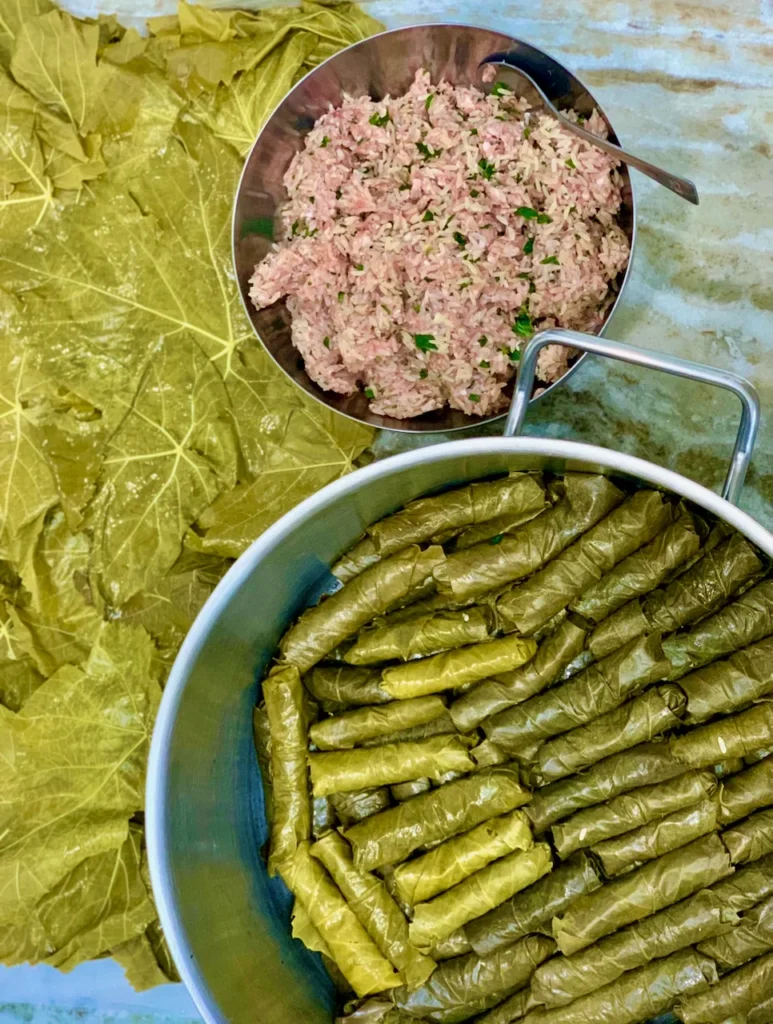
In a large bowl, grape leaves were separated and hung around the edges, making it easy to grab and roll. The filling was raw rice, raw ground meat and lots of herbs and spices.
Once the grape leaves were rolled, they were layered in a deep pot or Dutch oven, just barely covered with enough water to immerse them, and over a low heat they underwent a gentle simmer cooking both the rice and meat together.
This ‘old-school’ method, while a longer method, it always allowed time for several to sit around the table to make these together and chat!
However now, with busy lives and little time to cook traditional style recipes I grew up with, I have devised different ways to obtain a classic recipe, but in half the time!
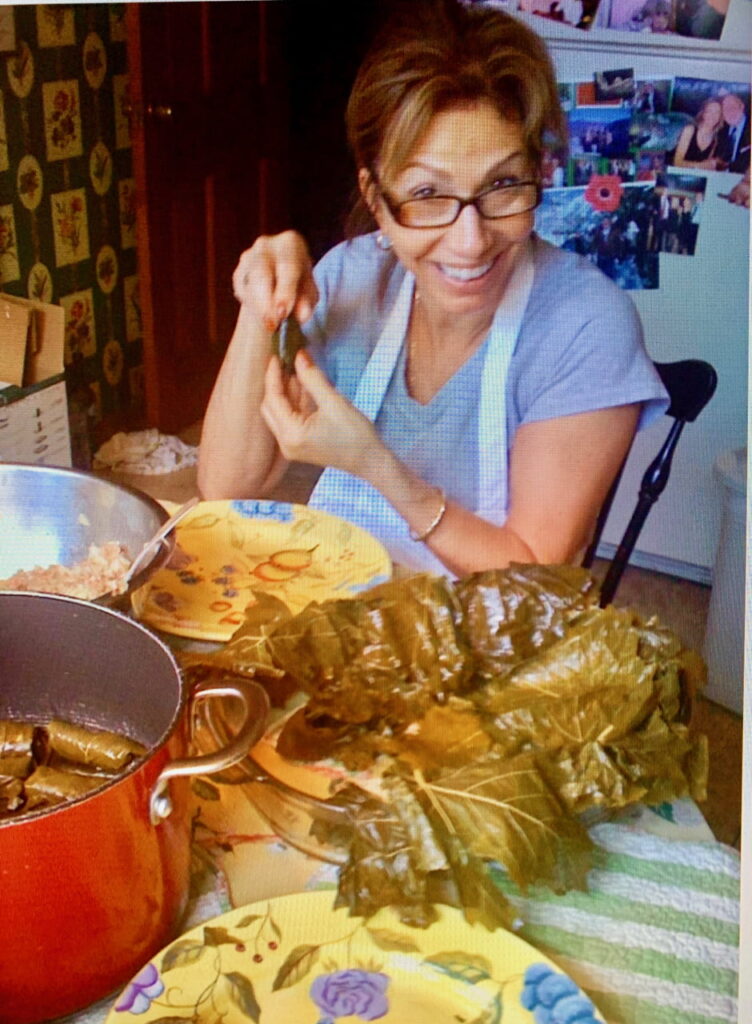
Making My Stuffed Grape Leaves On Television In Under 60-Minutes
Who in their right mind makes stuffed grape leaves in under 60-minutes on a television cooking competition?
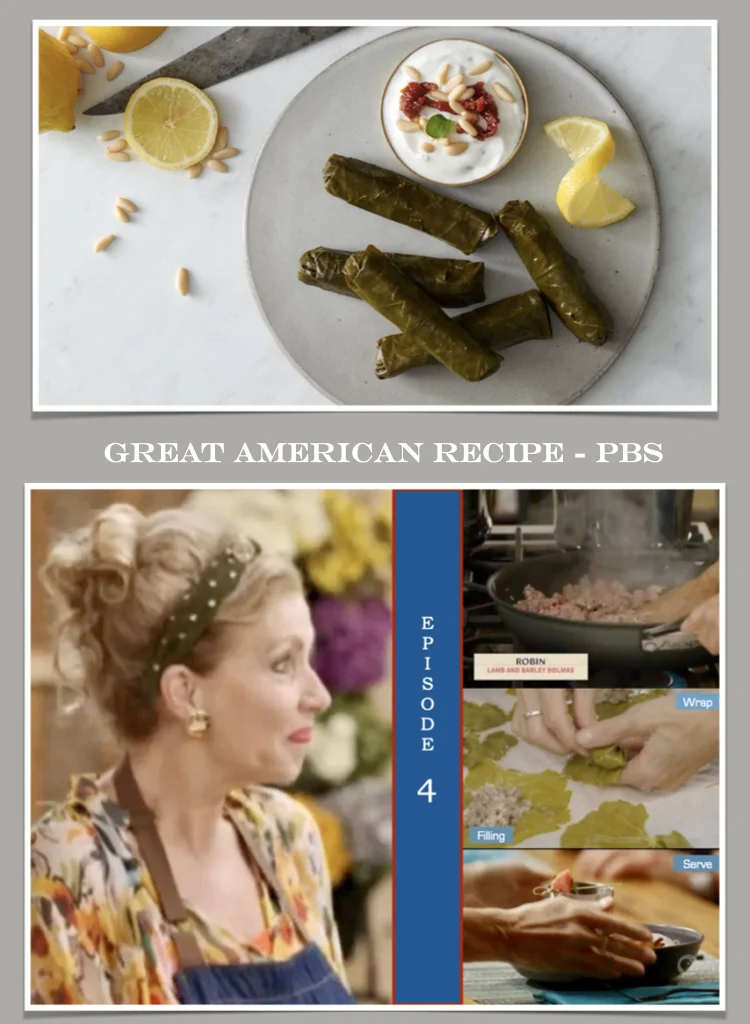
I did! It was on The Great American Recipe with PBS that I had the opportunity to share the BEST Mediterranean Stuffed Grape Leaves on national television. For Behind The Scenes stories about this exciting opportunity and how I was able to wow the judges, read further here!
Preparing the filling first, by cooking the meat in one pan and the rice in another, and them blending them together with all the flavors we know and love in stuffed grape leaves, is exactly what I did on set.
Once the filling was prepared, all I needed to do was quickly stuff the grape leaves, brush olive oil on them, a sprinkle of salt and pop them in the oven to warm them, creating a bit of a crispy texture on the leaves, and the judges love them. I am certain you will too, and preparing the filling before stuffing the leaves, takes the guesswork out of tasting what they might need.
Preparing The Leaves
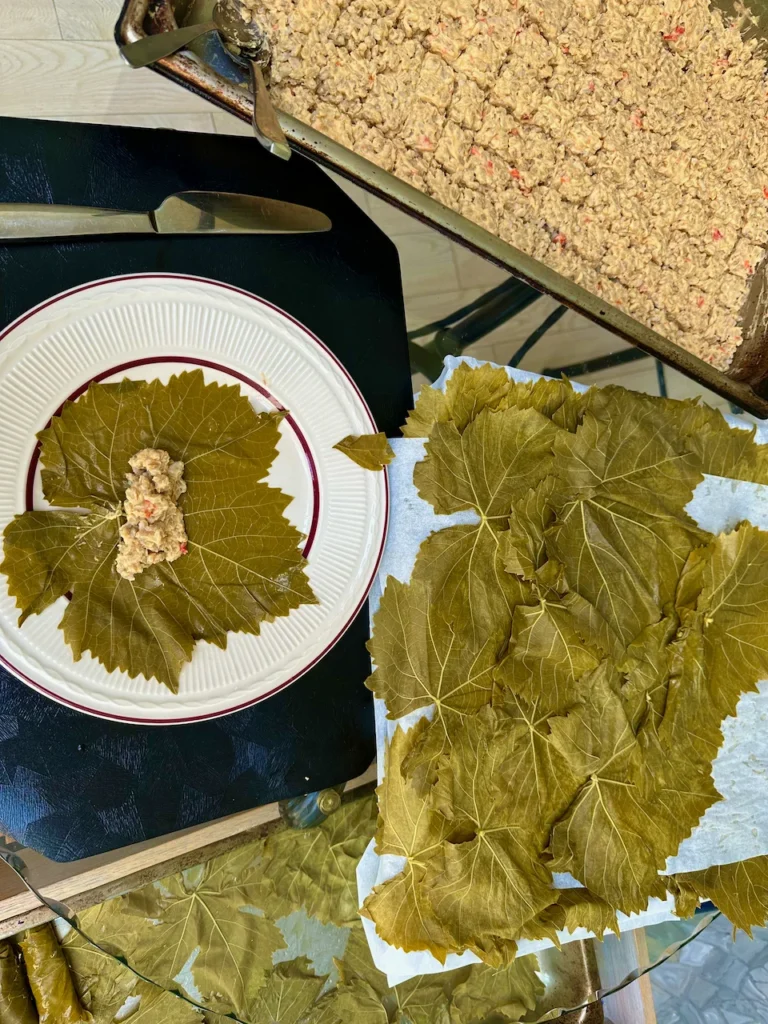
This will be the first step to having the grape leaves sorted out and ready for fast roll-up time. This is what you will want to do:
- Open the lid to the glass jar, empty the briny water out and carefully grab onto one of the cigar-like rolls of leaves. There is often 3 bundles tightly rolled inside the jar.
- Run the bundle under cold water, while slowly unrolling the bundle. Run the opened bundle under cold water to rinse much of the brine water off.
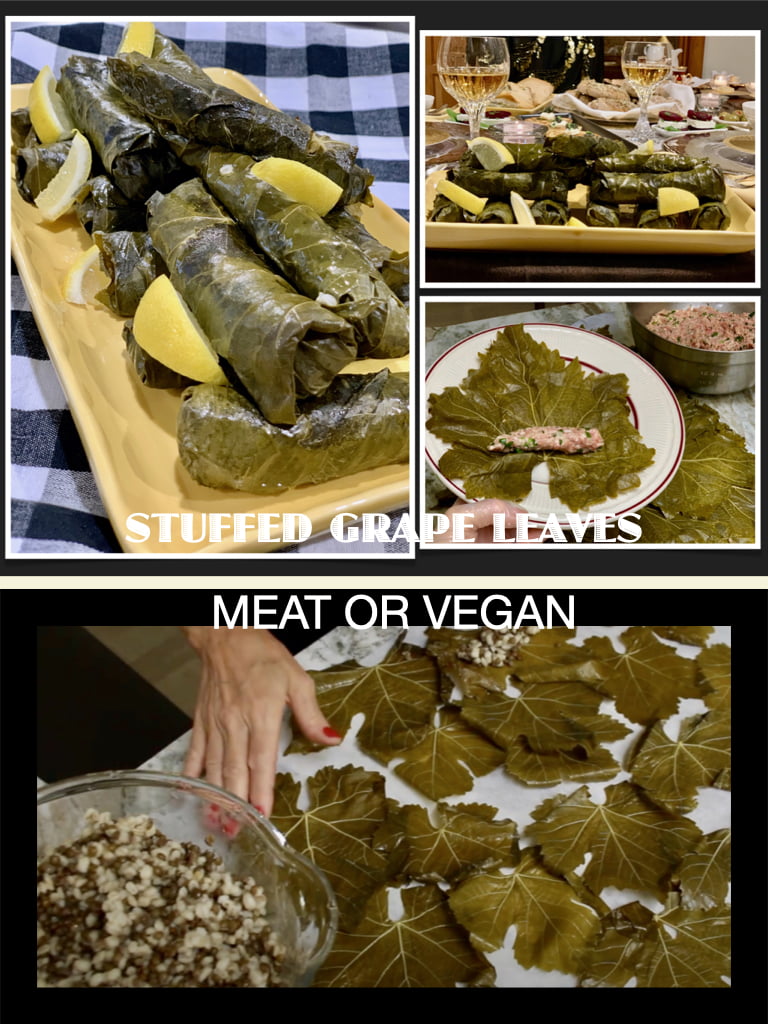
- On a parchment paper lined cookie sheet, separate one grape leaf at a time and lay them flat so they will be ready to roll when you are. Clip any steps sticking out. As delicate as the leaves appear, they are actually quite hearty, and don’t break easily.
What To Serve With Mediterranean Stuffed Grape Leaves
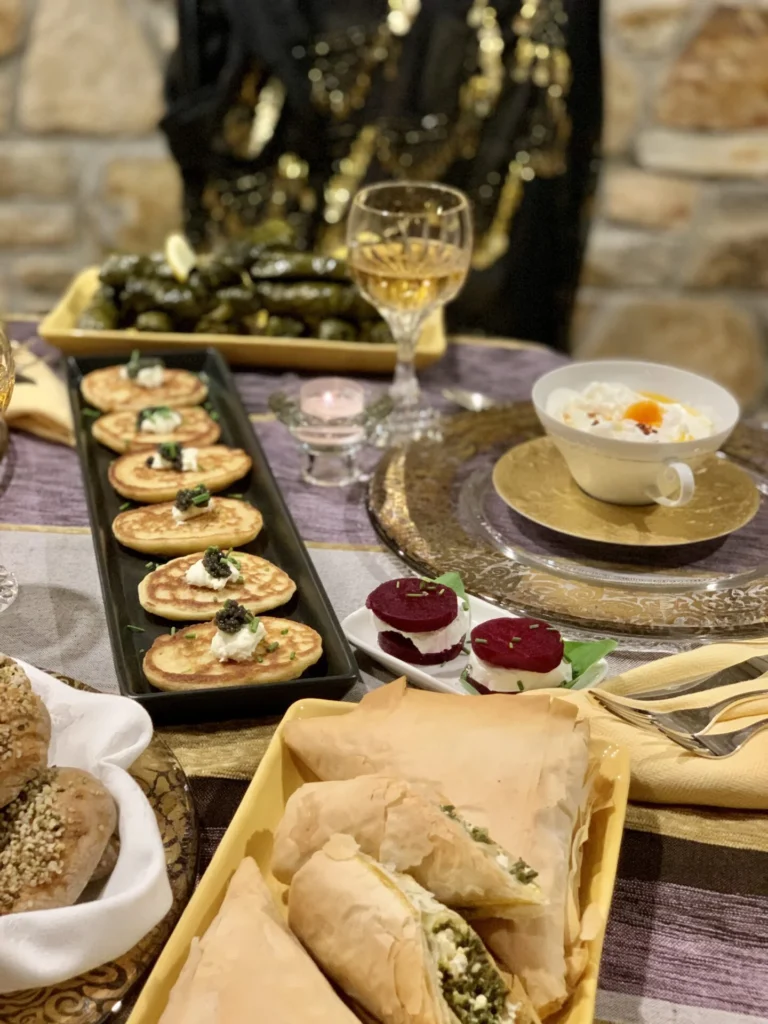
Mediterranean Cuisine is what I grew up cooking, and stuffed grape leaves were often served along with many other favorite Mediterranean dishes.
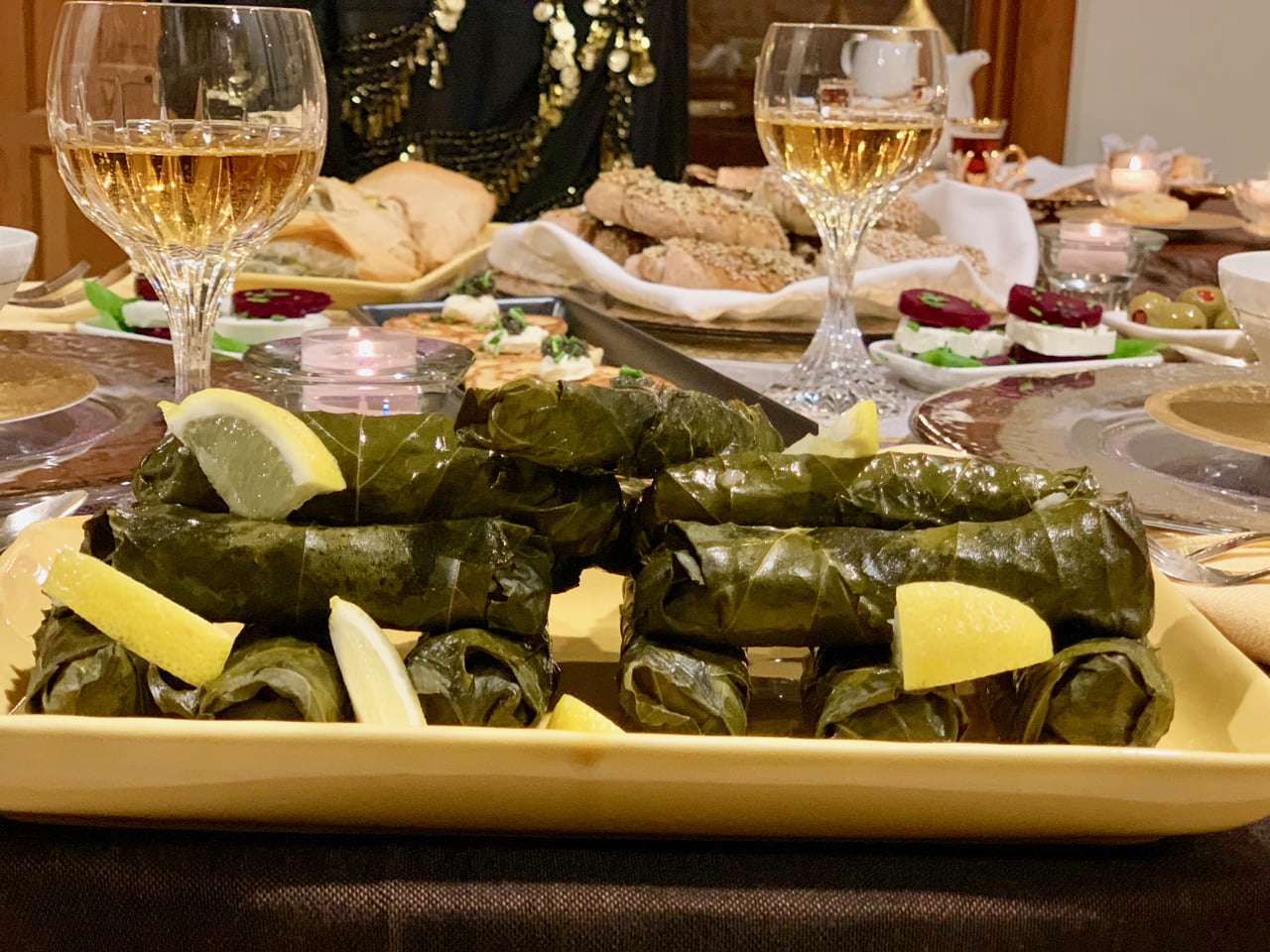
In my home, stuffed grape leaves could be served as a side dish along with other dishes, such as a Lamb Tajine, Lamb Chops (which I also made for television and were a hit), or Koftas (which I made on Guy’s Grocery Games).
However I enjoyed them as a main dish served with plain yogurt, maybe a small salad and a favorite Turkish bread called Simit.
Some Mediterranean cultures will also reheat their stuffed grape leaves in a little tomato sauce.
How To Store Leftover Grape Leaves
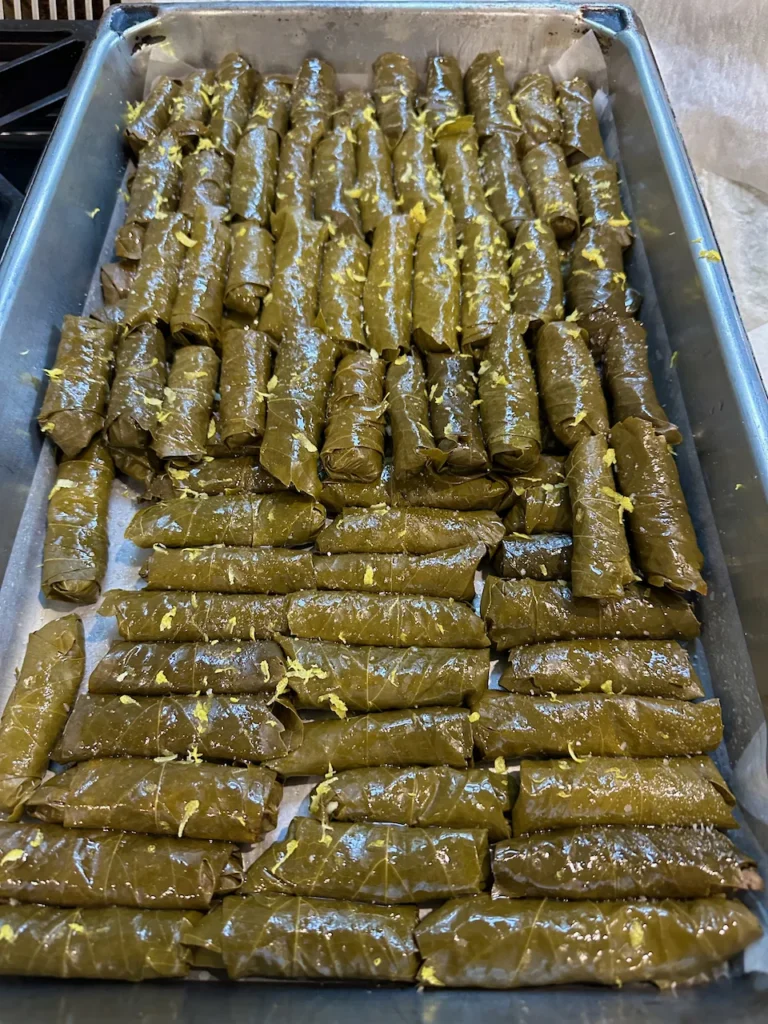
What to do with remaining grape leaves? Very rarely are there leftover grape leaves in our home, because what doesn’t get eaten in the first serving, stays in the fridge for the week to nibble on all week as a delicious appetizer or quick lunch!
Of course stuffed grape leaves make for the perfect and complete meal to send the kids off to school with. Don’t laugh, my kids often took stuffed grape leaves to school in their lunch and their teachers loved that I packed extra for them too.
But these little bundles of a complete meal in a bite are perfect for freezing. Simply layer room temperature stuffed grape leaves in an airtight freezer bag and once thawed are perfectly reheated for later use.
What To Do With Leftover Stuffing From Stuffed Grape Leaves
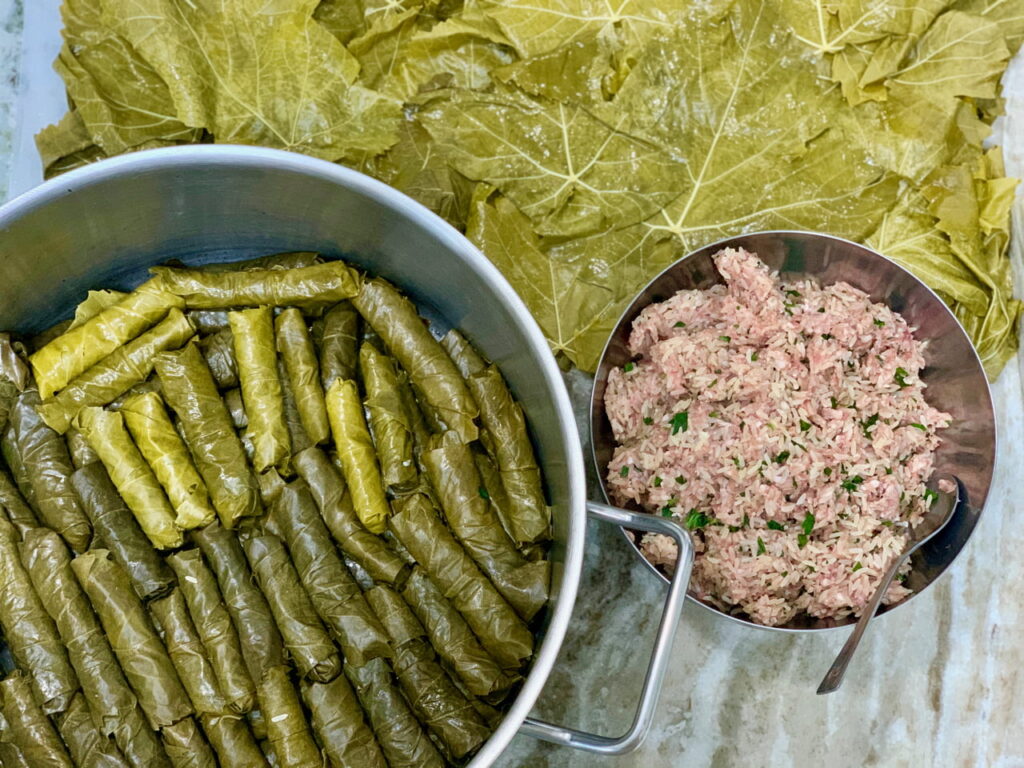
Invariably, I end up with way more filling than I have leaves. Has that ever happened to you? In truth, I often make extra filling on purpose so that I can use it in so many of my other favorite recipes.
Often in a Mediterranean home, cooking is done for larger gatherings than are common here in America. Extended families drop in without notice, families value sharing a meal together and often there is more than one cook in the kitchen.
Therefore, stuffing things is a great way to feed a large crowd! This type of filling is called ‘hushwa’ and my kids loved it enough to make it a main course on busy weeknights.
Equally delicious, though, is this same filling stuffed in peppers, hollowed out zucchini or squash and even hollowed out tomatoes.
Vegetarian Stuffed Grape Leaves
Stuffed grape leaves are prepared in a variety of ways, depending on the region of the Middle East you are from. Preparing a vegetarian stuffed grape leaf is not just for vegetarians, it is a delicious way to add a variety of vegetable ingredients to your filling.
Some families like a little spicy in their dolmas and so they prepare the rice with chili peppers. Other’s finely chop tomatoes to blend with rice, pine nuts and onions. A favorite vegetarian dolma I like to prepare is made with barley (or rice), and French lentils.
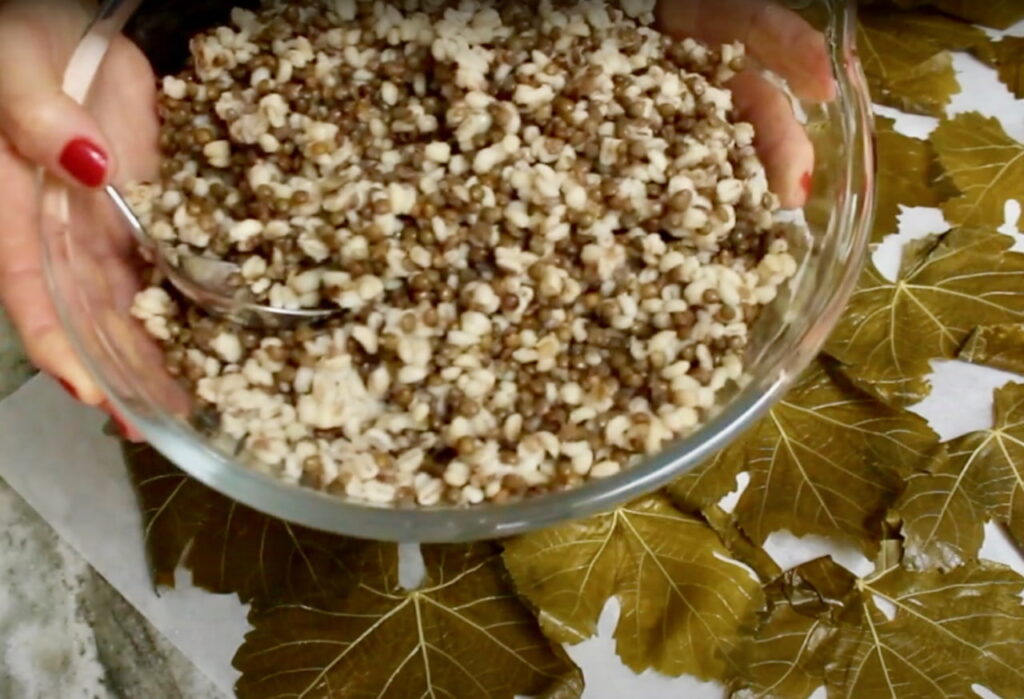
Lentils in the filling prepare for the grape leaves, offer a protein and substance to each bite and are delicious dipped in a variety of Mediterranean dips such as:
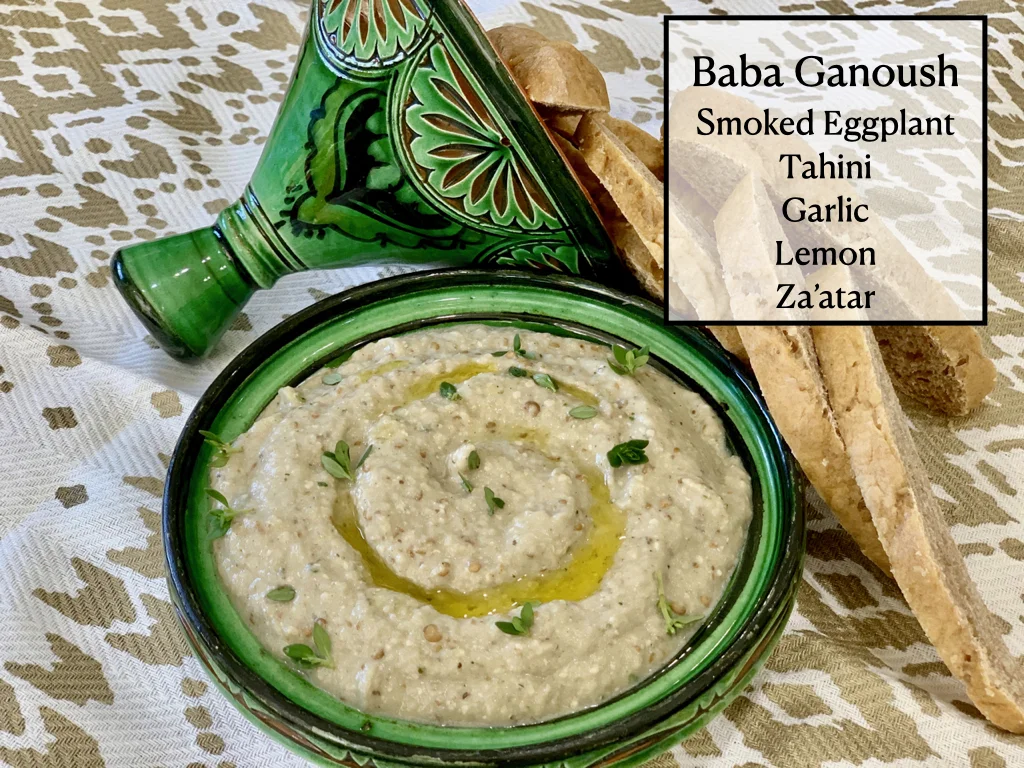
- Baba Ganoush, a rich eggplant vegetable dip made with tahini, garlic and other flavors.
- Tzatziki – made with thick yogurt, cucumbers and herbs.
What If I Don’t Like Grape Leaves?
If grape leaves are not something you grew up with but love the ingredients in the filling, I’ve got a backup plan for you!
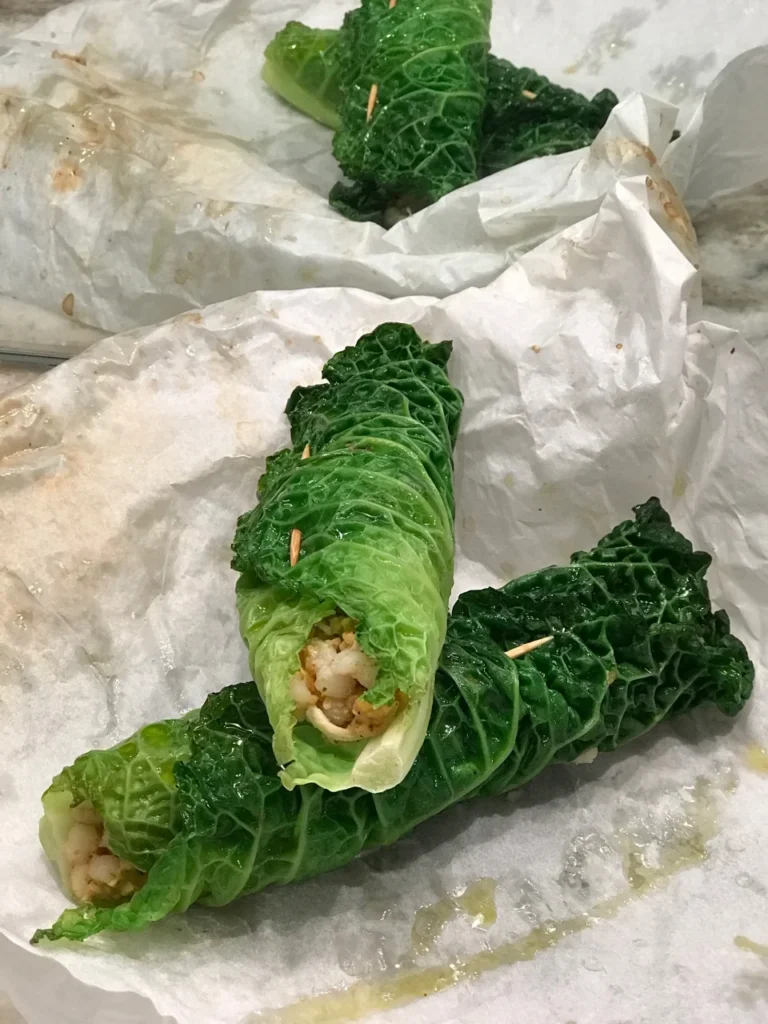
Stuffed cabbage leaves, in my home, are often filled with this same filling, except I add a pinch of tomato paste to the meat while it’s cooking.
The addition of tomato paste adds a bit of acidity and tartness to the sweet cabbage leaves, offering a delicious contrast.
Tools You’ll Need to Make Stuffed Grape Leaves
Stuffed grape leaves may look intricate, but the tools needed are wonderfully simple. Most home kitchens already have everything required to roll, cook, and serve these delicate Mediterranean bundles.
- Two Large Saucepans – One saucepan is used to cook the rice and meat filling or prepare the grains for the vegetarian version. The second wide saucepan is ideal for layering and gently simmering the stuffed grape leaves in broth until tender.
- Large Strainer – Jarred grape leaves are packed in a salty brine, so they should be rinsed well before using. A large strainer makes it easy to drain and rinse the leaves thoroughly before separating them for rolling.
- Large Mixing Bowl – A spacious bowl allows you to comfortably mix the filling ingredients, whether you’re preparing the traditional lamb and rice mixture or the lentil and barley variation.
- Baking Sheet Pan – If you are using the quick oven method, a baking sheet pan holds the rolled grape leaves in a single layer so they can be brushed with olive oil and gently warmed.
- Basting Brush – A small brush is perfect for lightly coating the rolled grape leaves with olive oil and lemon, keeping them moist and adding flavor during baking.
- Cutting Board and Knife – A sharp knife and sturdy cutting board make quick work of chopping onion and fresh herbs, which bring brightness and fragrance to the filling.
- Measuring Tools – Accurate measuring cups and spoons ensure the right balance of rice, herbs, and seasoning in the filling.
- Airtight Storage Container – Stuffed grape leaves store beautifully in the refrigerator. Place leftovers in a glass or airtight container to keep them fresh for several days.
- Stovetop – The stovetop is used for the traditional slow-simmered method, allowing the rice and filling to cook gently inside the grape leaves.
- Oven – For the faster cooking method, the oven warms the pre-cooked filling wrapped in grape leaves, giving you delicious dolmas in a fraction of the time.
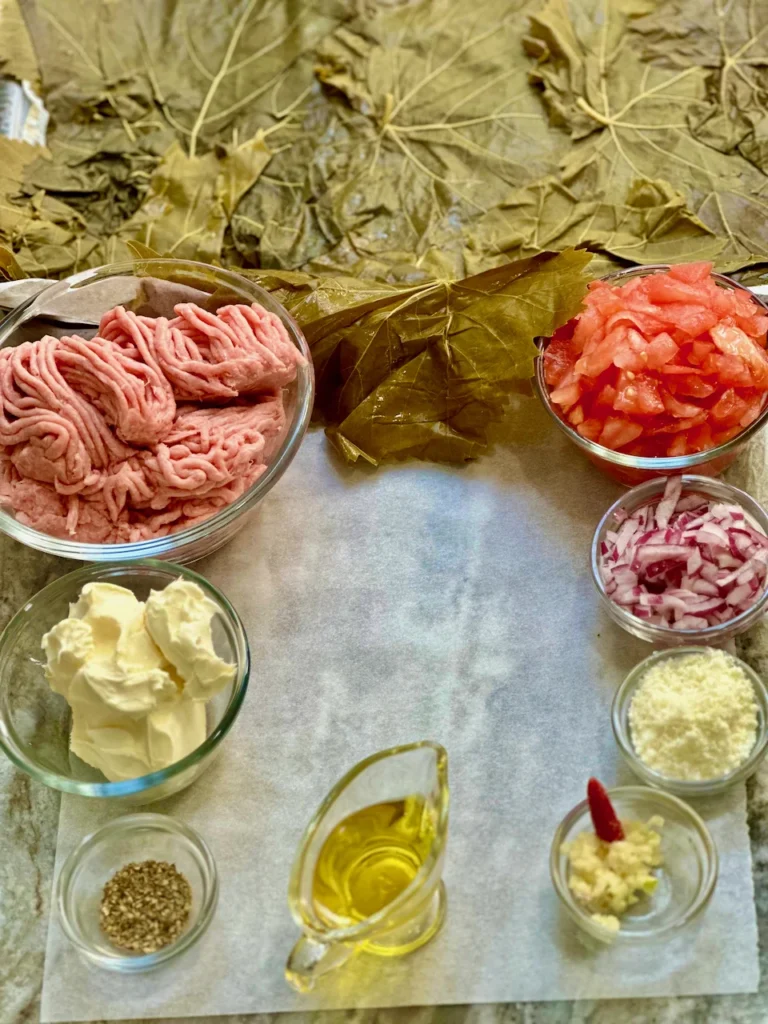
Ingredients for Stuffed Grape Leaves
At the heart of every great stuffed grape leaf recipe is a filling that is fragrant, bright with lemon, and balanced with herbs and olive oil. The ingredients are simple, but each one plays an important role in building the classic Mediterranean flavor.
Below are the ingredients for the traditional lamb and rice filling, along with a simple plant-based lentil and barley variation that is just as satisfying.
For the traditional stuffed grape leaves filling:
- Jarred grape leaves – Tender grape leaves are the wrapper that holds everything together. Most home cooks use jarred grape leaves, which are already preserved in brine and ready to use. Simply rinse them well and gently separate the leaves before filling. Look for jars with whole, unbroken leaves for the easiest rolling.
- Ground Meat – Traditional stuffed grape leaves often use ground lamb, which adds a rich, savory flavor that pairs beautifully with lemon and herbs. Ground beef can also be used, or even a mixture of the two if you prefer a milder flavor.
- White Rice – Rice is the heart of the traditional filling. When prepared the classic way, the uncooked rice slowly cooks inside the grape leaves, absorbing the juices from the meat, herbs, and broth as the dolmas simmer.
- Pine Nuts (Optional) – A small handful of pine nuts adds a subtle buttery flavor and delicate texture. They are optional, but they bring a wonderful hint of the Middle Eastern and Mediterranean kitchens where stuffed grape leaves have been made for generations.
- Onion – Finely chopped onion adds natural sweetness and moisture to the filling as it cooks, helping the rice and meat stay tender.
- Olive Oil – Good extra virgin olive oil is essential for authentic flavor. It enriches the filling and keeps the grape leaves tender while they cook.
- Fresh Lemon Juice – Lemon juice is what gives stuffed grape leaves their bright, tangy finish. The acidity balances the richness of the filling and enhances the fresh herbs.
- Fresh Herbs (Parsley Preferred) – Fresh parsley is traditional, adding color and a vibrant herbal note. Some cooks also add mint or dill, but parsley alone creates a beautifully balanced flavor.
- Salt – A simple seasoning that enhances every ingredient in the filling. Because jarred grape leaves are already slightly salty from the brine, taste carefully as you season.
- Chicken Broth (optional) – When making the traditional slow-cooked version, a small amount of chicken broth is added to the pot. As the grape leaves simmer, the broth gently cooks the rice and infuses the dolmas with flavor.
For the vegan filling Option: Lentils and Barley
For a hearty plant-based variation, the filling can easily be adapted using grains and legumes that bring both texture and flavor.
- Hulled Barley (Precooked) – Hulled barley provides a wonderfully chewy texture and a slightly nutty flavor. Cooking it ahead of time makes the vegetarian filling easy to assemble and wrap.
- French Lentils (Precooked) – Also called lentilles du Puy, French lentils hold their shape beautifully and add a rich, earthy flavor that pairs perfectly with olive oil, lemon, and herbs.
- Water or Vegetable Broth – Use water or vegetable broth to cook the lentils and barley before assembling the grape leaves. Vegetable broth adds extra depth of flavor.
- Remaining Ingredients – The remaining ingredients, olive oil, onion, lemon juice, parsley, pine nuts, and salt, remain the same as the traditional filling, bringing the same bright Mediterranean flavors to the vegetarian version.
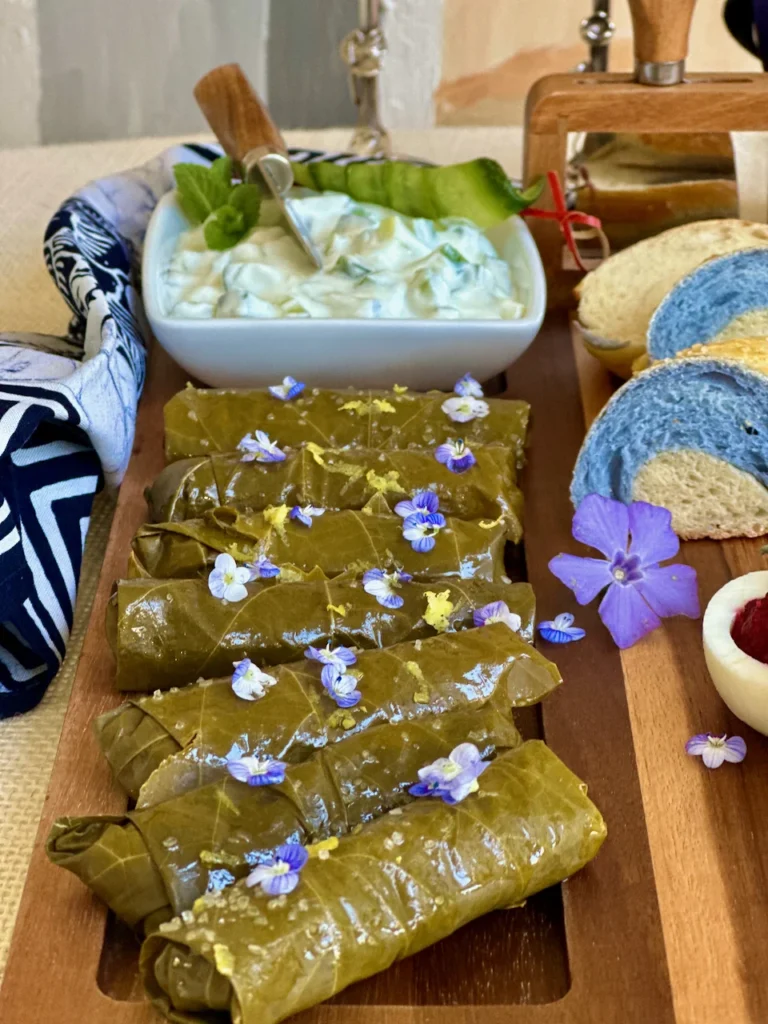
Authentic Stuffed Grape Leaves (Dolmas) – Traditional, Quick, and Vegetarian
Equipment
- 2 Medium Saucepans
- Baking sheet pan
Ingredients
- 1 lb Jarred Grape Leaves tender grape leaves
- 1 1/2 lbs Ground meat ground beef or lamb
- 1 1/4 cups White rice
- 1/2 cup Onion finely chopped
- 1/4 cup Pine nuts optional
- 1/4 cup Olive oil extra for brushing
- 2 tbsp Fresh lemon juice
- 1/4 cup Fresh herbs Fresh parsley, finely chopped
- 2 tsp Salt or to taste
- 1 1/4 cup Chicken broth or water
- 1 tsp Coarse Kosher salt
- Vegan Version
- 1 1/4 cup Hulled barley
- 1 cup French lentils
- 3 cups Hot water
Instructions
- Preparing Meat and Rice MixtureIn a medium-size saucepan, over medium heat, drizzle 1 tablespoon of olive oil on the bottom of the pot, add rice, 1 teaspoon salt and pine nuts and sauté for about 1-minute, while stirring. Add the broth, cover and cook for about 20-minutes.
- While the rice is cooking, place the remaining olive oil in a large saucepan, over medium-high heat, add the onions, 1 teaspoon salt and ground meat and sauté until all the pink is gone from the meat, stirring all the while.
- Once the meat is no longer pink, remove from the stovetop. Add the cooked rice to the meat mixture, along with the lemon juice, and fresh parsley, stir, cover and allow to sit while preparing the jarred grape leaves.
- Preparing Leaves Remove the grape leaves from the jar, rinse well and unfold them, separating each leaf, cutting off the stem end and laying it on a paper towel or across a large strainer. This step makes rolling the grape leaves much more efficient.
- On a cutting board or flat surface, place one leaf in front of you, shiny side down with the stem side close to you. Using a teaspoon, place a heaping teaspoon of the filled mixture at the end close to you. Fold over the edges along the sides, and begin to roll the filling inside the leaf in a tight 'cigar-like' roll. Place each rolled grape leaf in a large airtight container and continue to roll the remaining leaves. Don't throw away any remaining leaves, but rather place them on top of the rolled leaves to use later when heating the stuffed grape leaves.
- Preparing Vegetarian VersionUsing the exact ingredients as the meat stuffed leaves, simply replace the rice with barley, French lentils for the ground meat and hot water for chicken broth.
- In two separate medium size saucepans, drizzle equal amounts of olive oil in each pan, equal amounts of chopped onions in each. Add the barley to one of the pans, pine nuts and lentils to the other, stir, add lemon juice and salt to each. Add 1 1/2 cups of hot water to each pan, stir, lower the heat and cook until the water has evaporated, the barley is plump and lentils are soft. Once they cool, gently fold the lentils into the barley mixture and use this filling in the same way as preparing Mediterranean meat stuffed grape leaves above. Proceed with the instructions above for Preparing Leaves and rolling them.
- Heat and ServeSince the filling on either variation of stuffed grape leaves is already cooked, and the leaves are already soft from being brined, the stuffed grape leaves can remain in the fridge until you are ready to serve. Since this was a labor of love, and you now have about 50 stuffed grape leaves, simply place as many as you want to serve on a parchment paper lined baking sheet, brush lightly with olive oil, a pinch of coarse salt on top and place in a 325 degree oven for about 15-minutes.
- To prevent the tops from drying out while heating, place any leftover leaves on top to cover them while being heated.
Video
Notes
- A tip for rolling small or torn leaves: since not all leaves will be perfectly shaped, simply overlap 2 badly shaped leaves and roll them as 1 whole leaf.

I believe the table... that place that draws people to gather, is the most powerful symbol of togetherness. All that happens before the table is set, the planning, the gathering, the preparing, are all an intricate part of the dance that create the mood of celebration to share with friends and loved ones.
Follow this recipe exactly, use lamb for the best flavor and I promise, you will not be disappointed. We’ve been making them since we were old enough to stand on a chair.