
Okay, so you love Fish and Chips do you? Well then let me show you How To Make British Chips To Outshine Your Fish, says an American married to an old fashioned Brit!
Why ‘Better Than British Chips’?
The name started as a kitchen joke, one of those bold, half-serious declarations you make when something comes out of the pan exactly right.
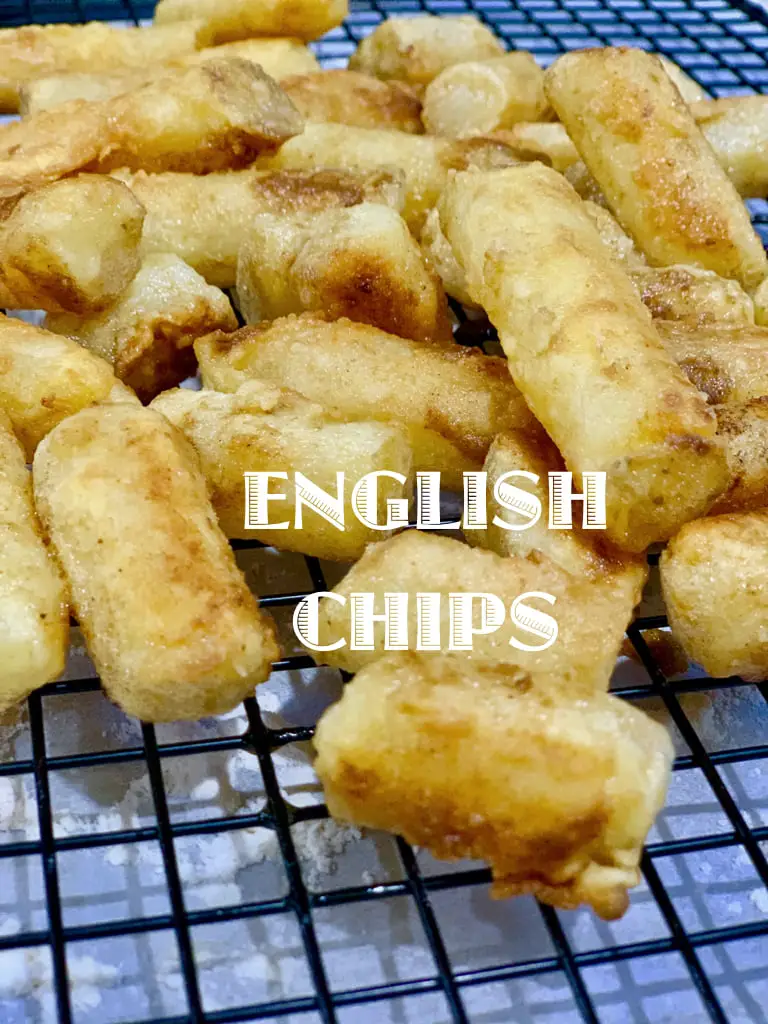
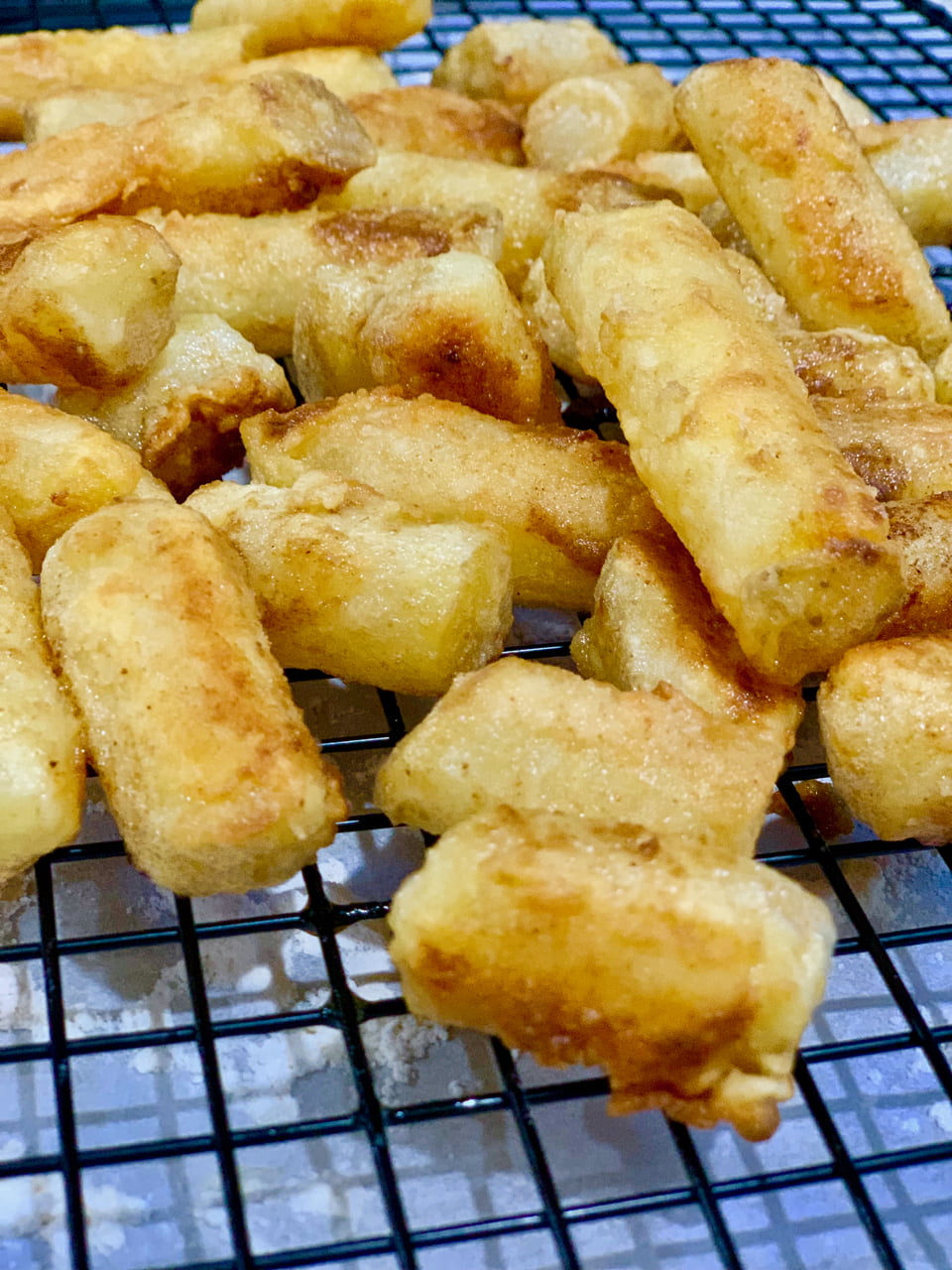
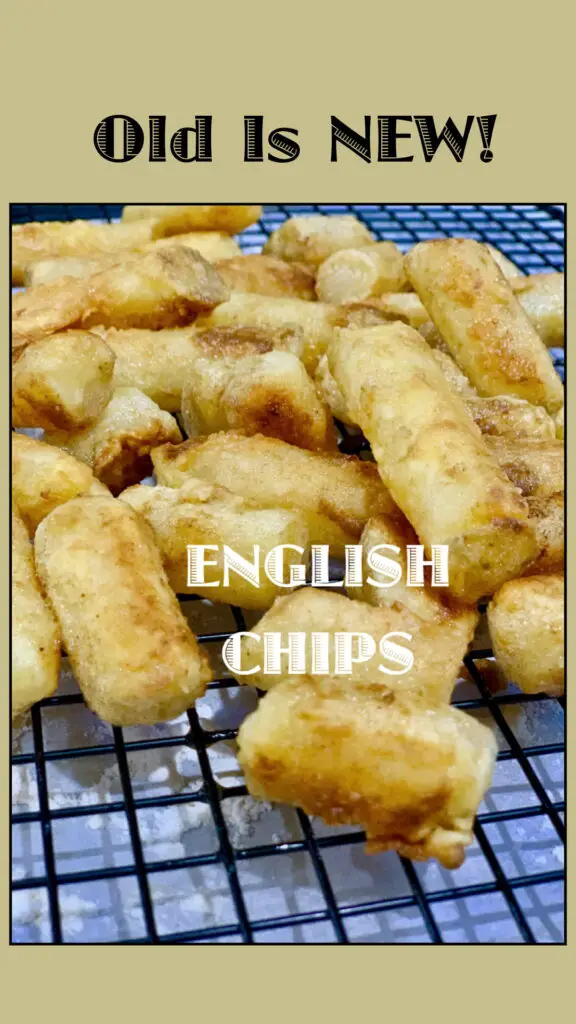
British chips are beloved for a reason: thick-cut, comforting, and deeply nostalgic. But these potato sticks, with their crisp batter, fluffy centers, and rich pan-fried flavor, felt like they were doing something just a little more.
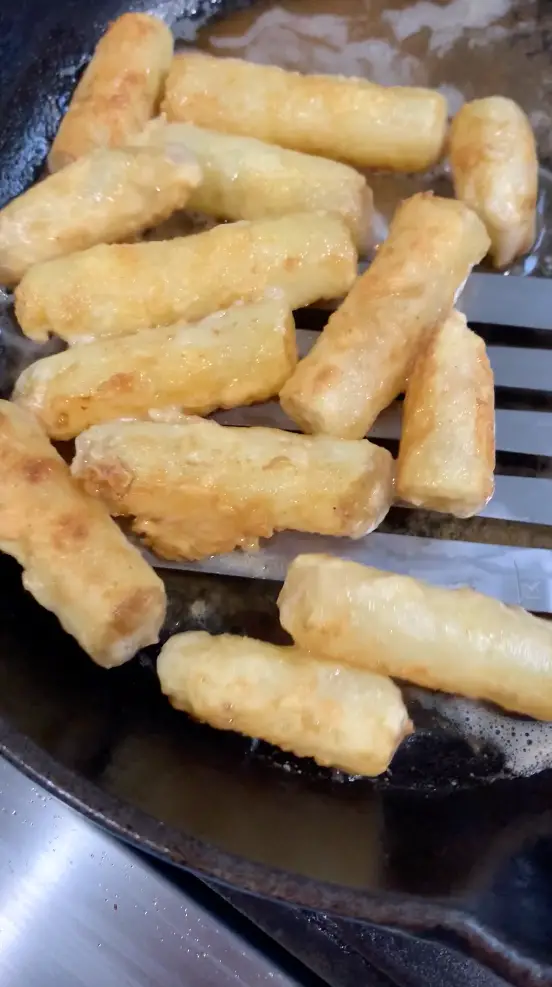
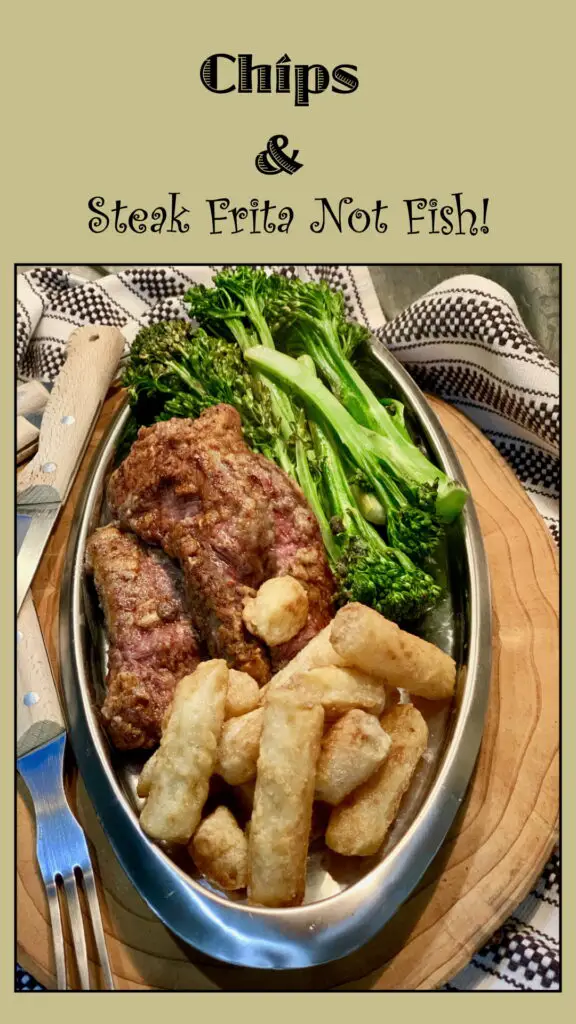
Cut into tidy cylinders, lightly battered, and sautéed instead of deep-fried, they manage to be both indulgent and restrained, golden and crunchy without the heaviness.
After the second batch disappeared faster than the first, the name stuck. Not as a slight, but as a celebration of how a familiar idea can be reimagined at home with intention, good fat, and a cast iron pan.
Bold? Maybe. Delicious? Undeniably.
Chips vs Fish
Be honest, when you order Fish and Chips, you are really after those fabulous potatoes.
The fish simply assures you that you have made a healthy choice!
Potatoes have a long and sometimes ugly history in reference to famine and poverty throughout Europe.
However, the stories and the history of what brought British Chips and Fish to our world today, are enlightening.
Allow me to share what I have learned from my colonial British husband on the topic.
Let’s Start With The Authentic British Fish Which Is Not Authentically British
Fish and Chips were first introduced to Britain by the Jewish community.
It all started in Holland, when the Jewish community fled for safety, to Great Britain, a well loved fish recipe came with them.
The Dutch, like the English, were great fishermen. While in Holland the Jewish community was not allowed to do much in the way of industry, but fish is what was most commonly available to eat.
Finding yourself a Jewish immigrant in England, back at that time, meant you sought out familiar foods to cook with.
Fish was one of them. Familiar, and the best way known at that time, to replicate a great meal!
The Beginning Of British Fish Warehouses
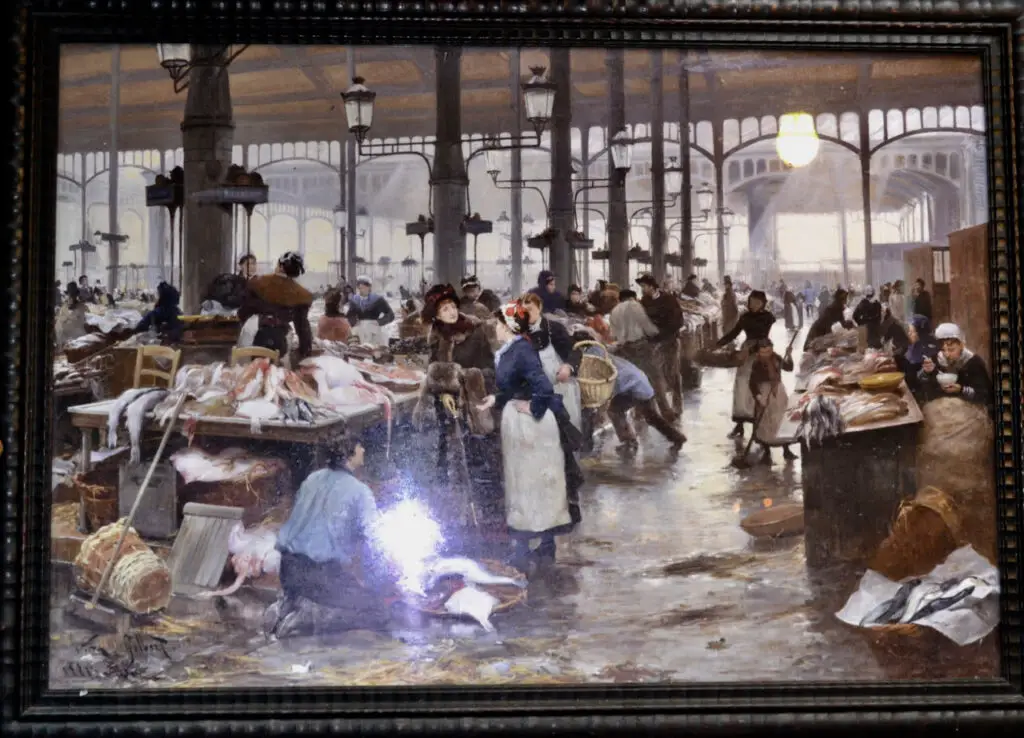
Working the north sea area’s coastline of England, the waters were a treasure in fish.
With the development of the railways, fish caught by the fleet in Great Britain from the east coast, could be brought into the innerland of Britain in vast quantities.
It was where the people of Britain became heavily populated, because of the factories.
Having left the farms, for work in the city areas, life as they knew it in the countryside, changed.
Railway made it possible to ship large volumes of fish from the coast, inland to the population centers.
It was there and then, that the fish warehouses became a necessity.
Fast Forward To Better Times And Best Fish Cooking Methods
It was in the mid 1800’s that Joseph Malin, an Eastern European Jewish Immigrant, opened the first ‘Chip Joint’!
As often was the case, in those times, a storefront was opened to sell goods and wares, while the family lived in the back of the storefront.
The contribution of this first storefront of Fish and Chips, turned this dish into the national dish of Britain.
The batter that was made to dip and fry the fish in, was made with flour and a fizzy beer.
Creating a luscious crisp casing around the fish, often Cod Fish, this recipe drew lines around the block of that tiny storefront.
The potatoes though… that was a different story.
Why Potatoes?
My question to my historian minded hubby, was ‘why potatoes’? Were they grown in the United Kingdom?
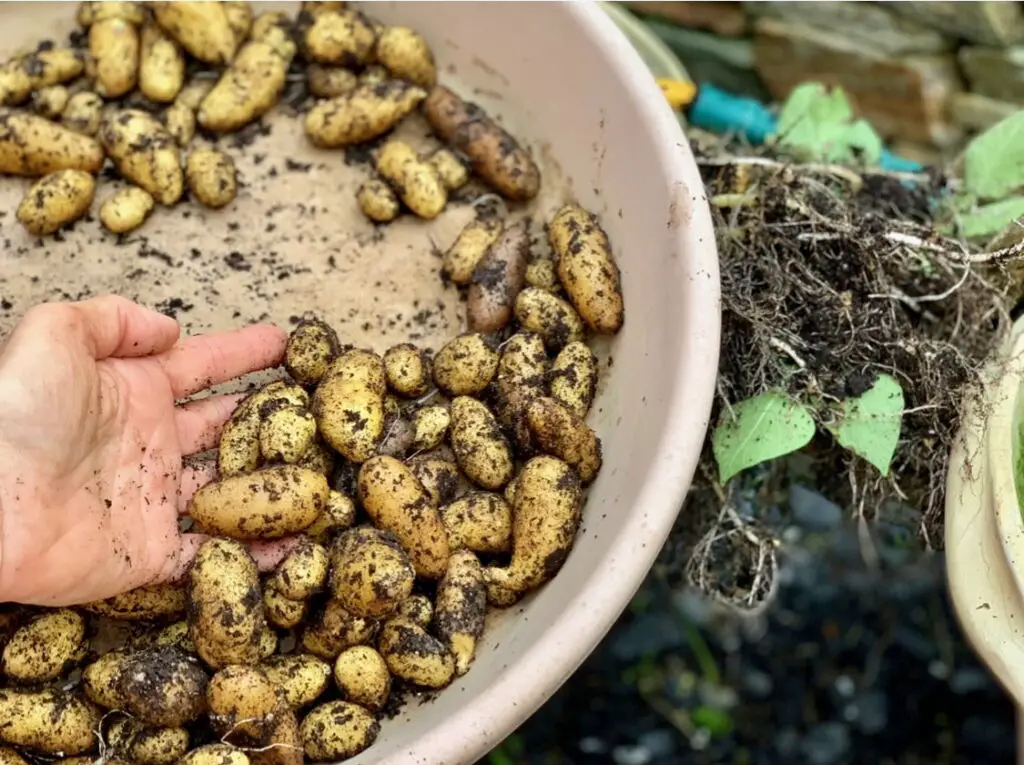
His reply, “Potatoes were easily available, easily cooked. Britain was relatively wealthy. The farmers were wealthy.
English grew potatoes, which originally came from South America, of which the British realized it to be a major staple and easy to grow.”
While I was living in Brazil, for a few years, potatoes were absolutely abundant, prepared in a variety of ways, and often served alongside other carbs, something we Americans would never do!
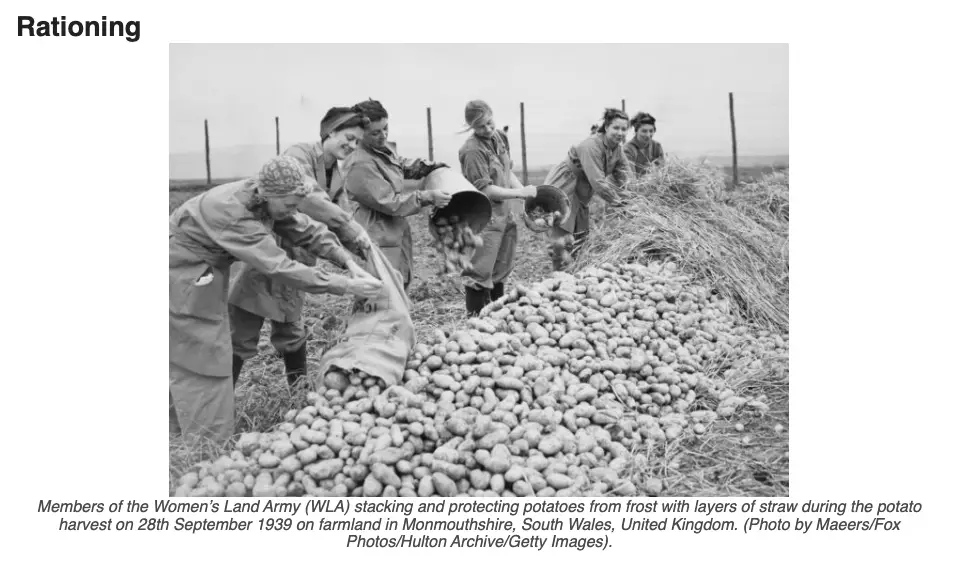
National Dish – British Chips And Fish – Rationing
As was written in War History Online:
“Alongside tea, the meal has since become a symbol of British culture, even though ironically its two main components come from different cultures.
During both world wars, Fish and Chips were one of the only meals that were consistently available.
It was feared that if the British population was denied their fish and chips morale would suffer.“
Hubby assured me that Fish and Chips were not rationed!
How Are British Chips Different From French Fries?
Aside from the fact that in the United Kingdom, Australia, South Africa, Ireland and New Zealand this style of potato is call Chips, there really is no difference from the French Fries we know here in America.
Once the potatoes are cut, however you want to cut them, they must be rinsed in cold water to remove some or the starch.
Second important step, is to dry the moisture from the potatoes, not easy when you are cooking lots!
From here, the temperature of the oil is most important; too hot and it burns, not hot enough and you quickly end up with soggy potato sticks.
For this reason, and because I detest working with large amounts of hot oil, I created this fabulous Hot Chips recipe.
Golden Brown British Chips Without The Deep Fryer
I don’t know about you, but I have never been a fan of using a deep fat fryer. Such a large amount of oil is needed, and then it can become rancid if saved for too long and reused. Throwing out that amount of oil, after each use, just seems wasteful.
And so, I prefer to use a hot cast iron pan and only enough fat to cook with the amount I am intending to cook.
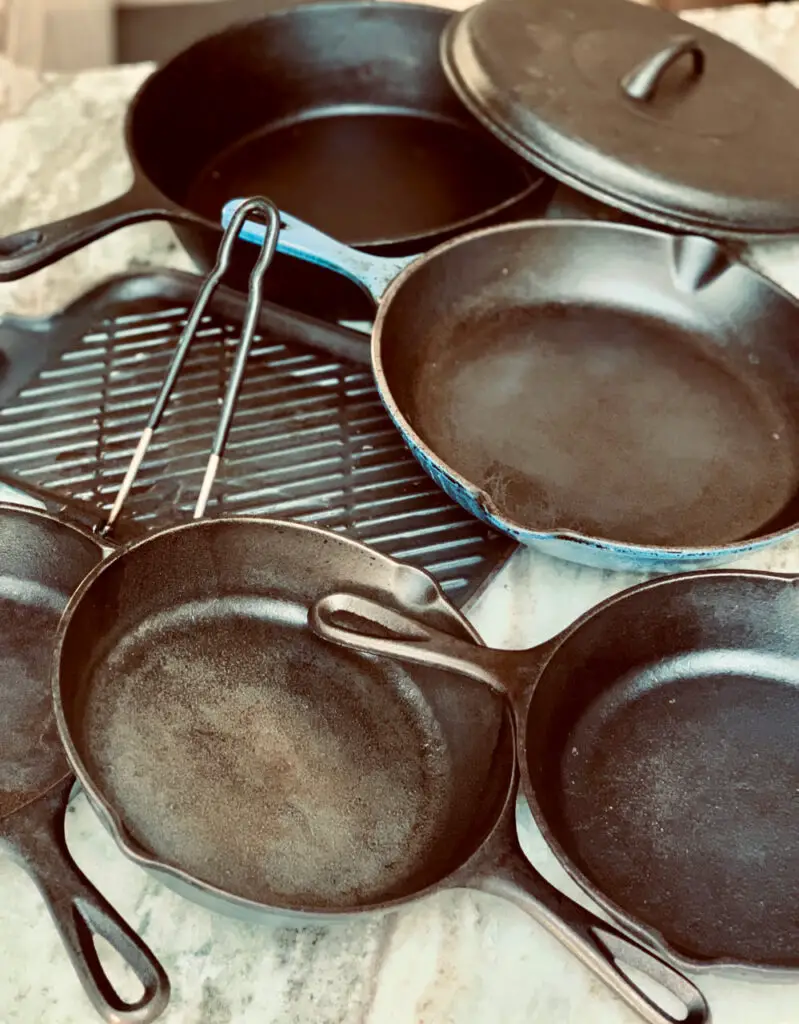
The secret, is in the batter! Not a fizzy beer batter, where it often seems there is more breading around the fish or chips, than fish or chips. Just a simple, light batter that makes them crisp, yet still a substantial potato.
Crispy British Chips
Imagine a thin batter that is derived simply by dredging the potato sticks in something wet and then something dry, of which both impart a bit of flavor.
Not a heavy batter, that becomes more batter than potato, just a light flavorful dusting. Also imagine, not needing a gallon of oil to cook your chips in!
With the use of a hot cast iron pan, a little oil, butter or meat drippings, these dusted potato sticks are more crisp, than oil fried, more flavorful, and healthier than your beer-battered fish!
How To Outshine Your Fish
Step by Step Instructions
Step 1 – Make Holes
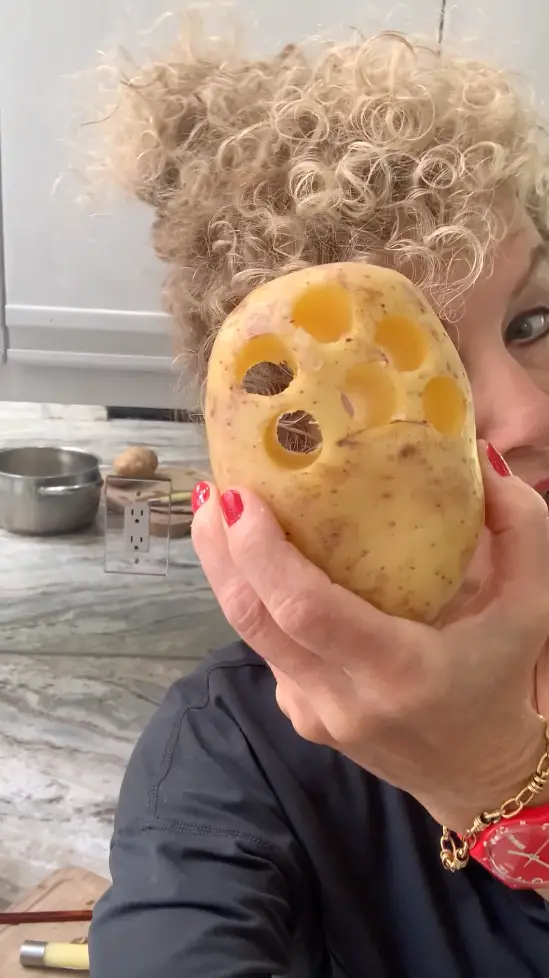
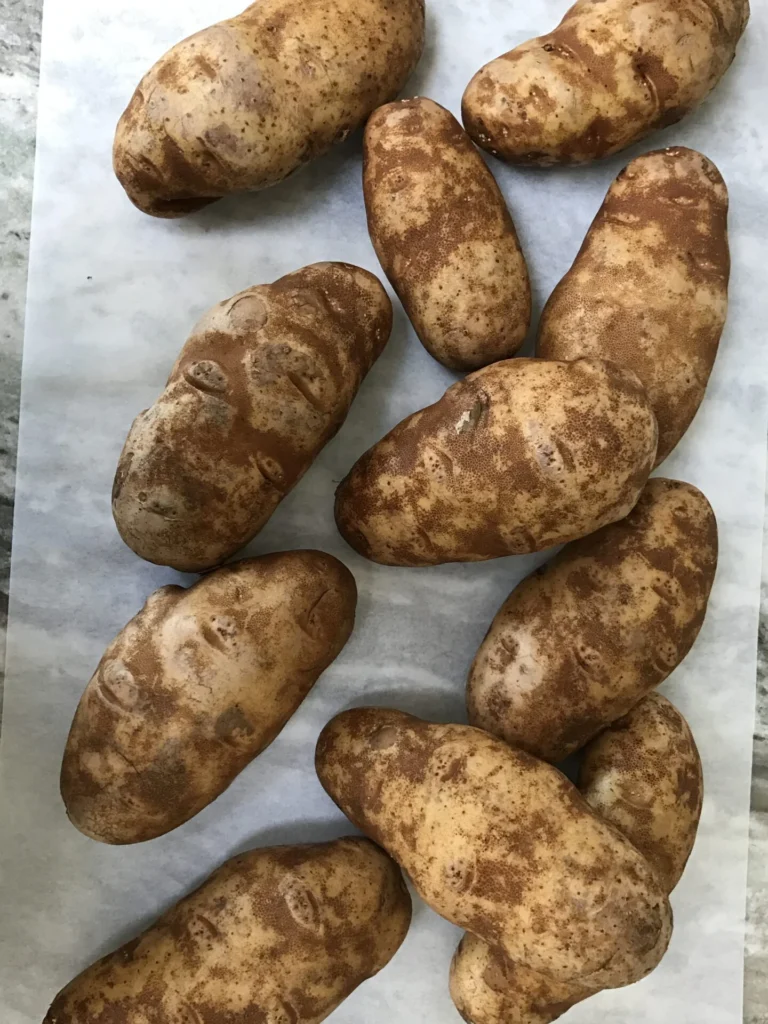
With an apple corer, remove as many long tubes of potato from a large Russet potato. Creating cylinder pieces of potato, makes for a very attractive finished dish, or simply slice into strips.
An entire circle of the potato slice has the chance to become golden and crisp, and not simply two flat sides.
Be sure to save what remains of the potato you poked holes in, for quick ‘smashed’ potatoes for another meal.
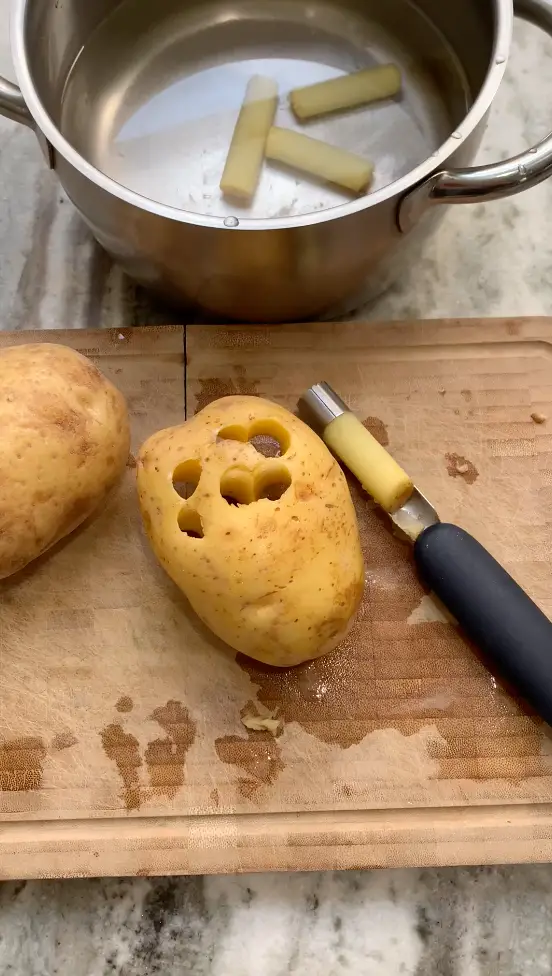
Step 2 – Blanch Potatoes
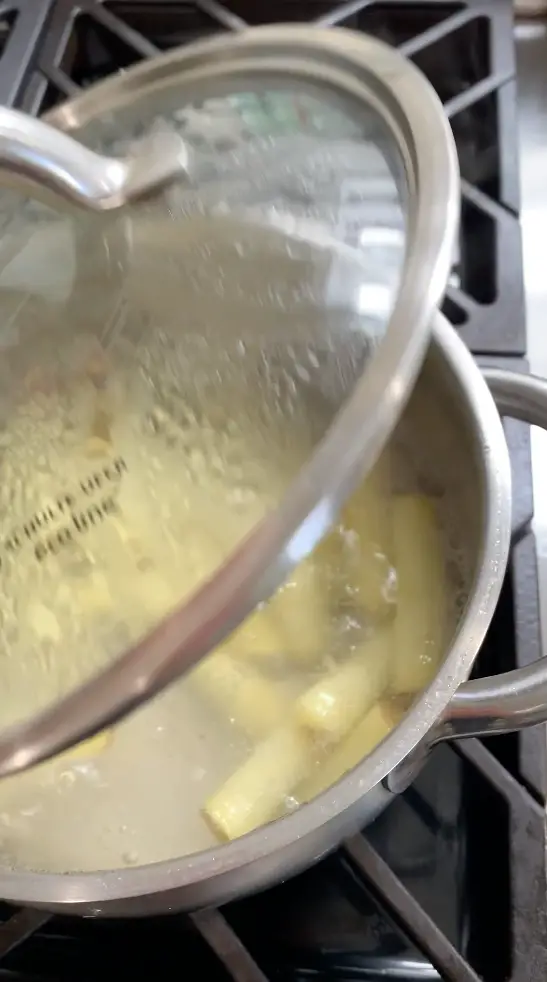
In a pot of boiling salted water, drop the potato pieces in, cover and quickly blanch them.
About 1-minute is all that is needed.
It helps remove some of the potato starch and allows them to cook quickly when they are dredged and dusted and cooked in a skillet.
Step 3 – Dredge
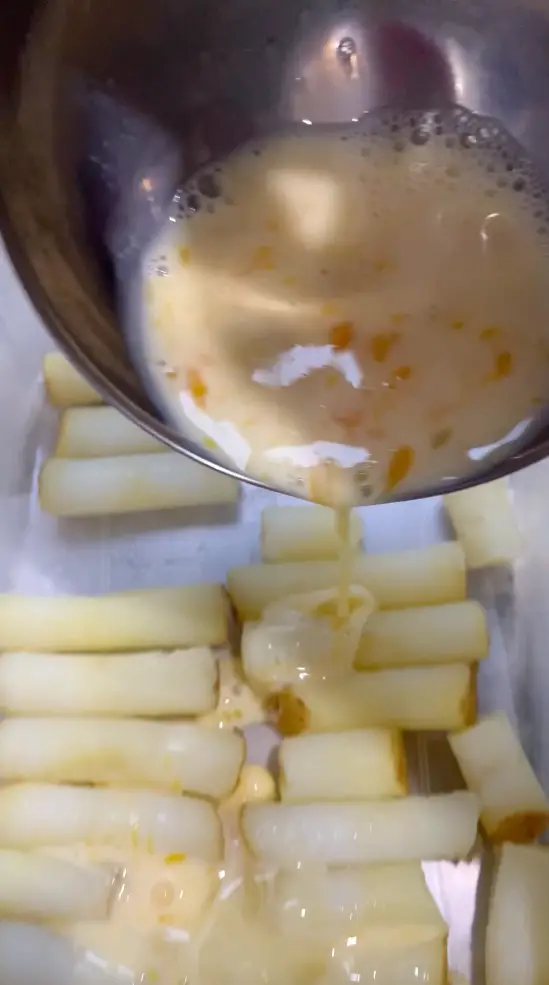
In one bowl, mix the milk, egg and garlic and lay the potato pieces in to coat.
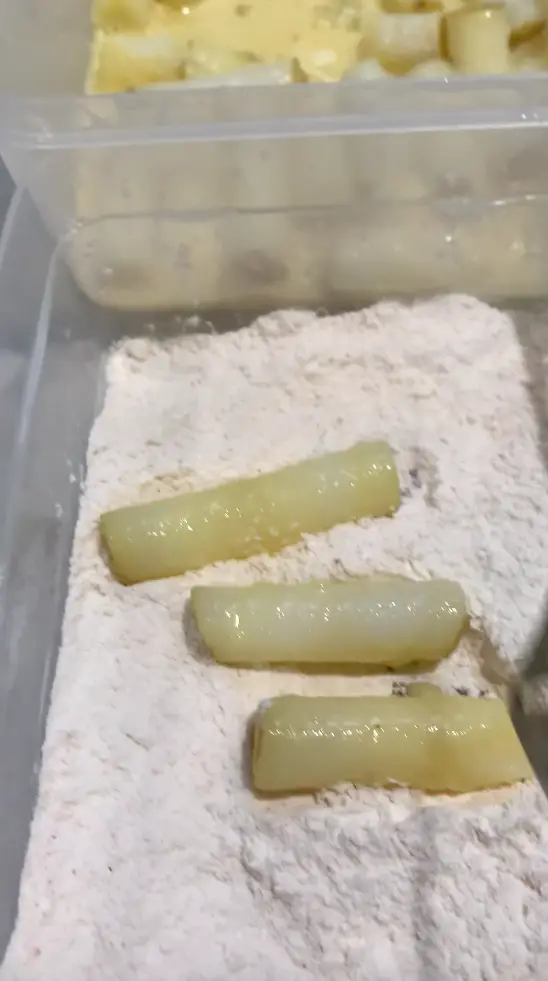
In a separate bowl, mix the flour, pepper and salt.
Lay the egg coated potatoes in and give a shake to dust all the sides of the potato.
Step 4 – Cook
Place oil and butter into a medium-hot cast iron pan.
Lay the dredged potato pieces in a single layer on the bottom of the pan.
Turning, so all sides have a chance to cook to a golden brown.
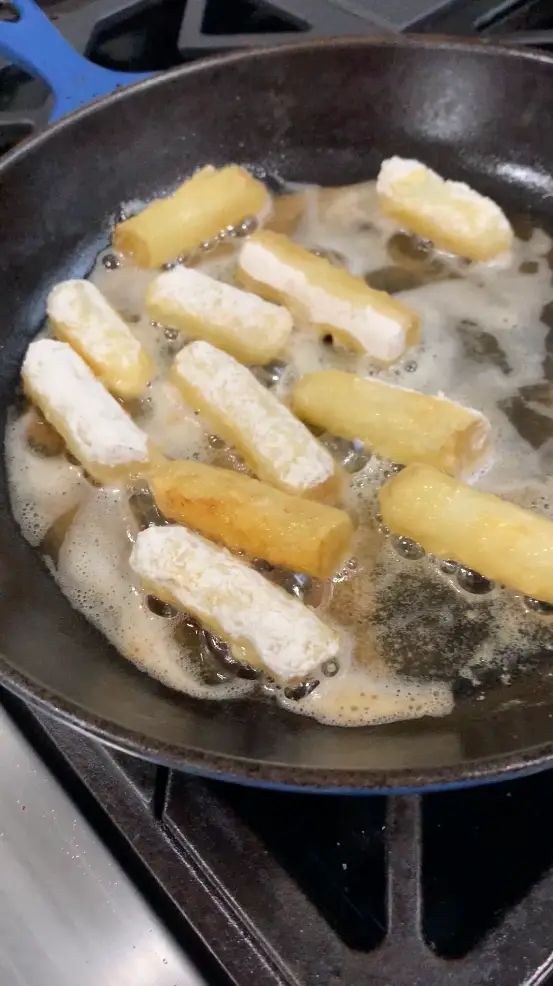
Remove from the pan, lay on a cooling rack for just a few minutes, and serve.
Because Charles Dickens Said So!
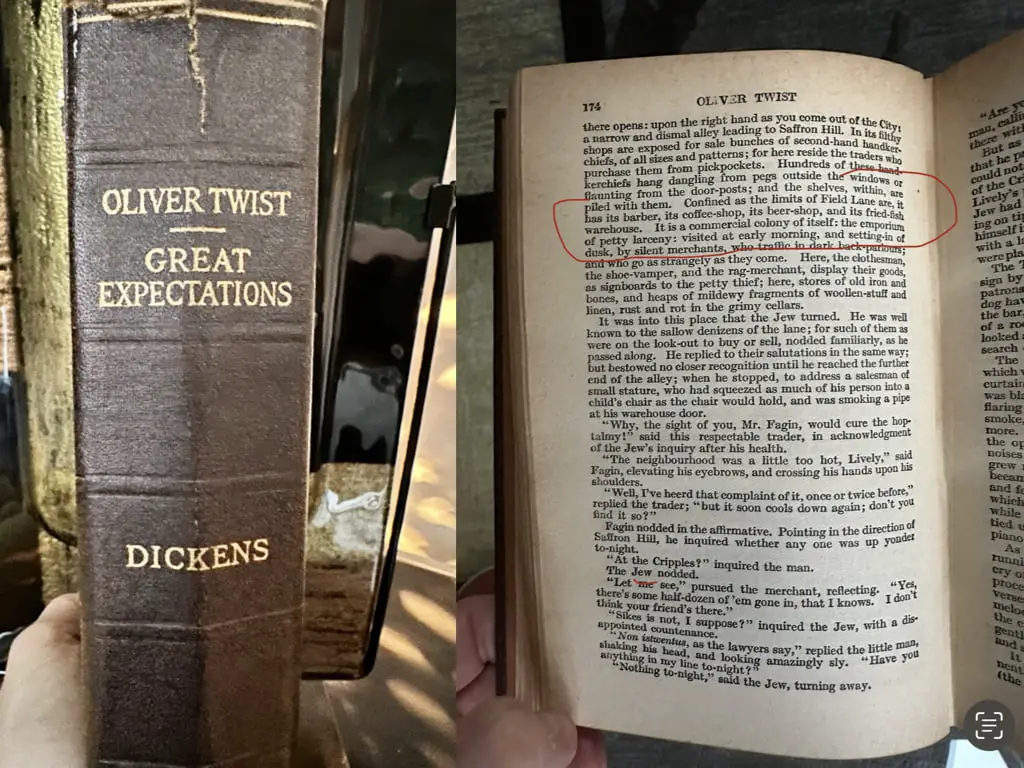
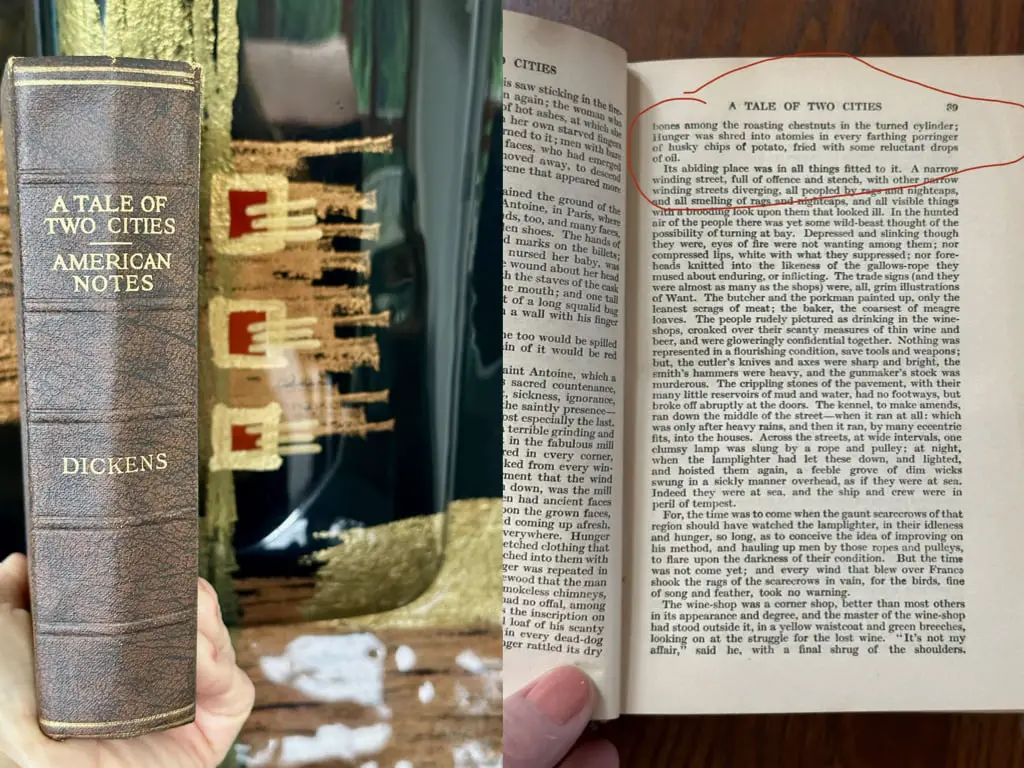
Among many other fascinating artifacts, my husband has the full collection of leather bound Dickens Novels.
How exciting it was for me to find mentions in two of his novels pertaining to British Chips And Fish!
No need to run to the library, I’ve got them both right here for you!
Oliver Twist
“Confined as the limits of Field Lane are, it has its barber, its a coffee-shop, its beer-shop, and its fried-fish warehouse.”
A Tale Of Two Cities
“Hunger was shred into atomies in every farthing porringer of husky chips of potato, fried with some reluctant drops of oil.”
Equipment Needed
- An apple corer is the quiet star here, used to extract clean, uniform potato cylinders from large Russet potatoes, turning a humble spud into something a little more playful and precise.
- A medium pot with a lid is essential for blanching the potatoes first, setting them up for a fluffy interior before they ever meet the pan. For cooking, a large skillet or cast iron skillet provides steady, even heat and the kind of surface that encourages deep golden crispness with far less oil than a deep fryer.
- You’ll need two dredging dishes, one for the batter, one for the potatoes, keeping things orderly and efficient as you work. Measuring cups and spoons ensure the batter stays light and balanced, while a garlic press makes quick work of fresh garlic, dispersing its flavor evenly throughout.
- A stack of paper towels nearby is helpful for draining excess oil and keeping the chips crisp, not greasy. And finally, a reliable stovetop or burner brings everything together, simple, familiar, and exactly what this kind of comfort cooking calls for.
Ingredients Needed
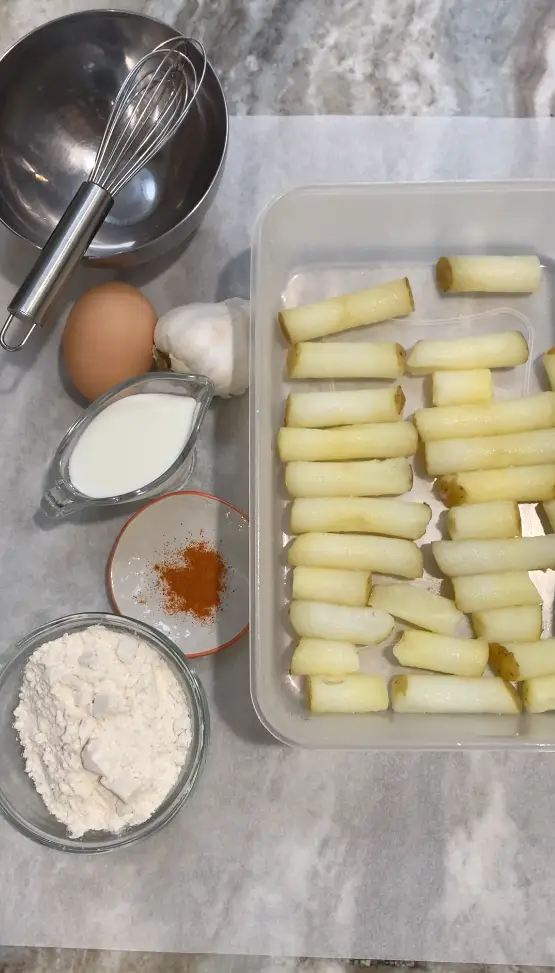
- At the heart of these Better Than British Chips are large Russet potatoes, chosen for their high starch content, which is the secret to that shatteringly crisp exterior and fluffy interior. Cut into tidy cylinders with an apple corer, they feel both playful and intentional, a familiar potato transformed.
- A simple egg anchors the light batter, giving it just enough structure to cling without weighing things down. Milk loosens the mixture, while flour provides a delicate coating that crisps beautifully in the pan rather than soaking up oil like a deep fry would.
- Garlic, finely grated or mashed, adds a quiet savoriness that perfumes the potatoes as they cook. Salt is essential here, not just for seasoning, but for drawing out moisture and enhancing that golden crunch, while a pinch of cayenne or freshly ground black pepper brings warmth and subtle heat.
- For cooking, I love using vegetable oil, but when I have it on hand, beef dripping or bacon fat takes these potato sticks to another level entirely, lending a depth and richness that feels indulgent yet old-world. A final knob of butter at the end rounds everything out, encouraging browning and adding a nutty finish that makes these impossible to stop eating.
Great Potato Recipes You Are Sure To Love
Oh, how we love our potatoes! Over the years I’ve created so many delicious potato recipes, of which I am happy to share with you.
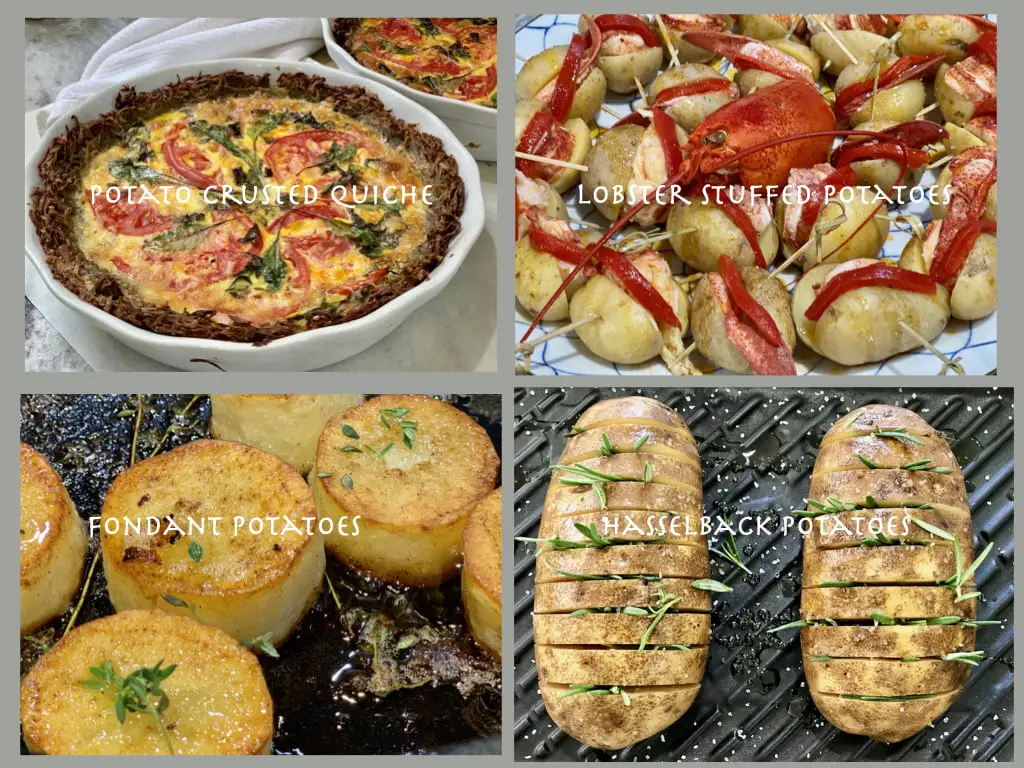
A favorite, of which I prepared on national television on The Great American Recipe with PBS, was Potato Crusted Quiche.
Other’s You are Sure To Love!
- Fancy French Fondant Potatoes – a classic potato recipe served with Beef Wellington.
- Hasselback Potatoes – with an easy cutting tip.
- Potato Latkes – perfect for serving poached eggs on top of.
- Potato Salad – gotta have potato salad, but only if it’s with homemade olive oil mayo.
- Potato Stuffed With Lobster Tails – a classic Mediterranean dish from Spain.
How To Make British Chips To Outshine Your Fish
Equipment
- Apple Corer
- Large cast iron skillet
Ingredients
- 4 Large Russet Potatoes scrubbed
- 1 Egg
- 1 Garlic clove crushed
- 1/4 cup Milk
- 1 cup Flour
- 2 tsp Salt
- 1/4 tsp Cayenne or Black pepper
- 3 cups Water
- 1/4 cup Vegetable oil or meat drippings
- 2 tbsp Butter
Instructions
- With an apple coring tool, remove as many tubular shaped potato pieces from the whole potato.
- Place the potatoes in a pot of boiling water with 1 teaspoon of salt, turn the heat to medium and simmer for 1-minutes. Remove and run under cold water.
- Lay the potato pieces out on a towel to dry the potatoes.
- Meanwhile, whisk the milk, garlic and egg in a bowl and place the dried potatoes into the mixture for 10-minutes, or overnight.
- Whisk together the flour, remaining salt and a pinch of cayenne pepper. Place the egg-washed potatoes into the flour mixture.
- Place a large skillet, preferably cast iron, over medium-high heat along with the oil and butter. Once the butter melts and begins to bubble slightly, place the flour dusted potatoes into the skillet and cook on all sides until golden brown. Remove and serve.
Video

I believe the table... that place that draws people to gather, is the most powerful symbol of togetherness. All that happens before the table is set, the planning, the gathering, the preparing, are all an intricate part of the dance that create the mood of celebration to share with friends and loved ones.
We don’t put batter on our chips! This is NOT a British chip recipe!
It all in the potatoes you use and the American potato simply dies NOT. Make an English chip & never will !!
Thanks so much Julie for the visit!!